


News
Reducing number of peers threatens ‘to forfeit expertise’, warns Gove
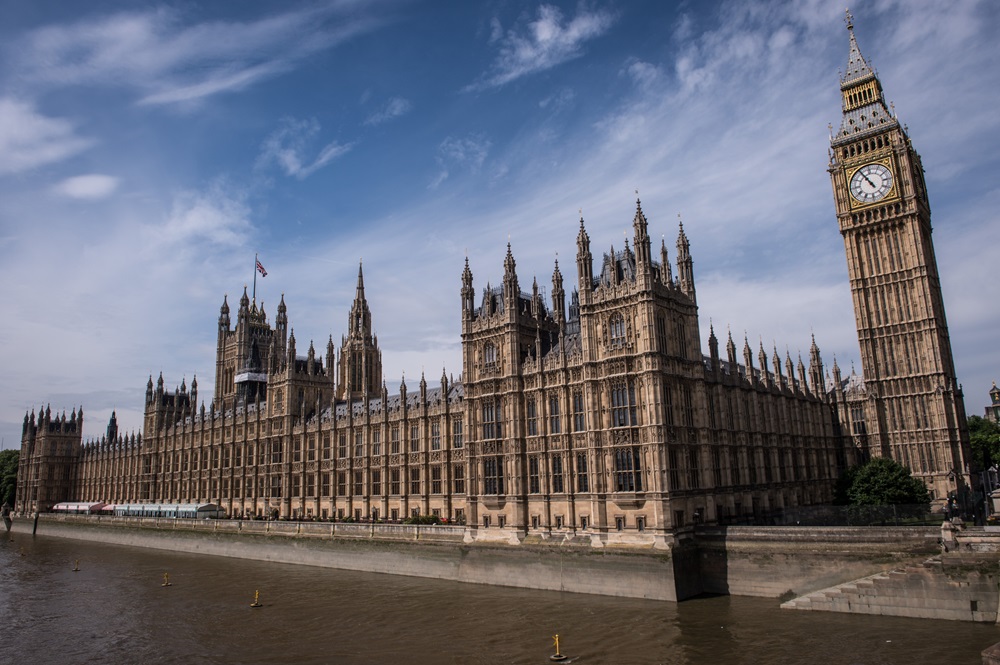
Curbing the size of the House of Lords threatens “to forfeit expertise”, Tory former Cabinet minister Michael Gove has warned.
The Conservative peer also spoke out against raising the minimum attendance threshold for the unelected chamber, arguing many members who were more infrequent visitors to Parliament “will be people of eminence who will be occupied outside in deploying their expertise for the public good”.
He described the accusation the Lords had too many members as a “false premise” and argued against “seeking to bend the operation of our House to those who are not in sympathy with it”.
Lord Gove made his comments as the chamber discussed further changes to the upper chamber under plans to remove the hereditary peers.
[mid-content-banner]
Right of birth
The House of Lords (Hereditary Peers) Bill, which has already been through the Commons, will abolish the 92 seats reserved for members of the upper chamber who are there by right of birth.
There are currently 86 hereditary peers after the suspension of by-elections pending the legislation.
The Bill delivers on a promise in Labour’s election manifesto and has been promoted as the first step in a process of reform.
There have been long-standing concerns about the size of the House and calls to reduce its membership, which stands at more than 830, compared with MPs, who are capped at 650.
This has been accompanied by frustrations at peers who rarely attend or only turn up to claim the daily allowance of £361.
It has fuelled claims some use the House as a glorified members’ club at taxpayers’ expense.
In response, a range of proposals have been suggested including a retirement age, a participation requirement and a restriction on creating new life peers under a “two out, one in” system.
The Conservatives have the largest number of eligible members at 287 followed by Labour on 211, according to official figures.
Under the current rules, members only have to attend once in a parliamentary session to retain their seat.
[lower-mid-content-banner]
"False premise"
Cautioning against a move to require peers to attend more than 10% of sitting days, Lord Gove said: “It is based on a false premise that we hear often, which is that this House has too many members and new schemes must be found somehow to identify those who should be expunged or removed at any point.”
He added: “The suggestion that there are too many members can often be a means of trying to get rid of those members whom the executive or others, for whatever reason, ideologically or otherwise, find inconvenient – a stone in the shoe.
“We in this House should not be seeking to reduce the range of voices, to limit the number of members or indeed, potentially, to forfeit expertise.”
Referring to the pressure for reform, Lord Gove said: “Rather than seeking to bend the operation of our House to those who are not in sympathy with it, we should seek to ensure that it operates effectively in challenging faulty legislation and in making sure that expertise is deployed – not in attempting to regulate our numbers but in attempting to regulate the flow of legislation that comes from the other place which is faulty and which benefits from the expertise here.
“If we lose a single voice that is expert and authoritative in challenging that executive, we undermine the case for this place.”
Two-tier system
But leading lawyer Lord Pannick said: “We undermine respect for this House if we continue to have people who do not turn up more than once in each session.”
Former Treasury chief Lord Burns also argued that without action the size of the House would continue to grow, with the Prime Minister’s power to make appointments having an an “escalator” effect.
The independent crossbencher, who previously led a committee to look into the issue and drew up proposals to cap the number of members at the same level as the Commons, said: “What we have observed is that this mechanism and the way that it works leads to a steadily increasing size of the House, and two or three more moves of governments, which have substantial majorities for periods of time, will see this explode to even larger numbers, unless we can find some way of beginning to constrain this.”
Earlier, the Lords backed a Tory move by 265 votes to 247, majority 18, to create life peers who do not have to sit at Westminster.
The Conservatives said it would allow the honour to be granted without swelling the size of the chamber.
But opponents said it would create a two-tier system and cause further confusion, with an established system already in place to recognise contributions without people being made a peer.
Peers also supported a Conservative amendment to abolish unpaid ministers in the Lords by 284 votes to 239, amid long-held concerns about Government frontbenchers in the unelected house not being remunerated for their official duties.
Support our Nation today
For the price of a cup of coffee a month you can help us create an independent, not-for-profit, national news service for the people of Wales, by the people of Wales.
Get more trusted Welsh news
Choose Nation.Cymru as a preferred source in Google News to see more of our journalism.
