
News
Proposed law seeks to ‘end wealth extraction’ from Wales
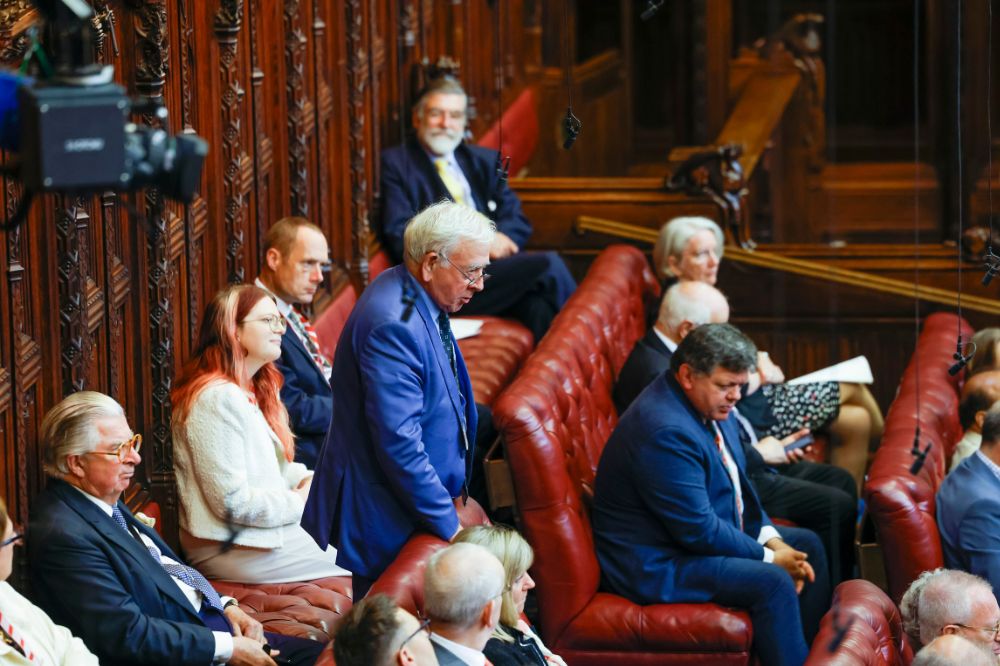
A proposed new law seeks to “end wealth extraction” from Wales by devolving responsibility for the Crown Estate within its borders to the Welsh Government.
The Crown Estate is a huge collection of assets owned by the British monarchy, which includes vast swathes of urban, coastal and maritime land across the UK.
It is run as a business, independent of government, but its profits are delivered to the Treasury each year, after which an annual payment is made to the monarch in the form of the Sovereign Grant, currently set at 12% of the total.
A private member’s bill, put forward by Plaid Cymru peer Lord Wigley, aims to improve Wales’ “democratic control” of its natural resources and to ensure that profits derived from these assets stay in Wales for the benefit of communities.
He argued that Wales has been treated badly by the Crown Estate, with struggling councils forced to fork out thousands each year for access to coastline and public footpaths, among other resources.
[mid-content-banner]
Devolved
Meanwhile, the value of Crown Estate assets are skyrocketing amid investment in renewable energy projects, such as offshore wind.
Lord Wigley also pointed out that the Crown Estate has been devolved in Scotland since 2016.
He said: “Wales has a history of exploitation of our natural resources, whether coal or other minerals, or our water resources on which Birmingham and London now increasingly depend.
“We likewise see the exploitation of our energy potential: waves, sea currents, estuarial waters and wind, onshore and on the seas around our coasts.
“My colleagues and I in Plaid Cymru want to see the maximum possible benefit from such projects coming into the Welsh economy.”
[lower-mid-content-banner]
Fairness
Fellow Plaid Cyrmu peer Baroness Smith of Llanfaes added: “This is about fairness and ending the continued wealth extraction from Wales.
“At present, the revenue derived from the estate’s activities in Wales is paid directly to the UK Government, with no guarantee that Wales receives an equivalent amount back.
“The National Infrastructure Commission for Wales asserts that the current system sees a transfer of wealth from fees arising from the Crown Estate’s commercial activity in Wales to England – an illogical and bizarre outcome.”
She added: “Surely it’s not radical to say that every nation deserves the right to benefit from the wealth generated from its own natural resources.”
The Crown Estate (Wales) Bill was also supported by Labour peer Lord Murphy of Torfaen and independent crossbench peer Lord Thomas of Cwmgiedd.
However, both the Government and Opposition front benches oppose the Bill “at this time”, arguing that it would disrupt key projects building renewable energy infrastructure and grid connectivity.
Treasury minister Lord Livermore said: “Devolving the Crown Estate to Wales at this time risks significant fragmentation of the energy market and risks jeopardising the existing pipeline of offshore wind development in the Celtic Sea planned into the 2030s.
“This in turn would undermine international investor confidence and significantly delay progress towards net zero to the detriment of the whole of the UK.”
Benefit
He argued that devolution would require the creation of a new entity to take on management of the Crown Estate in Wales, which would not benefit from the Crown Estate’s scale, capital and established expertise.
The minister added: “Devolution would also likely delay UK-wide grid connectivity reform, which is crucial for meeting out growth targets, because it would make it harder to co-operate on energy generation and infrastructure across England and Wales.”
Lord Livermore told peers that the Government does not believe devolving the Crown Estatewould see Wales benefit financially.
He said: “Wales benefits from UK Government spending derived from the Crown Estate. It also receives Barnett funding when Crown Estate funding is spent in England in areas that are devolved in Wales.
“If Wales were to benefit only from the income from the Crown Estate generated in Wales, then it would likely be zero or negligible for several decades to come. This is because Welsh assets are relatively new and will take time to mature, likely in the order of 10 to 15 years.”
The minister added that the Scottish Government receives a block grant reduction to reflect the profits it retains from the Crown Estate Scotland following devolution.
He concluded that the Government does not believe devolution of the Crown Estate is in the “best interests” of Wales or the wider UK.
The Bill received its second reading in the House of Lords on Friday.
Support our Nation today
For the price of a cup of coffee a month you can help us create an independent, not-for-profit, national news service for the people of Wales, by the people of Wales.
Get more trusted Welsh news
Choose Nation.Cymru as a preferred source in Google News to see more of our journalism.