


News
Plaid Cymru's Caerphilly victory overshadowed by UK broadcasters' obsession with Reform UK and Labour
Martin Shipton
UK-wide broadcasters framed the coverage of the Caerphilly by-election result not around Plaid Cymru’s victory but the implications for the Labour Party and Reform UK, according to research carried out at Cardiff University.
With the emphasis on Reform’s defeat, the apparent terminal decline of Labour in Wales and its significance for Keir Starmer’s government at Westminster, Plaid Cymru’s success was overshadowed.
The research, led by Professor Stephen Cushion of Cardiff University’s School of Journalism, Media and Culture, said: “The result was largely seen through the prism of power shifts in Westminster, and the prospect of Reform UK’s Nigel Farage becoming the next Prime Minister.
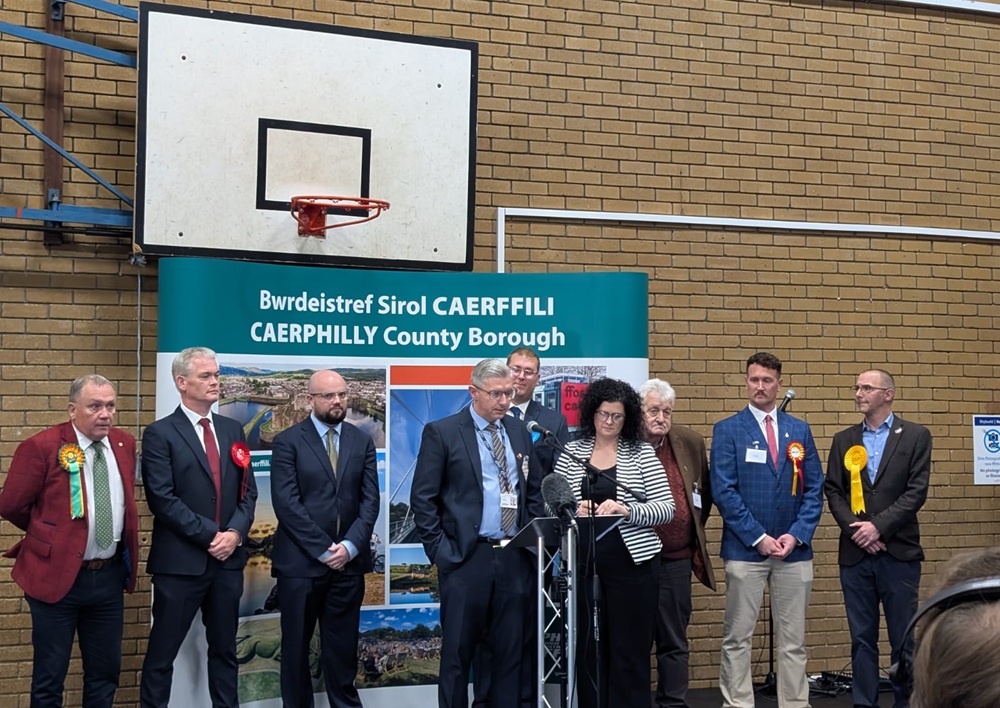
“Not long after the result was announced, the focus on Westminster politics was acknowledged by BBC Wales Politics journalist, Teleri Glyn Jones, when she asked Plaid Cymeu’s new MS Lindsay Whittle: ‘We’ve grabbed you as the winner of this but actually the rest of this room’s media is going to the person who came second, Llŷr Powell from Reform. What do you think that tells us?’.
“Reacting to the result, the headline of BBC News UK online analysis read: ‘Extraordinary Caerphilly by-election humbles Westminster's big beasts’, with a narrative centred on the decline of Labour and the Conservatives. Plaid Cymru, who won the by-election by 11%, was the fourth party mentioned. The analysis of Plaid Cymru’s victory focused on Lindsay Whittle as a candidate with a proud history of public service in Caerphilly, who built a strong local base to finally win after standing repeatedly for a seat in Westminster and in the Senedd. There was limited reference to Plaid Cymru’s wider support in Wales and its leader, Rhun ap Iorwerth, was noticeably absent from the article. By contrast, Reform UK leader Nigel Farage was both mentioned and pictured.
“Comparatively, Welsh news coverage gave Plaid Cymru and the immediate Welsh context of the by-election much greater focus, alongside covering the wider political ramifications of defeat for Labour and Reform UK. Both BBC Wales Today and ITV Wales at Six featured a running order that reflected how many votes each party received, covering Plaid Cymru first, Reform UK, then Labour.
“But how did TV, online and social media in Wales cover the by-election throughout the campaign? To what extent did they weight the perspectives of parties and leaders according to their past electoral success at the Senedd, their standings in the latest opinion polls, or their newsworthiness and ability to set the political agenda?
“Overall, this Cardiff University study found BBC and ITV in Wales on TV, online and social media broadly balanced the perspectives of the major political parties, with Labour, Reform UK, Plaid Cymru and the Conservatives receiving most attention. Labour, unsurprisingly, received the most coverage as the governing party in Wales and the party defending the seat. It also was the protagonist in the most news items.
“After Labour, Reform UK was the party most referenced and leading the news narrative. Its candidate appeared more often than candidates from other parties, while Reform’s leader, Nigel Farage, was the third most referenced party leader, behind Labour and Conservative party leaders based in Wales. In UK-wide network news, Reform UK and Nigel Farage appeared even more prominently, gaining more airtime (on BBC News at Ten) and driving the narrative of the campaign, and promoting debate about the implications for Westminster politics more generally.
“Taken together, the findings suggest that broadcasters in Wales weighted coverage of parties according to their past electoral success, with Labour most dominant. But despite only having one Senedd Member, Reform UK featured marginally more than other parties except Labour. This could be interpreted as broadcasters reflecting trends in public opinion polls in combination with the news value of Reform UK acting as a new force in Welsh politics and disrupting the political status quo. It was also motivated by the prominence of a single major news story, the Nathan Gill scandal.
“The prominence of Reform was even more pronounced in UK network coverage, perhaps due to the party’s far more dominant standing in the polls. Or, put more bluntly, Reform featured more in UK-wide news because they have held a sustained lead the polls in England over many months and have – according to commentators - been setting the Westminster agenda.
“Looking ahead to the 2026 Senedd election, if these trends in survey data across Wales and the UK remain the same, there could be a major divergence in how broadcasters in Wales allocate airtime to parties during the campaign compared to UK network news. Given more people in Wales rely on UK-wide news than news produced in Wales, this could prove a significant influence in what news and analysis people are exposed to before they cast their vote next May 2026.”
Support our Nation today
For the price of a cup of coffee a month you can help us create an independent, not-for-profit, national news service for the people of Wales, by the people of Wales.
Get more trusted Welsh news
Choose Nation.Cymru as a preferred source in Google News to see more of our journalism.
