


News
Plaid Cymru warns Wales is set to 'lose out' in Spending Review
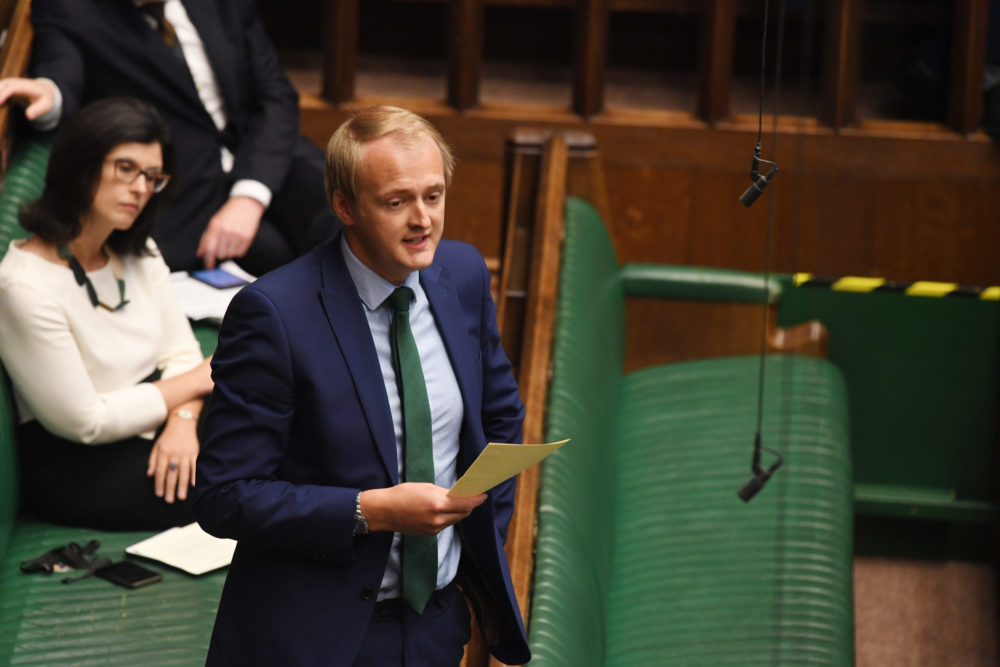
Plaid Cymru has warned that Wales is set to lose out in the UK Government's Spending Review next week.
The party's Treasury spokesperson, Ben Lake, has predicted "real-terms cuts" to essential public services in the review, which would hit "the most vulnerable hardest" while allowing structural funding injustices in Wales to persist.
Ahead of the review announcement on Wednesday (11 June), Mr Lake says that the Labour Government will “wax lyrical about a handful of new capital projects” while remaining silent on the fact that it has “moved the goal posts” on rail infrastructure spending by reclassifying another English rail project as ‘England and Wales’.
[mid-content-banner]
Reclassified
Plaid Cymru has criticised the classification of a new £6.6 billion rail line between Oxford and Cambridge – which has no route or benefit to Wales – as an 'England and Wales' project.
This decision denies Wales consequential funding, despite the project being reclassified as England-only by the Labour UK Government’s 2024 Statement of Funding Policy.
Mr Lake, said: "The Chancellor’s Comprehensive Spending Review is widely expected to confirm some eye-catching capital projects, but it will also impose real terms cut to many important services that will hit the most vulnerable the hardest.
"Whilst money will be squeezed from families and public services in this Spending Review, the UK Government will also attempt to re-classify the £6.6 billion rail line between Oxford and Cambridge as an ‘England and Wales’ project.
“In the 2020, 2021, 2023 and 2024 editions of the UK Government’s Statement of Funding Policies the railway was classified an ‘England-only project’, meaning that Wales received funding to invest in our own infrastructure. The UK Government now intends to re-classify the project so that Wales loses out on millions in investment.
“Therefore, whilst the UK Government will wax lyrical about a handful of new capital projects this week, it will remain silent on the fact that it has moved the goal posts to ensure that Wales – yet again – loses out on much needed investment.”
Responding to questions about the Oxford and Cambridge project, a Department for Transport spokesperson said: “Transport is an essential part of our mission to rebuild Britain, and improving rail connectivity in Wales is a key part of this.
“East West Rail is funded via our rail network enhancements pipeline which funds projects in both England and Wales. This includes the redevelopment of Cardiff Central Station, improved level crossings in north Wales and support for the upgraded South Wales Relief Lines.”
[lower-mid-content-banner]
NHS
The NHS is expected to receive a funding boost of up to £30 billion in the review next week, at the expense of other public services.
The Department of Health is set to be handed a 2.8% annual increase in its day-to-day budget over a three-year period.
The cash injection, which amounts to a rise of about £30 billion by 2028, or £17 billion in real terms, will see other areas including police and councils squeezed, The Times newspaper reported.
The Chancellor Rachel Reeves has acknowledged that she had been forced to turn down requests for funding in a sign of the behind-the-scenes wrangling over her spending review.
She blamed the former Conservative government’s stewardship of the economy rather than her self-imposed fiscal rules, which include a promise to match day-to-day spending with revenues.
The Chancellor said despite a £190 billion increase in funding over the spending review period “not every department will get everything that they want next week and I have had to say no to things that I want to do too”.
On top of the increase in day-to-day spending, funded in part by the tax hikes Ms Reeves set out in her budget, looser borrowing rules will help support a £113 billion investment package.
Tough choices
Economists have warned the Chancellor faces “unavoidably” tough choices when she sets out departmental spending plans on June 1.
The Institute for Fiscal Studies (IFS) think tank said defence and the NHS will dominate the review, raising the prospect of cuts to other unprotected departments.
Carl Emmerson, deputy director at the think tank, said on Saturday that any increase larger than 2.5% a year for the NHS budget would mean that departments excluding defence would be cut on average.
“So, that could be things like the kind of services local authorities provide, they might be seeing their grants from central government cut, potentially putting pressure on council tax,” he told LBC.
“Rachel Reeves is actually planning to borrow quite a lot over the next few years, she’s barely on course to have debt falling in five years’ time.
“The challenge is that if we get bad news on the economy, if we have other policies the Government wants to do, like making winter fuel payments more generous again, perhaps like relaxing the two-child limit come the October, November budget, I wouldn’t be surprised if she does need to put taxes up to make the sums add up at that point.”
Support our Nation today
For the price of a cup of coffee a month you can help us create an independent, not-for-profit, national news service for the people of Wales, by the people of Wales.
Get more trusted Welsh news
Choose Nation.Cymru as a preferred source in Google News to see more of our journalism.
