


News
Old-fashioned economic thinking driving biodiversity loss says new study
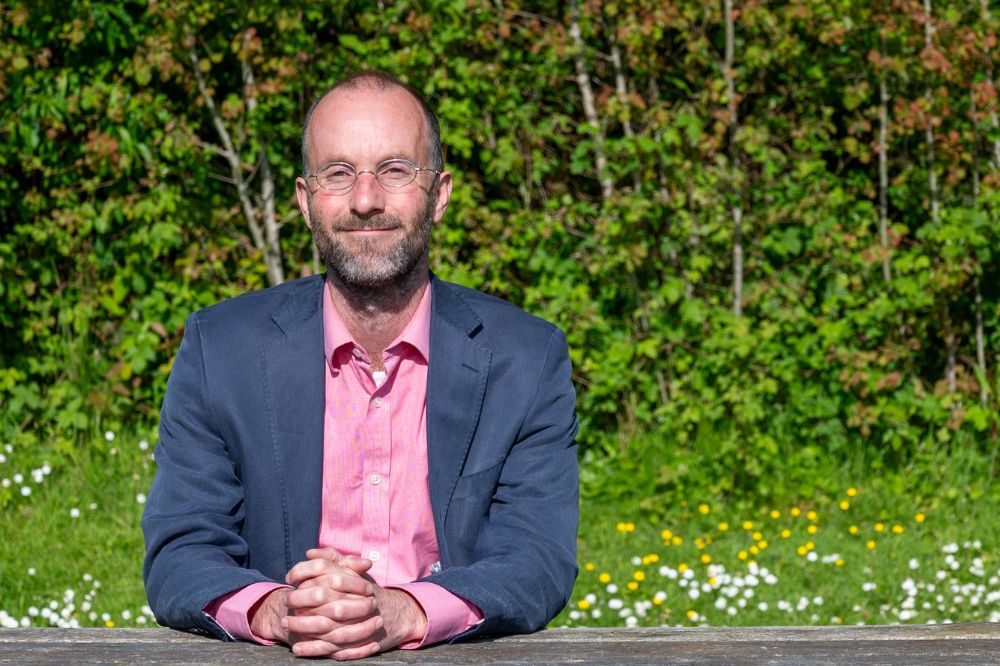
Old-fashioned economic thinking is driving biodiversity loss, according to a new international study led by academics at a Welsh university.
Published in the journal Proceedings of the National Academy of Sciences, the new research by Aberystwyth University proposes a transformative approach to economics - one that recognizes nature not merely as a resource, but as a living system deeply intertwined with human identity, culture, and wellbeing.
The findings build on the United Nation's Intergovernmental Platform on Biodiversity and Ecosystem Services (IPBES) Values Assessment,which advocates for a more inclusive understanding of nature's worth.
The new paper highlights the importance of relational values - such as heritage, stewardship, and spiritual connection - in shaping how people interact with and care for the natural world.
[mid-content-banner]
'Values'
Lead author Professor Jasper Kenter, a Research Fellow in Deliberative Ecological Economics at Aberystwyth Business School, said: "We relate to nature in countless ways. It's not just about ecosystems or resources — biodiversity shapes our communities, our mental and physical and health, our sense of place and belonging, our spirituality.
"Traditional economic thinking has been too narrow and technocratic to capture these diverse values, often leading to conflict over land use and conservation priorities. To make better decisions that reflect people's lived experiences, we need a paradigm shift."
The paper introduces a new framework - relational biodiversity economics - which seeks to embed these broader values into economic decision-making.
This new way of thinking provides a different, more socially inclusive way to assess complex trade-offs - such as balancing land use for food production, housing, carbon storage, and nature conservation.
[lower-mid-content-banner]
Relationship
Co-author Professor Mike Christie, also of Aberystwyth Business School and co-chair of the United Nation's IPBES Values Assessment, added: "Halting biodiversity loss requires us to rethink the very foundations of economic decision-making.
"But this is about more than economics — it's about reimagining our relationship with the natural world.
"By recognizing that people and economies are embedded within nature, we can build more resilient, inclusive, and sustainable futures."
"This work adds to a growing body of evidence calling for transformative change in how societies understand and engage with nature — a shift that could be key to reversing biodiversity decline."
The research was funded by UK Research and Innovation through the NAVIGATE project, with additional support from the Strategic Research Council of Finland and the Spanish Ministry of Science and Innovation.
It involved collaborators from the Universities of Aberystwyth and East Anglia, Natural England, the University of Helsinki (Finland), and the Basque Center for Climate Change.
Support our Nation today
For the price of a cup of coffee a month you can help us create an independent, not-for-profit, national news service for the people of Wales, by the people of Wales.
Get more trusted Welsh news
Choose Nation.Cymru as a preferred source in Google News to see more of our journalism.
