

Mon, 17th August Cardiff 22°
Nation.Cymru wordmark
Advertisement

News

New research finds strong trends towards Welsh language place names
By Stephen Price
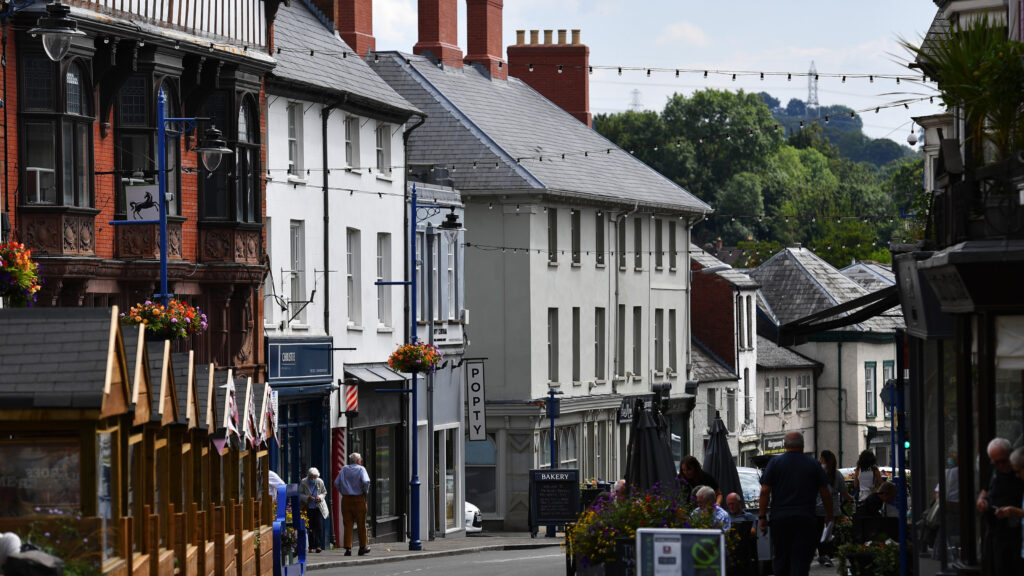
Abergavenny. Image: Visit Wales

Research on how property, street, and business names are changing across Wales shows a clear shift towards using Welsh language place names.

The report commissioned by the Welsh Government collected a wide range of valuable evidence, including:

  • Local authorities received three times more applications for Welsh language street names than English language names between 2018-2023.
  • Most changes to property names do not involve a change in the language of the property name.
  • When they do change language, properties are at least three more likely to be renamed from English to Welsh than from Welsh to English.
  • In all regions of Wales, more house names are changed from English to Welsh than Welsh to English.
  • People report that Welsh house names give them “a sense of pride, place or nostalgia”.
  • Welsh Language Secretary Mark Drakeford said: “Place names help tell the story of who we are as a nation, and this new research helps us understand our linguistic landscape. I'm encouraged to see more people embracing Welsh property names, regardless of their background.”

[mid-content-banner]

Celebrating Cymraeg

The research focused primarily on property names, business names, and street names, with the need for further investigation into names for topographical features in the natural environment also highlighted.

As part of the Welsh Government's wider work to promote and celebrate Cymraeg and our culture, it has established a network of Cultural Ambassadors to support the language in their communities.

The Cultural Ambassadors will be able to draw upon the List of Historic Place Names of Wales, which includes over 700,000 names and is funded by the Welsh Government.

[lower-mid-content-banner]

"Go for it"

Mark Drakeford said: “I’m proud to launch the gold level of our cultural ambassadors course, where people can learn more about the language and our culture online.

"The course includes modules on a range of topics including place names. If you want to support the Welsh language in your area, or know somebody who would be an ideal ambassador, then go for it.”

For the price of a cup of coffee a month you can help us create an independent, not-for-profit, national news service for the people of Wales, by the people of Wales.

Get more trusted Welsh news

Choose Nation.Cymru as a preferred source in Google News to see more of our journalism.

Choose Nation.Cymru as a preferred source in Google News

16 comments

Tomos

Guess its a good start, I still think we should start changing the names of all the houses that come onto the market to Welsh, ensure all new buildings and streets have welsh names. There are many places also with a one or two letter difference between english and welsh which is a waste. These should also be removed. We should be working together to promote an unique offering to tourists. For example if we want to go to Germany, France or Hungary they are very distinct from each other and a reason why people visit. Scotland has made more progress in being more distinct than us culturally we should follow suit.

Reply
John Ellis

Denbighshire council, where I live, has an established policy that all roads in new housing areas must have Welsh names, so round here what you're suggesting is already in operation. But I think that you're quite right to point to the sheer pointlessness of having alternative Welsh and English names when the difference in minimal. 'Abertawe' and 'Swansea' are entirely different words, but 'Rhuthun' and 'Ruthin' is without logic.

Reply
Dai

"Scotland has made more progress in being more distinct than us culturally we should follow suit." Care to give any examples? I'd argue the opposite, I've lived in Scotland and I don't think this is true at all. The major differences are due to geography and its legal system... things like the colder climate (not exactly an advantage), historic architecture (although most new buildings look like they could be from anywhere in the 'Yookay') diet (not something the Scots should be proud of), banknotes (when cash is on its way out) and their dialect of English (derived from Northumbrian). Gaelic is on its arse in the Highlands and islands and most Scots are hostile towards it. Tartan and kilts are only worn at weddings and tourist attractions. They have a strong 'brand' but that doesn't mean they have a more distinctive culture than us. You'll see Union Jacks everywhere in Scotland and most of the people flying them are 100% Scottish. They also need to take more responsibilty for their disproportionate role in the atrocities committed by the British Empire and the colonisation of Ireland. We should have more self-respect, there's no need to suck up to a people who have a patronising and lowly opinion of us... they can be worse than their English cousins in many ways. Any Welsh person who has lived in Scotland will know exactly what I mean.

Reply
Alain

Scotland lost much of its Gaelic culture and language during the potato famine which led to a de facto ethnic cleansing of the Highlands and islands. Unlike Ireland, this wasn't down to starvation, because charitable efforts was more generous to non-Catholics, but to migration and emigration. And there was of course the Viking influence, so that much of the Scotland vs England rivalry is based on competing invading tribes rather than indigenous vs Invader.

Reply
John Ellis

'... where the majority of the population cannot make up their minds or don’t even know whether they are Cymry or English.' I don't think that it's generally quite as polarized as that. I grew up in the north of England, but spent the best part of my young adulthood living and working in Anglophone areas of south-eastern Wales. And my feeling was that most locals in those areas very definitely thought of themselves as Welsh and not at all as English, but that their feelings about their Welshness was more akin to the sense of 'Yorkshireness' widely felt by folk from Yorkshire: genuinely felt, but nevertheless sitting fairly easily alongside a parallel sense of also being British.

Reply
Nigel Burford's alter ego

Well let's ensure that doesn't happen!

Reply
Nigel Burford's alter ego

Whoever down voted my comment is either an idiot or misunderstood. We have to make sure anglicisation halts now and is reversed entirely.

Reply
Geraint

Recently visited Saundersfoot in south Pembrokeshire and noticed the national park now calls the village Llanusyllt/Saundersfoot on its signage. Hope Pembrokeshire County Council follows their example soon. On my walk I was pleasantly surprised to see how many local businesses are supporting the language with a range of bilingual signage. It was also noticeable how many houses had Welsh names. To me this indicated a very positive attitude to Welsh from people who live and run small business there.

Reply
Rhufawn Jones

Dim Cymraeg, dim cwsmeriaeth yw fy egwyddor i, cyn belled ag y bo'n bosib. Ac mae hynny yn anodd, hyd yn oed yn Meirionnydd.

Reply
Only Considerable Upsides

I'm not sure it's much of an issue, Frank, for the simple reason that locals very often put their own slant on the pronunciation of place names, irrespective of the language concerned. I remember visiting Launceston in Cornwall for the first time, and asking for directions only to be corrected by a local who called it "LAAN-stun". The famous example of this in the US is New Orleans, or "New OR-lins". Place names, like languages, evolve.

Reply
John Ellis

Certainly true, and pretty universally among the English-speaking English too. I recall my late dad, a Mancunian who way back in the late 1920s was training to become an accountant, recalling trying to find some company's office in a district on the fringe of Bolton - a town which was unfamiliar to him. Having arrived at Bolton's railway station, he asked an elderly passer-by to direct him to Daubhill, the area where the office was to be found. The old chap looked at my dad, non-plussed. 'Never 'eard of it', he replied. My dad showed him the paper which gave the address. Then realization dawned: 'Ee, thou mean'st DOBBLE', the old man told him!

Reply
Hywel y eithaf dda

I've even herd locals take it a step further and pronounce it "Ni'OR-lins".

Reply
FyMarni

Definitely not the case in Bro Morgannwg! And that's despite complaints about the naming of streets in new estates to the Commissioner.

Reply
Johnny

Interesting,can you elaborate more on this please.

Reply
Mr Jones

Having moved to the Vale from west Wales a few years ago, I'm constantly horrified at what the locals do to Welsh language place names. They seem to treat the language with utter contempt. So much so I don't really consider where I live to be Cymru any more. English incomers generally treat Welsh language and culture with more respect than the good people of Barry.

Reply
Owain Morgan

This is the problem right here. You're not encouraging people to use Cymraeg if you're criticising them. Carrot, not stick please!

Reply

Leave a reply

Replying to FyMarni Cancel

Definitely not the case in Bro Morgannwg! And that's despite complaints about the naming of streets in new estates to the Commissioner.

Comments are reviewed before they appear.