


News
Natural Resources Wales 'is paid millions by Welsh Water for permission to pollute'
Martin Shipton
Natural Resources Wales has been accused of selling “licences to pollute” as it was revealed that the environmental regulator is paid millions of pounds a year by Dŵr Cymru Welsh Water for the right to discharge sewage into rivers, lakes and the sea.
Details of the payments were released in a disclosure made by the water company under the Environmental Information Regulations to Alun Phillips, founder of the charity A Peace of Nature, based at Ogmore-by-Sea in the Vale of Glamorgan.
[mid-content-banner]
Environmental permits
Mr Phillips asked Dŵr Cymru Welsh Water (DCWW): “What is the total spend forecast for environmental permits in the coming five years? That is to say, how much will DCWW be paying Natural Resources Wales (NRW) for re-issuing or issuing all environmental permits over the coming five years? Steve Wilson [DCWW’s managing director of wastewater services] has suggested this total to be around £20m. Please clarify.”
DCWW responded: “We were forecasting £6.574m in the Business Plan for new permits in AMP8 (DCWW’s eighth Asset Management Period, running from 2025 to 2030). However, the EA [Environment Agency in England] have recently increased their charges, so this is now anticipated to be around £7m (in 2022/23 price figures).
“For Subsistence Fees (the fee we pay annually against each permit) the EA have increased their charges and our costs for the EA will increase from £0.5m/pa to just over £1m/pa.
“NRW's Subsistence Fees for our assets are currently around £5m/pa but they are due to review their subsistence charges [in 2025] and we’re expecting them to increase too.
“For AMP8 (2025-2030) there will be £7m of capital expenditure (new assets) and £25m of operational expenditure (existing assets), giving a rough total of £32m.”
DCWW added a note: “If NRW follows EA's lead our NRW subsistence charge could increase to £10m/pa so potentially up to another £25m to the above sum.”
[lower-mid-content-banner]
Ogmore-by-sea
Mr Phillips submitted the information request following a serious sewage pollution incident at Ogmore-by-Sea in May 2024 that resulted in DCWW advising people not to use the local beach.
Mr Wilson of DCWW said at the time that the leak was "roughly one litre a second into the river". While the incident was still ongoing, it was estimated that about half a million litres of polluted water could have gone into the River Ogmore.
Mark Ryan, chairman of Ogmore Angling Association, which has 250 members, said at the time that some were "wary" of fishing in the area.
He added: "We have told our members to wash and sanitise their hands after fishing. The impact is the river is written off, you can't fish it. Closer to the treatment works all the grey toxic liquid will have killed everything. We've seen a huge downturn in the numbers of salmon and sea trout and it does coincide with the pollution in the river.”
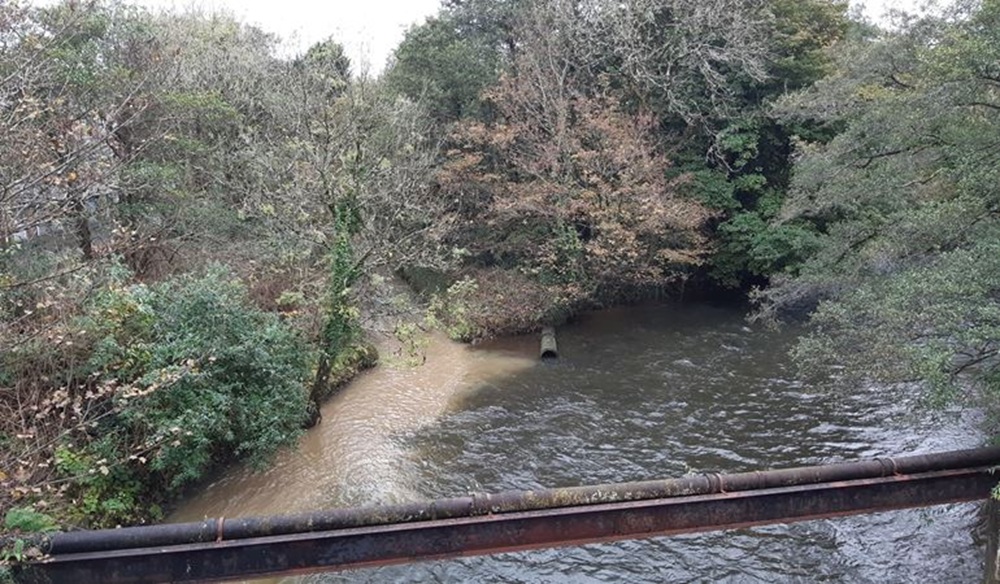
The latest available national data found that DCWW released sewage into rivers, lakes and the sea around Wales for more than 916,000 hours in 2023. The water company recorded 105,943 spills over the year, 93% of which were ranked as "significant".
Wayne Preece, group CEO of Hydro Industries, a Carmarthenshire-based company that helps developing countries secure safe water supplies, said he was appalled to learn from Mr Phillips that NRW was earning millions of pounds from DCWW for the right to discharge water polluted with sewage.
“They call them environmental permits, but in fact the payments to NRW feel like a perverse licence to pollute,” he said.
“There is a clear conflict of interest so far as NRW is concerned. It is supposed to be Wales’ environmental regulator, yet it is selling licences to DCWW so that it can discharge sewage into Wales’ waterways.
“It’s a ridiculous situation and it can’t be allowed to carry on. As things stand, it seems that more permits will be issued, inevitably leading to more pollution.
“It doesn’t have to be this way. There needs to be a concerted effort to end sewage discharges, but that’s unlikely to happen when the water regulator is getting paid millions to enable further pollution.”
Conditions
Nadia De Longhi, Head of Regulation and Permitting for Natural Resources Wales, said: “NRW issues a range of permits to a variety of industries, including water companies, and we cost recover for our service of determining the permit and the compliance activities we need to undertake.
“The environmental permits we issue set conditions for discharges to reduce harm to our rivers, lakes and coastal waters.
“These are regulated robustly by our teams to ensure that permit conditions are complied with and the impact of water company operations on the environment is minimised.
“Fully cost recovering these activities from operators rather than the public purse aligns with the ‘Polluter Pays Principle’ and means we are better able to direct our resources at regulating and protecting the environment of Wales.”
NRW points out that the principle of full cost recovery is in line with Treasury rules and obligations under the Natural Resources Body for Wales (Establishment) Order 2012.
Support our Nation today
For the price of a cup of coffee a month you can help us create an independent, not-for-profit, national news service for the people of Wales, by the people of Wales.
Get more trusted Welsh news
Choose Nation.Cymru as a preferred source in Google News to see more of our journalism.
