


News
National Trust urged to protect iconic estate from windfarm developers
Martin Shipton
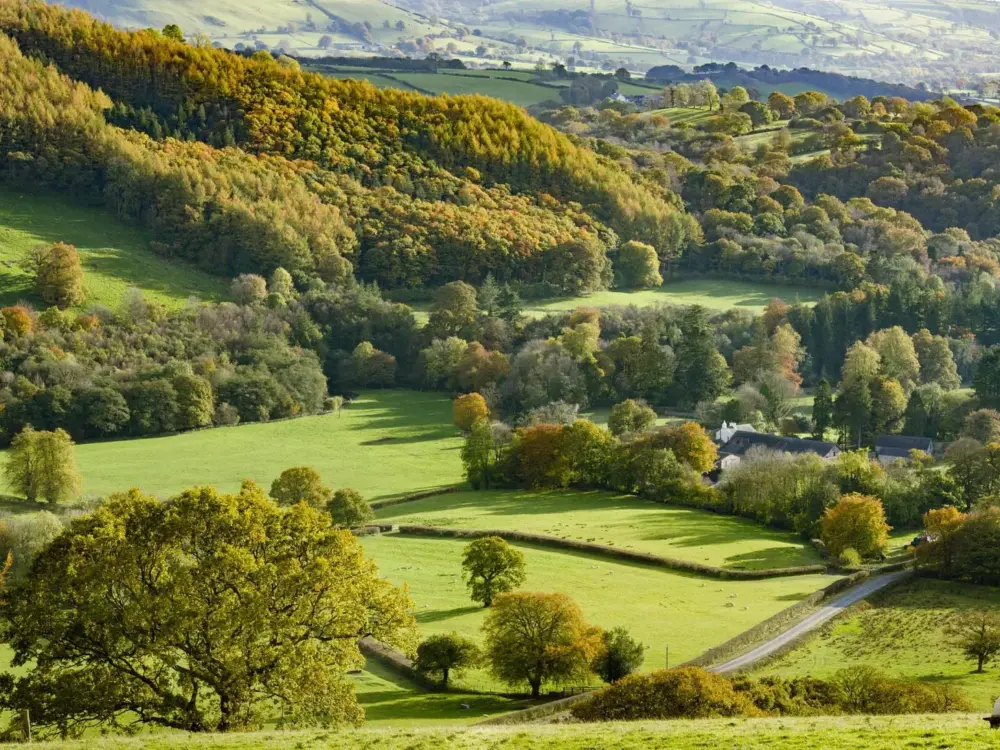
Campaigners are urging the National Trust to refuse to allow windfarm developers access to the iconic Dolaucothi Estate in Carmarthenshire, which contains the only Roman gold-mining site in Britain.
They fear that the proposed Bryn Cadwgan Energy Park would wreck a precious landscape in the Cambrian Mountains.
Galileo Empower want to develop the energy park at a location on the Carmarthenshire / Ceredigion border, around 10km to the east of Lampeter, 10km to the south of Tregaron and 16km to the north of Llandovery.
The proposal includes 19 wind turbines, 17 turbines with a maximum height to blade tip of 230m and 2 turbines with a maximum height of 200m, generating 137 Megawatts (MW) of energy; 12 MW of ground mounted solar photovoltaic (PV) panels; and 50 MW of battery energy storage system.
[mid-content-banner]
'Substantial benefits'
The company states: “As well as making a significant contribution to decarbonisation of our electricity system, we are committed to delivering substantial benefits to local communities via community wealth funds, local employment and business opportunities, a community share in the Energy Park and the opportunity for reduced energy bills for those living closest to the project.”
But in a blog post, Annie Zakiewicz, who chairs the Ceredigion branch of the Campaign for the Protection of Rural Wales, states: “When we think of the Bryn Cadwgan Energy Park, we are led to picture turbines, pylons, and access roads. However, hidden within the developer’s own Environmental Statement is something more concerning: the scheme would cut through one of Wales’s most significant historic landscapes — Dolaucothi, the only known Roman gold-mining site in Britain.
“Dolaucothi is not just another valley. It is a nationally recognised Registered Historic Landscape of Outstanding Interest because it preserves the remains of Roman mining — including aqueducts, leats, and the Pumsaint Roman Fort — within a working estate and parkland. It is also home to a Grade II registered historic park and garden, listed farm buildings, and archaeological features that span millennia.
“Cadw guidance is clear: ‘the setting of a historic asset is often integral to its significance’. A fort encircled by turbines or an aqueduct scarred by construction no longer tells its story in the same way. These places are fragile not because they are weak, but because their meaning is connected to the landscapes around them.
“The developer’s own documents1 confirm the risks. The proposed access route passes directly through the Pumsaint Roman Fort Scheduled Monument and its associated vicus (settlement). This results in a Moderate (significant) effect — one so serious that it would require separate Scheduled Monument Consent.
“The Dolaucothi Registered Historic Landscape would also experience a moderate (significant) impact, while the Grade II-listed Dolaucothi Lodge would be affected.
“Even after mitigation, the Environmental Statement records many heritage assets where significant setting effects remain, with some labelled as impossible to mitigate.
“In short: the harm is acknowledged and baked into the plan. However, there is the potential for cumulative harm here because this is the first of four ‘Energy Parks’ planned in the immediate area - and more beyond.
“Welsh planning rules do not take this lightly. Planning Policy Wales states that damage to scheduled monuments or their settings is only allowed in ‘exceptional circumstances’. The Well-being of Future Generations Act also requires public bodies to protect cultural well-being for future generations.
“The question, then, is not whether harm will occur — the developer admits it will. The question is whether it can possibly be justified in light of national policies designed to protect the historic environment.
“A complex historic estate and village landscape, centred on Dolaucothi and Pumpsaint, where 18th–19th century parkland overlays nationally significant archaeological2 and architectural features.
“This is not just about underground archaeology. It is about living connections to the land. Visitors still follow the Roman aqueducts across the hillsides. Locals pass the fort beside the A482 every day. These are tangible links to history that make the area special.
“Once turbines, pylons, and access tracks industrialise this valley, those links will be broken. And once broken, they cannot be restored.
“We cannot replace the only Roman gold mine in Britain. We cannot rebuild a fort or re-carve aqueducts into the hillside. What we can do is insist that decision-makers follow their own policies, and that nationally important heritage is treated with the respect it deserves.
“Bryn Cadwgan is not just about energy. It is about whether we value our history and landscape enough to defend them.”
[lower-mid-content-banner]
Access
Ms Zakiewicz and fellow campaigners are urging the National Trust not to agree access to the Dolaucothi Estate, pointing out that the Trust states on its website: “We protect and care for places so people and nature can thrive. Many millions share the belief that nature, beauty and history are for everyone. So we look after the nation’s coastline, historic sites, countryside and green spaces, ensuring everyone benefits.
"From wild and precious places to the world outside your window, the National Trust offers access, enjoyment and a chance for everyone to help out. Nature and the historic environment are under threat. They’re essential to everyone, they enrich people’s lives and are part of the fabric of society, and they urgently need more care."
A spokesperson for National Trust Cymru said: “We are aware that an access route to the proposed Bryn Cadwgan Energy Park has been identified via land we care for at Pumsaint. To date we have only given permission for survey work along the proposed route. We have not agreed to any element of the scheme in principle.
“We take a case-by-case approach to all proposed renewable schemes that directly impact the land we care for, to ensure they are being designed and located appropriately, using the right technology, on the right scale in the right location. We will continue to review the proposals and engage in the consultation process to further understand the details and impacts of the scheme.”
Support our Nation today
For the price of a cup of coffee a month you can help us create an independent, not-for-profit, national news service for the people of Wales, by the people of Wales.
Get more trusted Welsh news
Choose Nation.Cymru as a preferred source in Google News to see more of our journalism.
