


News
More English language place names targeted by protesters
Stephen Price
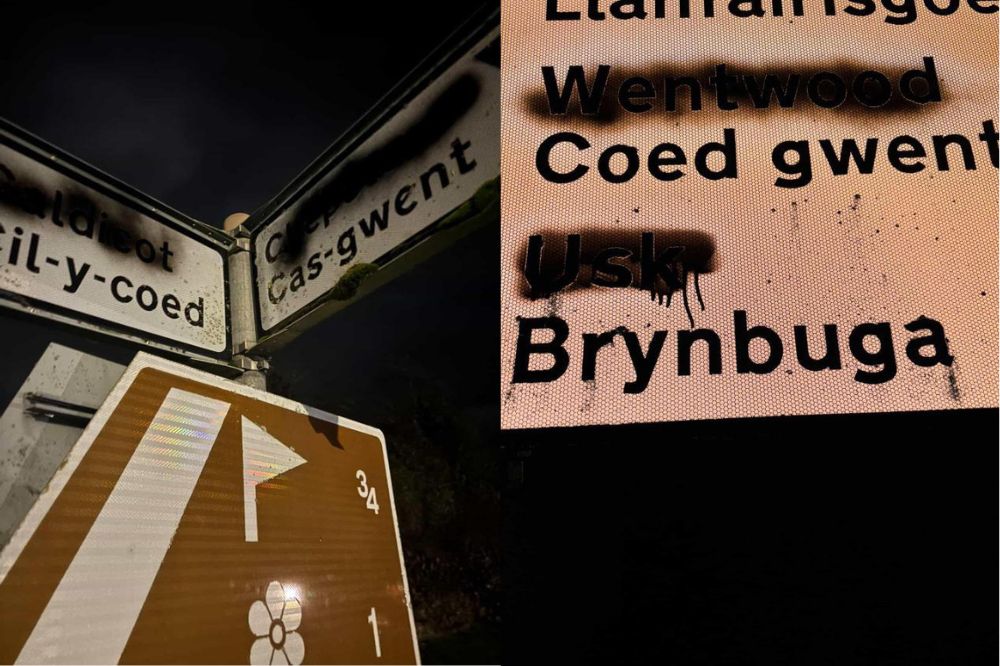
Protesters have targeted a further series of English language place names on bilingual road signs overnight - this time targeting locations in Monmouthshire.
The incidents occurred mostly overnight on signs for Brynbuga (Usk), Coed gwent (Wentwood), Cil y Coed (Caldicot) and Cas Gwent (Chepstow).
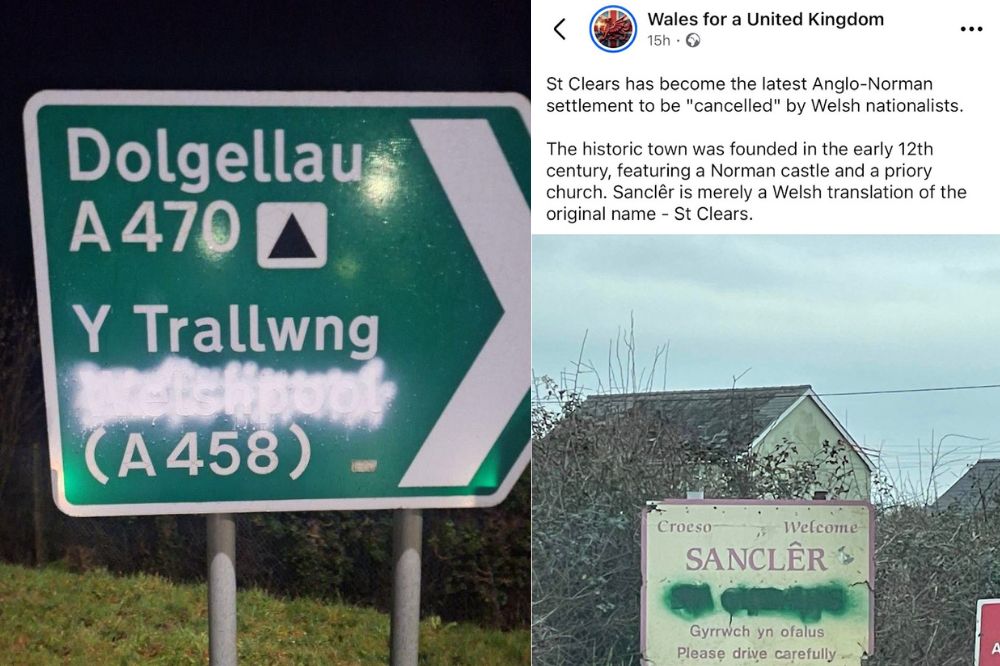
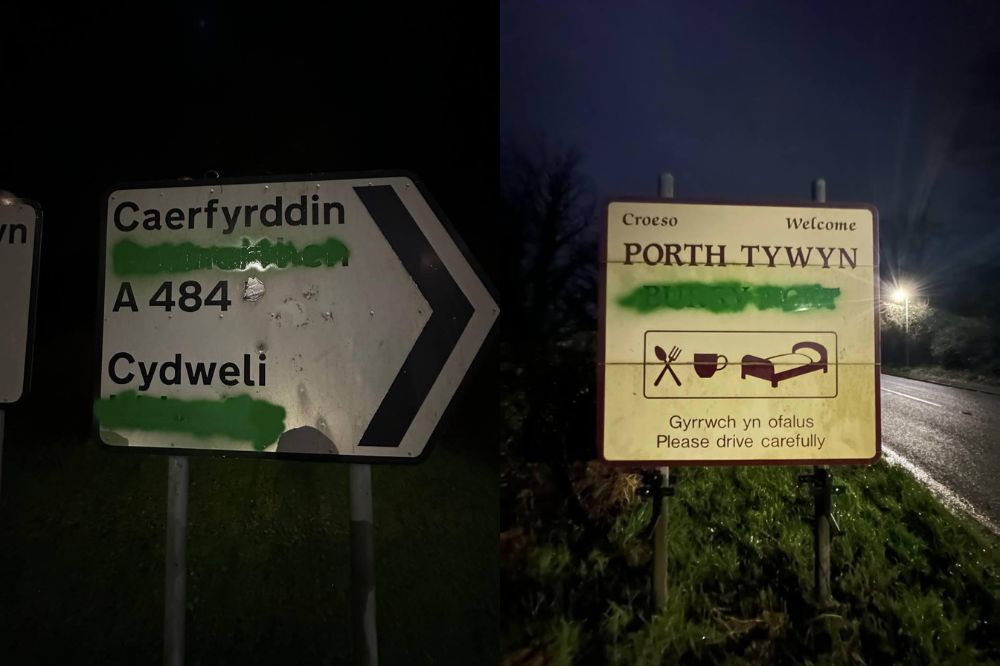
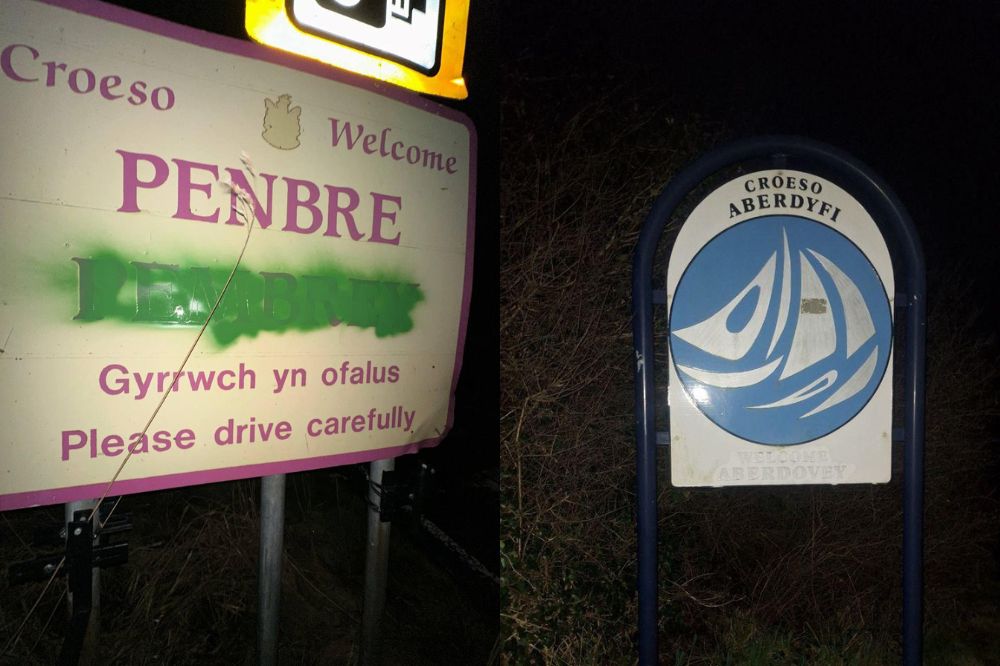
Earlier this week, signs for Y Trallwng (Welshpool), Porth Tywyn (Burry Port), Aberteifi (Cardigan), Caerfyrddin (Carmarthen), Cydweli (Kidwelly), Penbre (Pembrey) and Aberdyfi (Aberdovey) were targeted along with many others in west and north Wales.
Whilst the group or groups responsible for the graffiti aren't yet know, it is thought to have been a co-ordinated effort having all taken place since the beginning of February, with only English names targeted.
In a post showing one of the first signs to be targeted in Facebook group 'Wales for a United Kingdom', there has been wide speculation over the group or individuals behind the graffiti, with one commenter writing: "Going back to the times when nationalists burned English homes' Might be called a different name but the sentiment is the same."
Another wrote: "We will no doubt have more of this if Plaid get in."
Members of the same group, however, previously lay blame on Welsh nationalists for Welsh language signage being targeted with graffiti in Dinbych y Pysgod (Tenby), labelling the act a 'false flag'.
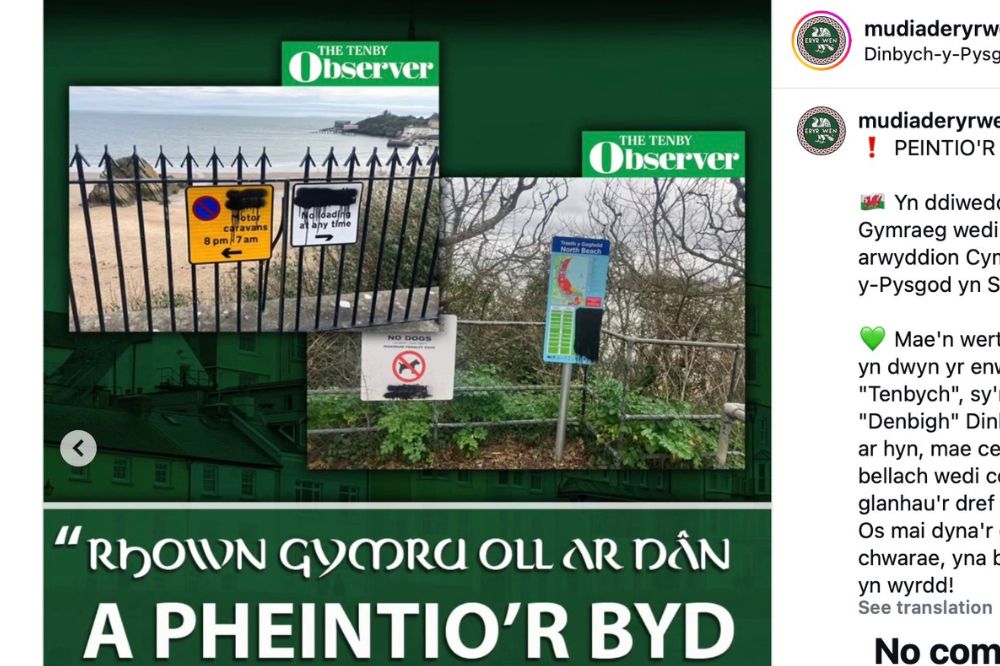
Back in January, the Welsh language was targeted on a number of bilingual information signs across the popular tourist destination, with language campaigners blaming 'anti-Welsh British nationalists'.
Graffiti appeared across Tenby's most popular tourist spots, including the town's popular North Beach, with black spray paint targeting the Welsh writing on signs such as those giving vital parking information as well as information for visitors in motorhomes.
Other signage targeted includes information for dog owners on beach restrictions, and in each case the English language information has been left alone.
Many of the English translations of the original Welsh (or French in the case of Sancler (St Clears), have been daubed in green paint, which has given rise to the belief that the perpetrators are Welsh language activists, or conversely, anti-Welsh language protesters furthering the 'false flag' theory.
Famously, in the fight for equal rights for Welsh language speakers back in the 1960s and 70s, English-only signs were targeted across the nation.
One very popular ‘battle hymn’ from this period, by Dafydd Iwan is titled ‘Peintio’r Byd yn Wyrdd’ (‘Painting the World Green’) — a Celtic green rather than an imperial-British or a Communist red — written at the height of the road-signs campaign, when the wording of English-only signs was being obliterated with green paint by activists.
Despite no one coming forward to accept responsibility for the graffiti, earlier this year, in light of vandalism targeting Welsh signage across Tenby in late January, Mudiad Eryr Wen had previously said they are "compelled to respond" - but many are questioning if the latest attacks are a 'false flag' campaign by British nationalists, aimed at stirring division prior to the upcoming Senedd elections.
Mudiad Eryr Wen, who shared photos of the signage from The Tenby Observer on Instagram, describe themselves as a brand new and energetic approach to defending our nation and campaigning for our eventual independence.
They say they are “a movement and community created by the youth, for the youth”.
A spokesperson for the group shared: "The vandalism in question isn't even targeting the town's original Welsh name, as happened in Aberteifi back in 2024.
"Rather, this vandalism is a direct attack on the Welsh language itself, with a plethora of bilingual informational signs being deliberately targeted. It is the puerile act of anti-Welsh British nationalists that are spurred on by the likes of Reform and Rupert Lowe.
"The town is already often referred to by the anglicised name of "Tenby", which is similar in origin to "Denbigh" in the north.
"Evidently, that doesn't suffice for some, who'd rather that the Welsh language was wiped out in its entirety.
"Rest assured, such attacks against the language vindicate our actions as a movement and demonstrate why we resort to our own direct action."
A spokesperson for Pembrokeshire County Council said: “Pembrokeshire County Council is aware of the vandalism of a number of signs around Tenby.
“The Council is currently arranging for the signs to be cleaned or replaced where necessary.
“Deliberate vandalism of this kind diverts time and resources away from important public services.”
The Mayor of Tenby, Councillor Dai Morgan, said: “Tenby Town Council strongly condemns graffiti and vandalism anywhere in our town.
“Such behaviour is unacceptable. It damages property, spoils public spaces, and costs the community time and money to put right.
“It shows a lack of respect for Tenby and for the people who live, work, and visit here.
“The vandalism will be reported, and we encourage anyone with information to do the same.”
Meanwhile, former Leader of the Welsh Conservative Senedd Group Andrew R T Davies, unaware of the 'false flag' narrative being shared online repeatedly while no one has claimed responsibility for the acts, wrote on X: "Welsh separatist activists are targeting English language road signs across Wales.
"In recent days, many English language signs have been defaced deliberately."
"It’s happened in Pembrokeshire, Powys and Monmouthshire.
"St Clears, one of the targeted towns, is an Anglo-Norman settlement founded in the 12th Century.
"Its respective Welsh language translation is “Sancler”. This is taken from the original English language name.
Welsh separatist activists are targeting English language road signs across Wales.
In recent days, many English language signs have been defaced deliberately.
It’s happened in Pembrokeshire, Powys and Monmouthshire.
St Clears, one of the targeted towns, is an Anglo-Norman… pic.twitter.com/L8N7UujAD8
— Andrew RT Davies (@AndrewRTDavies) February 6, 2026
He added: "While the English language place name was covered in spray paint, the Welsh translation was not targeted.
"These attacks are a disgrace.
"The English language is central to Welsh culture.
"Attempts to erase it by separatist activists travelling hundreds of miles into majority English speaking areas must be condemned.
"Over 80% of people in Wales don’t speak Welsh. They must be respected.
"These vandals do not get to decide what it means to be Welsh. Nor do they have the right to impose their own vision of Welshness on others.
"They must face the consequences of their actions."
Support our Nation today
For the price of a cup of coffee a month you can help us create an independent, not-for-profit, national news service for the people of Wales, by the people of Wales.
Get more trusted Welsh news
Choose Nation.Cymru as a preferred source in Google News to see more of our journalism.
