


News
Landowners warn of huge tax on profits due to farm inheritance changes
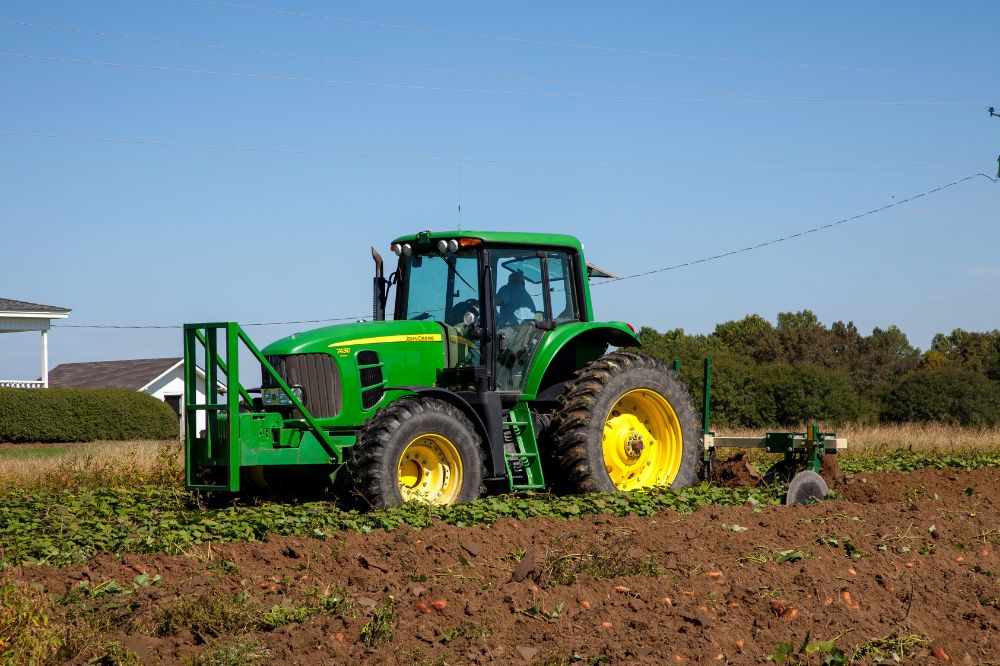
Small family farms could pay up to 159% of their profits in inheritance tax following changes at the Budget, according to analysis by a landowners’ group.
The Country Land and Business Association (CLA) has contested claims by ministers that a majority of farms will not feel the impact of the inheritance tax changes laid out by Rachel Reeves.
Inheritance tax relief allows farmers to pass on their land and property tax-free to their families, either within their lifetimes or in their will.
But at the Budget, the Chancellor announced the 100% relief for family farms would be limited to only the first £1 million of combined agricultural and business property.
For anything above that, landowners will pay a 20% tax rate, rather than the standard 40% rate of inheritance tax (IHT) applied to other land and property.
[mid-content-banner]
Uproar
The move has led to uproar among farmers and unions, who claim it will have a devastating impact on the future of farm businesses, forcing many to sell land and reduce their business viability.
Ministers have insisted that only around a quarter of farmers – the largest landowners – will be affected.
However, analysis by the CLA suggests a “typical” arable farm of 200 acres (80 hectares), making a profit of £27,300, would face an IHT liability of £435,000.
The farm would have to allocate 159% of its profit each year to cover the tax bill, if spread over 10 years, and may lead those inheriting the land to sell as much as 20% of their farmland, the CLA said.
Defra’s own figures suggest the average English farm size is 88 hectares, but this varies across different regions of the country, suggesting the CLA’s analysis may have more relevance to places such as the North East, where farms are on average larger.
The CLA’s calculations build upon warnings from the National Farmers Union, which has estimated that 75% of food production in the UK could be within the scope of Ms Reeves’ changes.
[lower-mid-content-banner]
Business property relief
The union said this is because the £1 million threshold for IHT relief for farms will be combined with business property relief once the changes take place.
At the moment, farmers can claim the two types of tax relief separately.
Gavin Lane, the CLA’s deputy president, said the Government either “isn’t being honest with the public about the true impact of these reforms, or they don’t understand the nature of rural businesses”.
He added: “I’d like to believe it is the latter and that they are prepared to listen to our input rather than continually trying to dismiss it.
“While they frame this as a tax on the wealthy, the reality is that ordinary family farms will be hit just as hard.
“Asking farms to use their income to pay a huge capital tax bill over 10 years, if indeed it is possible, will threaten the future of investment and the viability of the business.”
Asked about the impact of the reforms, a No 10 spokeswoman said: “It remains the case that the vast majority of farmers won’t be impacted by the change, and it remains the case that currently, 40% of agricultural property relief has been going to the 7% of the wealthiest claimants, which isn’t sustainable.”
The NFU is planning a “mass lobby” event in central London on November 19 to press MPs about the changes.
Downing Street acknowledged there was “a high degree of strength of feeling” about the matter, and urged farmers to consider Treasury analysis which said the vast majority of their number will not be impacted.
Support our Nation today
For the price of a cup of coffee a month you can help us create an independent, not-for-profit, national news service for the people of Wales, by the people of Wales.
Get more trusted Welsh news
Choose Nation.Cymru as a preferred source in Google News to see more of our journalism.
