


News
Jo Stevens is 'most anti-devolution Labour Welsh Secretary since George Thomas' says Lee Waters
Martin Shipton
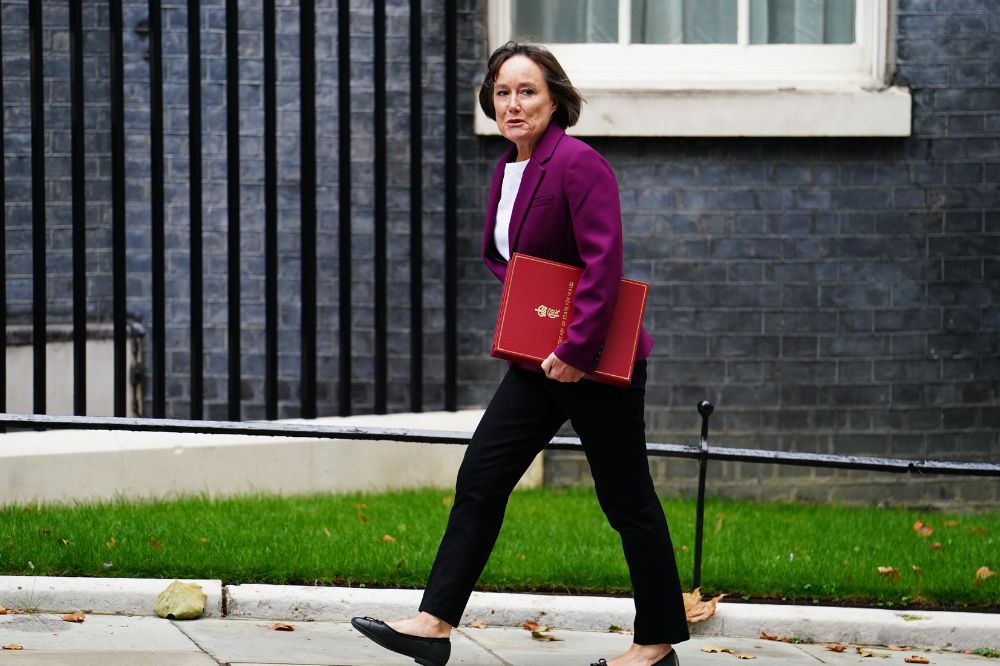
A former Welsh Labour Minister has accused Secretary of State for Wales Jo Stevens as being the most anti-devolution holder of the office since George Thomas.
Speaking on the Senedd Sources podcast, Llanelli MS Lee Waters said: “Jo Stevens is a classic example of a unionist politician. She’s not somebody who believes in devolution, particularly.
“She’s from very close to the English border in north east Wales. Her politics are the politics of many people in Labour history - Neil Konnock, Aneurin Bevan. It’s a proud tradition in Labour thinking where they essentially think there shouldn’t be differences.
“I don’t agree with that - and neither do most people in Wales, by the way. But that’s her sincere view and I understand that. It’s a reasonable view. It’s just not Labour policy. I find it quite peculiar really. I don’t want to make it personal. I don’t really know Jo, but I’ve always had cordial relationships with her.
“She is probably the most anti-devolution Labour Welsh Secretary we’ve had since George Thomas. I’m not really sure what the political strategy behind that is though. We are now going into a period where we will obviously come together as the election gets closer - that’s what parties do. The one thing that makes you have common cause with your own side most is being attacked by the opposition.”
There has been mounting anger within the ruling Labour Senedd group over the Labour UK government’s perceived hostility towards devolution.
In early December Mr Waters was one of 11 Labour Senedd backbenchers who signed a letter to Keir Starmer accusing his government of a “constitutional outrage” in bypassing the Welsh Government and announcing a scheme where councils will get money directly from Whitehall for town centre improvements.
The letter said there was "increasing concern" that the UK Government was failing to deliver further devolution. The Pride of Place town centre improvement programme had caused "considerable unhappiness" amongst Welsh Labour Members of the Senedd (MSs). It said it was a "UK Government programme operating in a wholly devolved area that is being designed and delivered from Whitehall".
Internal Market Act
The letter criticised the use of the Boris Johnson-era UK Internal Market Act to "impose" the new programme. The law was controversial in part because of the powers it gave the UK government to spend money in areas that are otherwise controlled by the Welsh government. Ministers in the Welsh government attempted to have the law overturned in the courts, the letter said, because "the Internal Market Act represented an unwarranted attack on devolution".
The letter added: "For our own government to then come in and use the very same powers to act in devolved areas is at best deeply insensitive, at worst a constitutional outrage," it said.
"If this was being done by a Tory government we would be calling for a judicial review. This must never happen again.
"Wales needs and deserves to be treated as an equal part of the UK and the UK Government has a responsibility to act to deliver this equality."
The letter said that while in opposition Labour had "raised expectations" of reform to the way Wales is funded, as well as the devolution of policing, rail infrastructure, policing and the Crown Estate.
It accused the UK Government of "not only not progressing these but... rolling back the existing devolution settlement."
George Thomas, then the MP for Cardiff West, was Secretary of State for Wales from 1968 to 1970. He had little time for the Welsh language and was an implacable opponent of those within the Labour Party who favoured devolution.
Royal sycophant
A notorious royal sycophant, his time as Secretary of State for Wales was dominated by the controversial Investiture of Prince (now King) Charles as the Prince of Wales in 1969.
Later Thomas became Speaker of the House of Commons during the period when Margaret Thatcher was Prime Minister. Critics accused him of showing favouritism towards Thatcher and her government.
When he retired from the Commons, he was made a hereditary peer and given the title Viscount Tonypandy.
He became a supporter of the Referendum Party (an anti-EU party founded by controversial businessman Sir James Goldsmith). He died in 1997, four days after the people of Wales voted narrowly in favour of setting up what is now the Senedd.
Support our Nation today
For the price of a cup of coffee a month you can help us create an independent, not-for-profit, national news service for the people of Wales, by the people of Wales.
Get more trusted Welsh news
Choose Nation.Cymru as a preferred source in Google News to see more of our journalism.
