


News
Industry insider casts doubt over plan to revamp bus services in Wales
Martin Shipton
Serious doubts have been raised about plans that will see a wholesale change in the way bus services are delivered in Wales.
Since the mid 1980s, private companies have been able to run buses where they want as long as they are registered and meet safety standards. Critics say this leaves services vulnerable to being axed if they do not make a profit.
In future, bus companies will bid for contracts instead of operating their own routes, following years of cuts and falling passenger numbers.
But there are warnings the new network will need substantially more money to function with costs estimated at more than £620m over 30 years.
[mid-content-banner]
Franchises
The Welsh Government wants to set up franchises overseen by Transport for Wales (TfW), which it owns.
But an industry expert who wishes to remain anonymous contacted Nation.Cymru and said: “As a long-standing professional in the public transport industry, I feel compelled to raise the alarm over Transport for Wales’ recent annual report — and, more significantly, what it reveals about the direction of bus policy in Wales. While public attention has often focussed on rail performance, the more urgent and under-reported issue is the fundamental risk now facing bus services as we move towards franchising.
“Buried within the report is a startling admission: Transport for Wales may not be capable of delivering the franchised bus network it has been tasked with designing and managing. This is not speculation — it is a risk explicitly flagged by the organisation itself. For an agency already under pressure for its mixed performance on rail, the idea of layering on the complex, resource-intensive process of franchising the entire Welsh bus network should raise serious concerns.
“More worrying still is the stark reality that bus patronage in Wales has not recovered in line with the rest of the UK. According to TfW’s own figures, bus usage remains over 20% below pre-COVID levels — a far slower rebound than seen in England or Scotland. That trend alone casts doubt on the ambitious revenue projections upon which the Welsh franchising model appears to be built.
“This is not merely a question of capability, but of affordability. Despite repeated calls for clarity, the full financial implications of bus franchising remain vague. The sector has been given little reassurance about how this system will be funded long term, particularly in the face of inflationary pressures and reduced commercial viability on many routes. And yet, TfW is being positioned as the central delivery body — one which has no significant track record of managing bus operations at this scale.
“It is not difficult to see how this could unravel. The report reads like a risk register written by an organisation bracing for failure, rather than one poised for transformation. Transfer of responsibilities from local authorities — many of whom already feel overlooked — further risks eroding local expertise. And meanwhile, bus operators are left in a state of prolonged uncertainty, unsure of whether to invest, retain staff, or plan for the future.
“We are at a critical juncture for public transport in Wales. Yet the signals coming from TfW — poor performance, unclear delivery plans, and growing internal doubt — suggest that the government’s franchising ambitions may be running well ahead of reality. Those charged with scrutinising this policy must ask: if the public body responsible for delivering it is already warning of failure, who will be accountable when the system falters?
“There is still time to pause, reflect, and course-correct. But doing so requires honesty — from the government, from TfW, and from those of us in the industry who have seen what happens when ambition outpaces capacity.”
[lower-mid-content-banner]
'Investing'
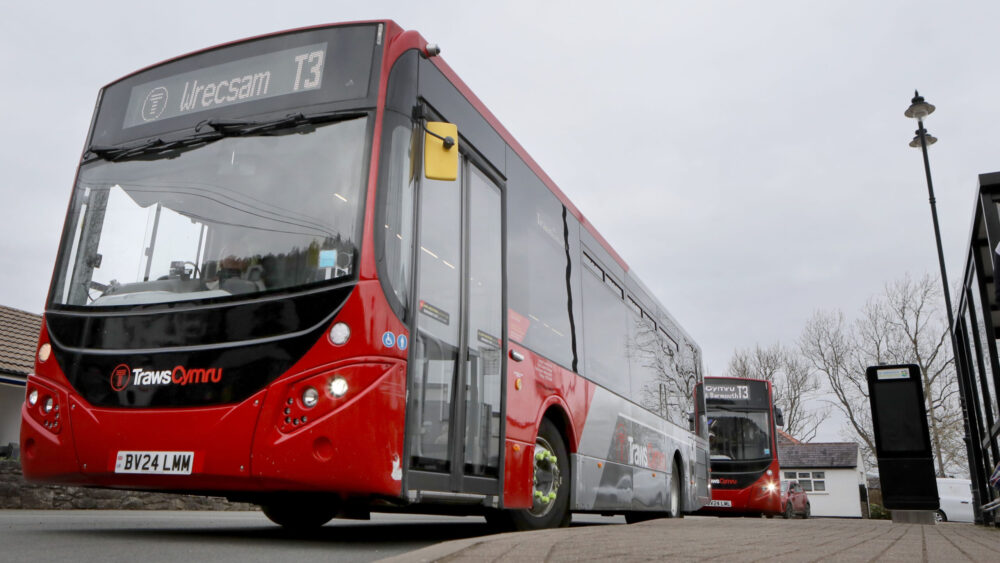
Lee Robinson, executive director for regional transport and integration at Transport for Wales, responded: "Transport for Wales has been continually investing and transforming the public transport network in Wales and the Borders for the past six years. We've already invested in our TrawsCymru bus network, with new buses and improvements to timetabling and this has resulted in a growth in passengers. The number of passenger journeys on the TrawsCymru contracts we manage grew 11.4% last year with 1.2 million journeys made.
“We've also opened new bus interchanges at Cardiff and Porth, with 3,500 bus services running a week from Cardiff.
“We now want to work with our partners to improve and transform the wider bus network in Wales aligned with Welsh Government ambitions. Through the bus franchising model, public funding will be better invested to create a more efficient and joined up network that integrates across all public transport. Our long-term goal is to create a fully integrated multi-modal public transport network in Wales with one network, one timetable and one ticket.
“We're committed to make bus travel more reliable and attract more people to use it, which will result in a more financially sustainable network, as has been delivered elsewhere in the UK.
“We have significant experience in managing contracts and partnering with operators who are responsible for managing bus operations and we're working closely with them, local authorities and the Welsh Government to deliver an improved bus network for the people of Wales. No one partner can deliver this change on their own, so working together is a fundamental key to success
“This is a significant shift for Wales and it is natural that a change of this magnitude should generate concerns. We are working closely with partners across the industry and always welcome the opportunity to talk to individuals, organisations or representative bodies about their specific issues.”
Support our Nation today
For the price of a cup of coffee a month you can help us create an independent, not-for-profit, national news service for the people of Wales, by the people of Wales.
Get more trusted Welsh news
Choose Nation.Cymru as a preferred source in Google News to see more of our journalism.
