


Sat, 8th August Cardiff 21°
Nation.Cymru wordmark
Advertisement

News

Higher interest rates will strengthen household spending, Bank policymaker says
By Emily Price
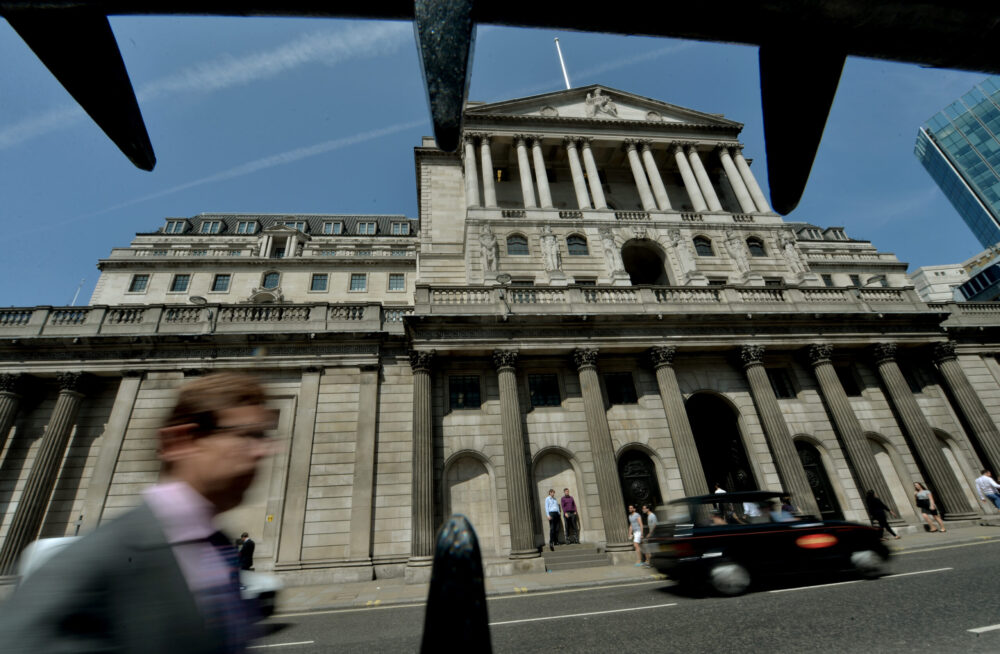
The Bank of England in London. Photo Anthony Devlin/PA Wire

Interest rates need to stay higher for longer to bring UK inflation down to its 2% target and therefore strengthen consumer spending, a Bank of England policymaker has said.

Catherine Mann said it may seem “counterintuitive” to keep borrowing costs higher in order to boost growth, but it is necessary in light of persistent inflation.

Ms Mann, who is an external member of the Bank’s Monetary Policy Committee (MPC), was discussing concerns about weak consumption among UK households which was weighing on overall economic growth.

She said in a speech at a Resolution Foundation event: “If the consumption gap was my only concern, reducing the restrictiveness of monetary policy would be appropriate.

“However, in light of elevated inflation and expectations, maintaining restrictiveness for longer would be appropriate.”

[mid-content-banner]

Inflation

Restrictive monetary policy refers to interest rates being kept at higher levels.

UK rates were held at 4% at the Bank’s last meeting in September, with Governor Andrew Bailey saying the UK was “not out of the woods” on inflation.

The UK’s overall inflation rate is nearly twice the Bank of England’s target level, at 3.8% in August, according to the latest official figures.

Food and drink price rises have accelerated for five months in a row.

UK prices are now 30% higher than they were before the 2021-2022 inflation surge, Ms Mann pointed out.

“This means that UK households have experienced 12 years of inflation in a little over two years.”

“It is perhaps counterintuitive that in order to create an environment conducive to growth, monetary policy must remain restrictive for longer,” she said.

“But this is necessary to bring inflation sustainably back to our 2% target in the medium term.”

The economist said this would mean households can return to normal consumption and saving behaviour, and be able to spend money without paying attention to inflation.

This, in turn, would help strengthen consumer demand.

[lower-mid-content-banner]

For the price of a cup of coffee a month you can help us create an independent, not-for-profit, national news service for the people of Wales, by the people of Wales.

Get more trusted Welsh news

Choose Nation.Cymru as a preferred source in Google News to see more of our journalism.

Choose Nation.Cymru as a preferred source in Google News

2 comments

Harry

The Bank for England is just a central bank. Growth isn't really their concern. That's why they created house price inflation by keeping rates low for too long after 2008 knowing it would shrink disposable income and stall the economy. It's up to the Department for the Economy to come up with a transformational plan for growth. Unfortunately there is no such department.

Reply
Neil Anderson

The article does not explain how Higher interest rates will strengthen household spending – but perhaps Ms Mann could? ...in light of persistent inflation", despite overly high interest rates over many years, suggests an inaccurate diagnosis and an inevitably flawed policy response. As Einstein said insanity is doing the same thing over and over again and expecting different results. So why is the BoE still sticking with them? Apparently, "elevated inflation and expectations". Let's tackle that first. I challenge Catherine Mann to find an economics textbook anywhere that demonstrates that interest rates can control inflation. In the absence of that, perhaps recent history in the UK could show this - but it does not. Years of this policy has resulted in lost opportunities and mismanagement, to the enormous cost of households and small businesses. That means hardship for people. Voters too! Anyone listening in Threadneedle Street? Or Downing Street? The BoE has failed to understand inflation and its (various) causes. Even though the first bout of the current inflationary period can be laid at the feet of imported oil and gas, the BoE raised interest rates. How was that ever going to have an impact on external sources? There is a recognised way of controlling inflation, which the nominally independent bank and the government want to ignore for wholly political reasons, not economic. That is by adjusting the money supply using taxation. Yes, the holy cow of fiscal management... If these venerable organs of the state wanted to be helpful (what?), they would focus more on the "weak consumption which...(is)...weighing on overall economic growth". Not to mention our hunger for food - and fairness. Households need more income, workers need to be paid more and benefits and pensions need to rise. While some inflation would be inevitable, taxation could be used to maintain that at about 2%. The annual deficit, accumulated in the 'national debt' (don't be frightened, children), is usually sufficient to maintain liquidity in the economy. We need to completely reform the tax system to ensure both horizontal and vertical equity - for example, by taxing investment returns at the same rate as income, and ensuring taxation is progressive, without loopholes for the ultra-rich. And a fully empowered, approachable, contactable and helpful tax authority, with offices in every town. Successive governments have lost our confidence. Next to go should be the BoE and the think-tanks that purport to advise them and us. But mostly the absurd and prejudicial neoliberalist 'trickledown' model. It is obvious what an independent Cymru must not do!

Reply

Leave a reply

Replying to Harry Cancel

The Bank for England is just a central bank. Growth isn't really their concern. That's why they created house price inflation by keeping rates low for too long after 2008 knowing it would shrink disposable income and stall the economy. It's...

Comments are reviewed before they appear.