


News
Gender ruling will not result in ‘toilet police’, senior minister says
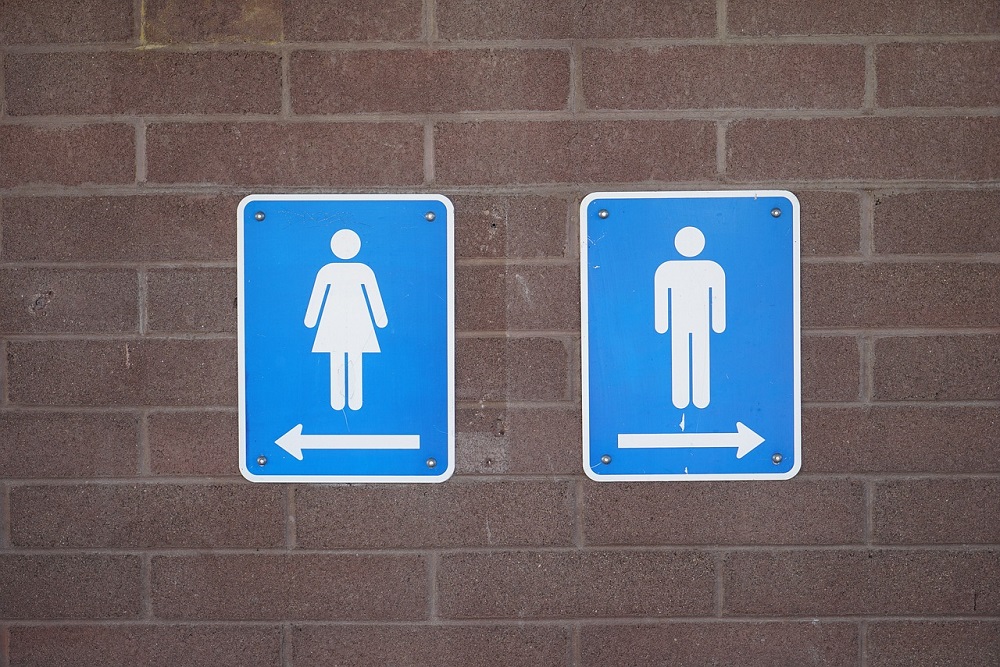
There are no plans for “toilet police” in the wake of the Supreme Court ruling on gender, a senior minister has suggested.
Pat McFadden did, however, acknowledge the Government will have to change its practices following the judgment.
Over the Easter period, the Supreme Court declared that the words “woman” and “sex” in the Equality Act refer to a biological woman and biological sex.
The ruling has been interpreted to mean that transgender women, who are biologically male but identify as women, can be excluded from women-only spaces like toilets and changing rooms.
[mid-content-banner]
Judgement
The Equality and Human Rights Commission (EHRC) has issued new guidance aimed at clearing up questions about what the judgment will mean in practice.
Transgender women “should not be permitted to use the women’s facilities” in workplaces or public-facing services like shops and hospitals, the EHRC said.
The same applies to transgender men, who are biologically female, using men’s toilets.
The watchdog also insisted that transgender people “should not be put in a position where there are no facilities for them to use”.
Speaking on the BBC’s Sunday with Laura Kuenssberg, Cabinet Office minister Mr McFadden said the Government now needed to “react to the court judgment and the guidance from the EHRC”.
The “logical consequence of the judgment” and the new guidance is that people will have to use toilets, changing rooms and other facilities of their biological sex, he added.
[lower-mid-content-banner]
Consequences
Asked if the latest guidance meant transgender people would be banned from using the toilets of the gender they identify as, Mr McFadden said: “Look, in reality, when you say ban, am I going to be standing outside toilets? I’m probably not.
“There isn’t going to be toilet police. But that is the logical consequence of the court ruling and the EHRC guidance.”
Conservative leader Kemi Badenoch has called for a “clear, medically supervised process” for transitioning, rather than people self-identifying as transgender.
Her comments come days after she clashed with Sir Keir Starmer on the issue and accused Labour ministers of lying about support for female-only spaces following Sir Keir’s U-turn on his views about transgender women.
Speaking to Sky News’ Sunday Morning with Trevor Phillips, the Tory leader said she “took a lot of abuse from Labour MPs calling me a homophobe, a transphobe, for saying what the Supreme Court has just ruled” and that she has “no sympathy” for Labour.
“Politics is about making difficult decisions. They need to grow up and be honest about what it is they believe in,” she added.
Campaign
Former Scottish first minister Nicola Sturgeon also gave her first comments on the Supreme Court ruling since it was issued on April 16.
She told the Mail on Sunday “I think my views are well known” when the newspaper approached her on Saturday.
The Scottish Government lost the high-profile case at the UK Supreme Court to campaign group For Women Scotland.
The latest guidance from the EHRC also says schools must provide single-sex toilets to boys and girls over the age of eight, and single-sex changing facilities to boys and girls over the age of 11.
“Suitable alternative provisions may be required” for transgender pupils, the watchdog said.
The watchdog also said sports clubs and other associations of 25 or more people are allowed to be exclusively for biological men or women.
Such clubs “can be limited to people who each have two protected characteristics”, the guidance said.
This would mean, for example, that a lesbian women’s sports club should not admit transgender women.
The watchdog is working on a more detailed code of practice following the Supreme Court ruling, which it said it aims to provide to the Government for ministerial approval by June.
Support our Nation today
For the price of a cup of coffee a month you can help us create an independent, not-for-profit, national news service for the people of Wales, by the people of Wales.
Get more trusted Welsh news
Choose Nation.Cymru as a preferred source in Google News to see more of our journalism.
