


News
Four micro nuclear plants planned for Wales
Martin Shipton
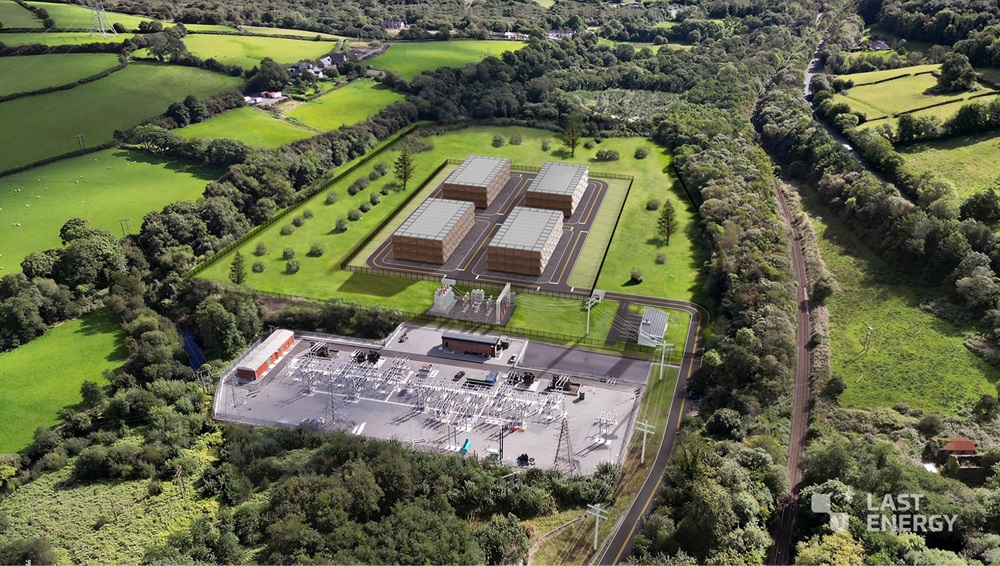
A rapidly expanding US company that specialises in building micro modular nuclear power plants has announced plans to develop four such units in Bridgend County Borough.
Last Energy’s proposal - which will inevitably be controversial - will see the 20MW plants built on a vacant site that housed the coal-fired Llynfi Power Station from 1950 until 1977, when it was decommissioned.
The four proposed units would serve local industrial customers.
Last Energy has already obtained site control, begun to conduct site surveys, and initiated the planning process. The firm says its plants “would aim to deliver power to mid-size manufacturers throughout south Wales, providing 24/7 baseload power and putting the local economy on a path toward industrial decarbonisation”.
Last Energy aims to deliver the first plant by 2027, depending on the licensing and planning processes.
[mid-content-banner]
Grid restraints
According to the company, the plants’ annual output would be equivalent to the amount of energy consumed by around 244,000 UK homes per year, alleviating grid restraints and contributing to the Welsh Government’s 2030 net zero targets as well as national climate goals.
Last Energy says it will not require public funding for the development, and estimates an overall capital investment of £300m in equipment, services, and other development-related activities. The company plans to source at least 10% of its needs from south Wales suppliers, translating to a £30m local economic investment - not including business rates collected by Bridgend council - and at least 100 local full-time jobs.
[lower-mid-content-banner]
Public engagement
Following briefings with Bridgend council and the Welsh Government, Last Energy will now begin public engagement for the project. The company has launched a website where the public can learn more about its plans, and will begin hosting a series of local community events later this year.
In addition to engaging the local community, Last Energy says it will begin to identify potential local suppliers for the project. The company will host events for prospective suppliers on November 5 in Cardiff and November 6 in Swansea to discuss its procurement process.
In addition to manufacturers for plant fabrication, Last Energy will look for companies to help with on-site plant installation, maintenance, and security.
Michael Jenner, CEO of Last Energy UK, said: “Last Energy’s Llynfi project will not only transform a vacant coal site into a hub for clean energy production, it will also create economic opportunity for companies throughout south Wales. The benefits of nuclear power speak for themselves, so our focus must be on delivering those benefits on time and on budget.
"Last Energy’s emphasis on mass-manufacturability allows us to deliver significantly smaller plants in under 24 months with purely private financing. We look forward to engaging with the public, meeting local suppliers, and being an active partner in south Wales’ path towards energy security and industrial decarbonisation.”
Tom Greatrex, CEO of the Nuclear Industry Association, said: “New nuclear is an integral part of a future power system - providing secure, reliable and always available electricity to consumers. Increasingly, industries are looking to nuclear to provide that reliable and price predictable heat and power as they seek to decarbonise. Potential projects such as that proposed by Last Energy, with an innovative business model of direct to industry power and co-location, will be required if deep decarbonisation is to become a reality rather than a slogan.”
Opportunities
A spokesperson for Great British Nuclear said: “Last Energy’s announcement shows the wide range of opportunities for nuclear energy to power the UK’s growth.
“New nuclear is a vital part of Britain’s energy future. As well as large-scale power stations like Hinkley Point C and Sizewell C, and the Small Modular Reactors Great British Nuclear is in the process of selecting, these kinds of even smaller reactors can supply heat and power to industries of the future. They are set to drive development and innovation, and significantly reduce industrial carbon emissions, which will be of huge benefit to the UK’s economy and will play a significant part in our clean air future.”
A company spokesperson said: “Last Energy’s mission is to drive a rapid global transition toward affordable clean energy by productising nuclear development. A Last Energy plant, referred to as the PWR-20, consists of a few dozen modules that are assembled like a LEGO kit. It requires minimal land. The PWR-20 is designed to be fabricated, transported, and assembled within 24 months, and is sized to serve private industrial customers.
“As a full-service developer, Last Energy owns and operates its plug-and-play power plant on the customer’s site, bypassing the decade-long development timelines of electric transmission grid upgrade requirements. The company intentionally relies on existing supply chains and uses the same reactor technology found in over 300 plants worldwide.
Commercial agreements
Last Energy currently has commercial agreements for 80 units throughout Europe, most of which will be developed throughout the UK.
“Last Energy’s flagship product, the PWR-20 micro-nuclear power plant, is designed to address the inefficiencies that have traditionally made nuclear development prohibitively complex and expensive. By owning all aspects of plant delivery and dramatically reducing the time and cost of construction, Last Energy is transforming the nuclear power industry to unlock clean, reliable baseload energy for industrial customers throughout Europe.”
Greenpeace opposes all forms of nuclear energy. A statement on the organisation’s website says: “Nuclear energy is also dangerous. We’re still living with the legacy of accidents at Chernobyl and Fukushima which released huge amounts of radioactive material. Even without such accidents, nuclear power creates radioactive waste at every stage of production, including uranium mining and reprocessing of spent reactor fuel. Some of this waste will remain dangerously radioactive for hundreds of thousands of years, yet nobody knows of a way to safely store it so problems aren’t created for future generations.
“The UK Government’s hopes for a new generation of nuclear power stations is crashing against the economic realities. As the cost of truly clean energy plummets and the price of nuclear energy spirals out of control, nuclear power companies are shelving their plans to build plants in the UK.
“Instead of backing nuclear power, our government needs to invest in renewable energy including wind and solar power. A thriving renewable energy industry will create jobs, provide cheaper electricity and help cut emissions much faster than nuclear power.”
Support our Nation today
For the price of a cup of coffee a month you can help us create an independent, not-for-profit, national news service for the people of Wales, by the people of Wales.
Get more trusted Welsh news
Choose Nation.Cymru as a preferred source in Google News to see more of our journalism.
