


News
First details of Swansea ferry plan expected early next year
Richard Youle, local democracy reporter
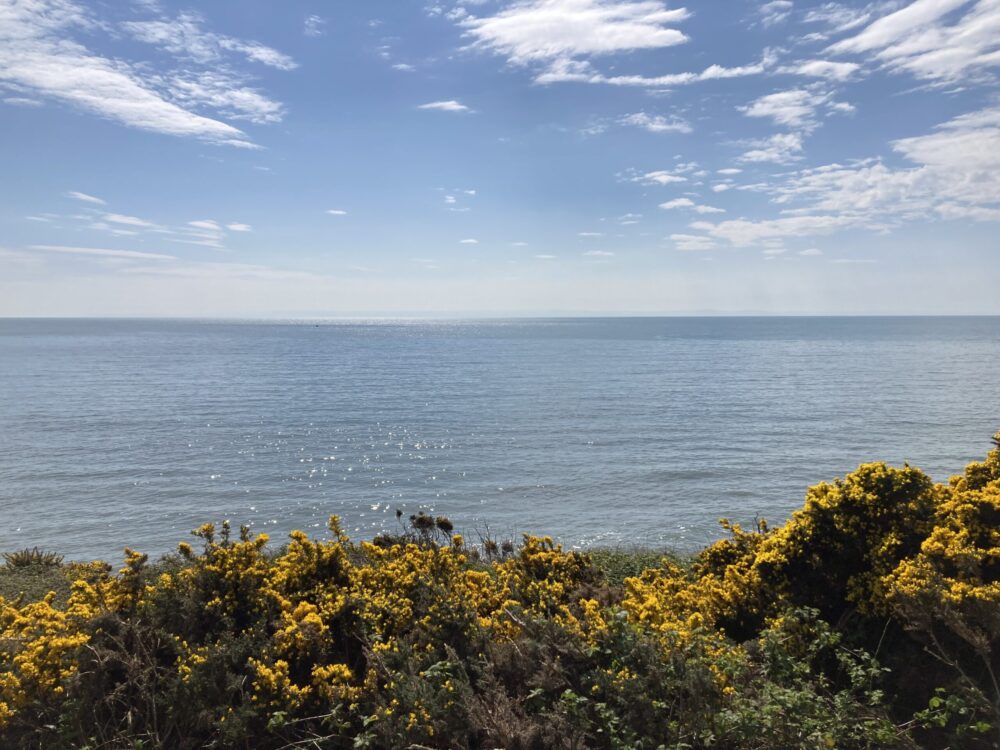
A shortlist of destinations for a potential ferry service linking Swansea and the south-west of England, along with a design of the vessel itself, could be published in a report in January next year.
That is the aim of the company, Ocean Prime Industries Ltd, which is carrying out a 12-month feasibility study into the concept. Although it’s very early days, the company’s chief executive and founder Dave Sampson envisaged a vessel around 55m long which would take passengers, cars and some cargo at speeds of up to 40 knots.
The zero-emission ferry would have an electric powertrain, run on clean power and have a relatively shallow draught.
Mr Sampson said Swansea was at this stage the only firm destination, should the initiative progress further. In terms of other locations either side of the Bristol Channel and Celtic Sea, he said: “We are not ruling anything in or out.”
[mid-content-banner]
Year-round
Mr Sampson said the service would need to operate year-round and that destinations it served would require a ramp for vehicles and ideally a shore power supply. “We wouldn’t be building a big terminal,” he said.
A Bristol Channel ferry service isn’t a new idea and a fast service linking Swansea and Ilfracombe in north Devon, called Severnlink, came close to launching in 2010 but was hit by funding difficulties.
Three years ago Rob Stewart, the leader of Swansea Council, signalled backing for a hydrogen-powered ferry, and the authority has given Ocean Prime Industries some UK Government Shared Prosperity Fund money towards the feasibility study.
Passengers would save time normally spent in a car on the M4 and M5 and tourism, say supporters of the idea, would be boosted.
Mr Sampson said around 4,000 people have already responded to a consultation to gauge public appetite for a ferry since it was launched in early March, and that approximately 98% of respondents backed it. The remainder, he said, were “maybes” or “noes”.
[lower-mid-content-banner]
Cars
He said supporters wanted to have the option of taking their car, and also good public transport connections. The “maybes”, he said, generally liked the concept but wanted more information while the “noes” said it’s been tried before and wouldn’t work. “I quite like the ‘noes’, they tell us more than the ‘yesses’,” he said.
But it’s not just the public who have responded. “It’s been really fascinating – some large shipping companies have contacted us, logistics companies have contacted us, fuel companies have been in touch , and we’ve had marine engineers expressing an interest in working with us,” said Mr Sampson. “We’ve been massively heartened by the whole thing.”
Further engagement will take place in the coming months, plus traffic data analysis, more research into UK and international ferry services, and financial viability work.
The plan is for a final report to be submitted to Swansea Council next January showing whether a ferry service could be economically viable and beneficial for the region. It could end up being the case, said Mr Sampson, that there wasn’t sufficient demand and that it couldn’t be viable.
Stormy
The Bristol Channel, which becomes the Celtic Sea further west, can be stormy. Mr Samspon said waves could reach up to 10m in the area between Swansea and North Devon for example but were typically more in the region of one-metre to 1.5m.
“There would be days when we wouldn’t be able to run a service,” he said. “The intention is to run it as much as possible. It’s very difficult commercially to run a service which just operates in the summer.” He added: “Part of the design of the ferry is to look at this, and make the crossing as smooth as possible in as many sea conditions as possible.”
The Bristol Channel has a very high tidal range – the higher the further east you go – which adds to the challenge in terms of accessing lower-water harbours.
Mr Sampson said he wouldn’t rule out destinations in Cornwall or Pembrokeshire – potentially even Rosslare in south-east Ireland if there was strong support, for example, for a service from Swansea. “This is all about customer demand,” he said.
Mr Sampson said the zero-emission aspect of the project was very important but also challenging. “It would be easier if we said we were going to do a hybrid diesel, or some other hybrid,” he said.
Ocean Prime Industries’ website said low-emission passenger ferries services were increasingly realistic. A way of becoming zero emission would be using hydrogen as a power source as long as renewable energy was used to split water into hydrogen, and oxygen, in the first place.
The company said it was searching for technologies which created a more efficient ship, and that some may not have reached the market yet but would in the next year or two.
Asked if he envisaged a single ferry or more than one, Mr Samspon indicated one to start with. He also reckoned there could be scope for it transporting workers employed on proposed tidal lagoon and offshore wind projects.
Tidal lagoon
A Swansea Bay tidal lagoon is being looked at as part of a larger energy and infrastructure project, as is a tidal lagoon proposal between Minehead and Watchet the other side of the channel. One component of the Somerset lagoon would be a new ferry terminal at Minehead for a small roll-on roll-off ferry. Meanwhile, a number of ports are looking at how they might benefit from a new government-backed floating offshore wind industry planned in the Celtic Sea.
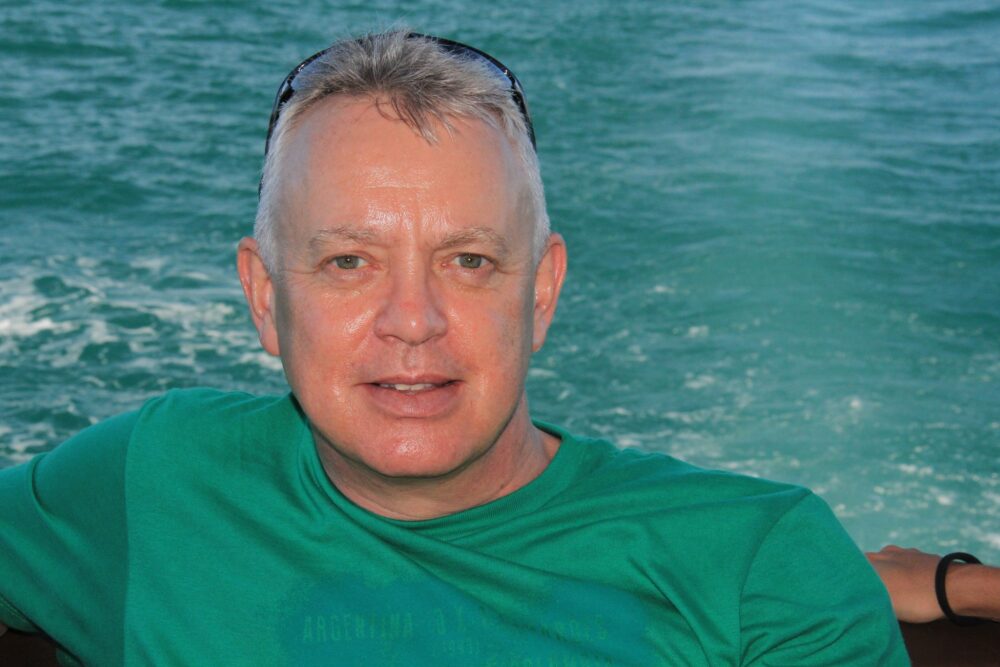
Mr Sampson studied marine biology at Swansea University, and did a master’s degree in aquaculture and fisheries management at the University of Stirling. His varied career has included a stint at a trout farm, being head of marketing at mobile phone firm 3, working in overseas development, and as commercial lead on a six-month project looking into zero-emission autonomous cargo submarines.
It was on this submarine project that he met naval architect Jami Buckley, who joined him at Ocean Prime Industries, and realised that transitioning away from oil for the shipping industry was “exceptionally complex”.
Mr Sampson, who has set up a GoFundMe webpage to help fund the feasibility study, said: “A lot of work is being done looking at electric and hydrogen-powered vessels. The challenge is that it’s taking a long time to be deployed.”
Cllr Stewart said he believed a ferry could bring economic benefits as well as cutting travel times. The feedback from residents and businesses thus far, he said, suggested “overwhelming support” to explore the idea further.
Mr Sampson said he wouldn’t want a ferry service from Swansea to south-west England to rely on a public subsidy. “We are looking at this as a commercial operation,” he said. “I know there are a lot of ferries that are subsidised, I don’t think they’re always doing a particularly good job because of it.”
Support our Nation today
For the price of a cup of coffee a month you can help us create an independent, not-for-profit, national news service for the people of Wales, by the people of Wales.
Get more trusted Welsh news
Choose Nation.Cymru as a preferred source in Google News to see more of our journalism.
