


News
English government department will decide on aid projects for Wales - just like under the Tories
Martin Shipton
A major new funding row has erupted after the Welsh Government accepted a decision of its UK counterpart to allow an English ministry to administer the latest post-Brexit aid round for Wales.
When the Conservatives were in power at Westminster, Welsh Labour Ministers were angry when they were excluded from the process of choosing projects and allocating funds to them. Instead, local authorities received money directly from the UK Government’s Department for Levelling Up, Housing and Communities, initially headed by Michael Gove.
Previously, when the UK was an EU member state, European aid money came directly to the Welsh European Funding Office (WEFO), a branch of the Welsh Government. WEFO decided which projects to take forward and how much money they would receive.
[mid-content-banner]
UK Shared Prosperity Fund
Last week, Chancellor Rachel Reeves announced the details of her Spending Review. In it she stated: “The government is providing targeted, long-term local growth funding to support regional growth across the UK, completing the transition from the UK Shared Prosperity Fund … In Scotland, Wales and Northern Ireland, the Offices for the Nations will work with the Ministry of Housing, Communities and Local Government (MHCLG) to implement the new local growth fund; and, investing in up to 350 deprived communities across the UK, to fund interventions including community cohesion, regeneration and improving the public realm.
“For 2026-27 to 2028-29, funding for Scotland, Wales and Northern Ireland across these schemes will be at the same overall level in cash terms as under the UK Shared Prosperity Fund in 2025-26.”
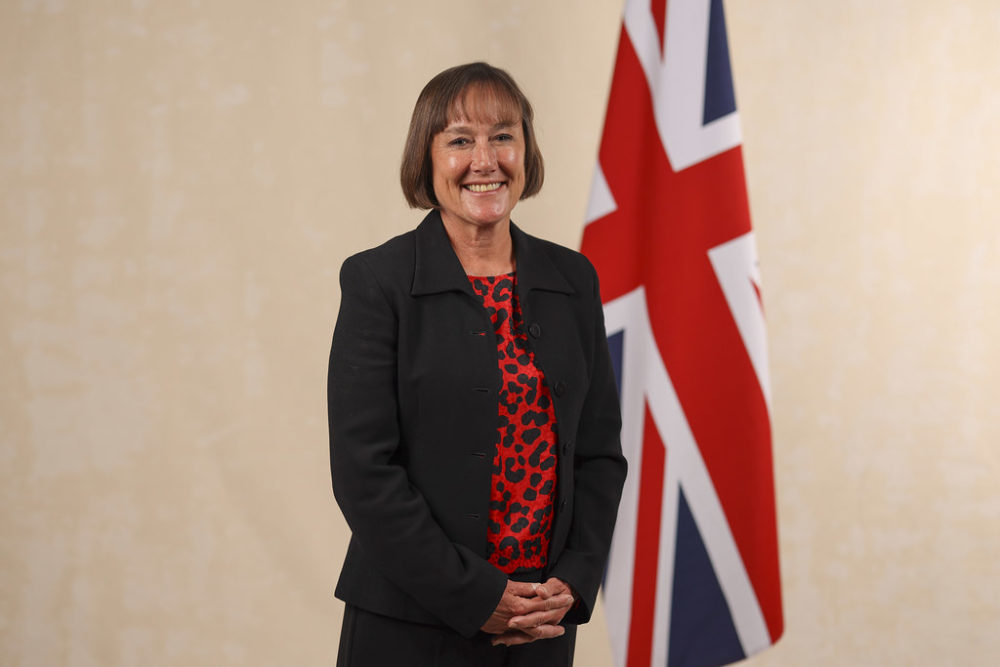
In Wales, the relevant “Office for the Nation” is not the Welsh Government, but the Wales Office, headed by Secretary of State for Wales Jo Stevens.
We asked the Welsh Government how it viewed being bypassed again, this time by a Labour UK government.
A spokesperson for the Welsh Government said: “We will ensure this £630m funding has greater impact than the legacy Shared Prosperity fund. We will continue to discuss the detail of this funding with the UK Government and will decide how it is used to support our economic ambitions and bring prosperity to all parts of Wales.”
[lower-mid-content-banner]
'Dismissive'
Plaid Cymru Westminster leader Liz Saville Roberts MP said: “The UK Labour Government’s decision to retain control over Welsh regional funds is a deeply disappointing repeat of Tory policy: centralised, top-down, and dismissive of Wales.
“Wales was promised we wouldn’t lose a penny. Instead, we’ve lost over £1.1bn, and now Labour is making things worse by choosing to sideline Wales from key decisions.
“The Welsh Government would be up in arms were this action taken by a Conservative UK Government. Wales sorely needs a government that puts nation before party, which fights for fairness regardless of the party of government in Westminster.”
In July 2023 Mark Drakeford - then the First Minister and now the Cabinet Secretary for Finance - issued a Written Statement in which he strongly criticised the UK Government’s decision to bypass the Welsh Government in the context of regional aid, seeing it as an example of the “fraught” relationship between the two governments.
'Disrespect'
Mr Drakeford stated: “The UK Government’s attempts to undermine the devolution settlement and its continued disrespect for the Welsh Government and the Senedd … has impaired intergovernmental working and damaged the union of the United Kingdom.
“The UK Government’s Shared Prosperity Fund and its repeated breaches of the Sewel Convention [under which the Senedd can decide to withhold consent for Westminster legislation impinging on devolved policy areas] are particular illustrations of this.
“There have been occasions where the UK government has worked with us positively and constructively, for example, in relation to freeports where the UK government showed willingness to work as equal partners. This is an example of how we can work together and bring our different powers, levers and expertise to deliver for Wales. This way of working needs to be applied to other areas including the UK Shared Prosperity Fund (SPF) and Levelling Up Fund, where funding should come directly to the Welsh Government so that all sectors can benefit from these programmes.
“As a replacement to EU funding, the SPF not only leaves Wales £1.1bn short compared to EU Structural and Rural funds, but also sets up a funding system that: bypasses the Welsh Government and the Senedd; excludes key growth sectors including universities, colleges and the voluntary sector; prevents high-impact strategic projects; and puts unacceptable demands on our local authorities.”
Support our Nation today
For the price of a cup of coffee a month you can help us create an independent, not-for-profit, national news service for the people of Wales, by the people of Wales.
Get more trusted Welsh news
Choose Nation.Cymru as a preferred source in Google News to see more of our journalism.
