


Thu, 13th August Cardiff 23°
Nation.Cymru wordmark
Advertisement

News

Council opens town centre rapid electric vehicle charging points
By Mark Mansfield
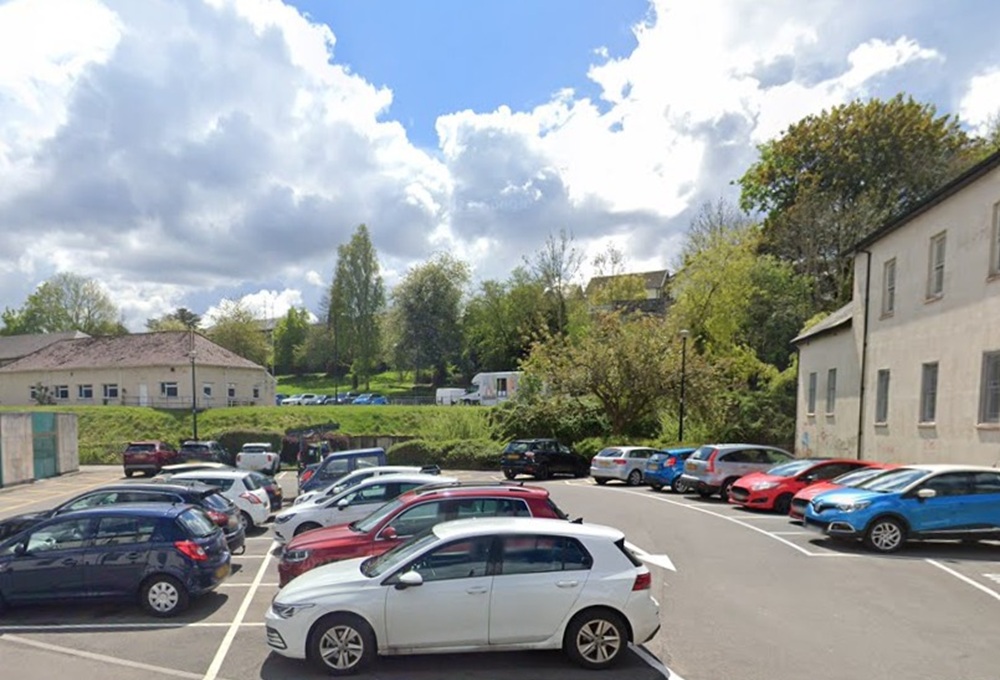
Aberdare Library car park is one of three town centre car parks in RCT to recently have electric vehicle charging installed. Photo via Google

Anthony Lewis, local democracy reporter

People can now charge their electric vehicles at three town centre car parks in Rhondda Cynon Taf (RCT).

The council has announced that there are new 50 kw (kilowatt) direct current rapid chargers which are ready to use at Aberdare Library car park, Tonypandy lower car park, and Pontypridd’s Goods Yard car park.

The installation of electric vehicle charging areas is part of the council’s goal to become a carbon-neutral local authority by 2030.

[mid-content-banner]

Cardiff Capital Region

RCT Council has worked with the Cardiff Capital Region, Welsh Government, and UK Government on the installation of 76 electric vehicle chargers at 65 community locations in the county borough since the first installations were completed in May 2022.

The council is aiming for 90% of residents to be within a mile of a charger by the end of the decade.

The council says these charging points will give people a substantial charge in about an hour.

Councillor Maureen Webber BEM, deputy leader of the council and cabinet member with responsibility for climate change said, said: “We’ve come a long way with support from the Welsh Government and our partners. These new rapid chargers are another big step towards making everyday EV use more practical and convenient for everyone in our communities.

“Electric vehicle drivers can now visit Aberdare, Pontypridd, and Tonypandy town centres for shopping or having a meal while their electric cars or vans are receiving a rapid recharge over the period of their stay.”

As part of phase one the council got funding after working closely with the Cardiff Capital Region for more than 70 installations across 31 sites including mix of 7kw and 22kw chargers.

[lower-mid-content-banner]

Phase two

In phase two the council got further funding from UK Government for 26 more locations including public, community centre, and leisure/education site car parks.

The council said this will be complemented by funding from Welsh Government and the Cardiff Capital Region.

Other installations as a result of external  funding such as the Welsh Government’s Ultra-Low Emission Vehicle (ULEV) Transformation Fund and the Sports for All Grant include Cynon Valley Indoor Bowls, Dare Community Sports Hall, several units at Robertstown Business Park, Aberdare Cemetery, Bronwydd Pool, Llwydcoed Crematorium, Rhondda Fach Sports Centre, Trealaw Cemetery, and Treorchy Cemetery.

For the price of a cup of coffee a month you can help us create an independent, not-for-profit, national news service for the people of Wales, by the people of Wales.

Get more trusted Welsh news

Choose Nation.Cymru as a preferred source in Google News to see more of our journalism.

Choose Nation.Cymru as a preferred source in Google News

6 comments

Brychan

These are slow chargers at 50Kw. Fast chargers are between 200Kw and 300kw. https://www.youtube.com/watch?v=GcD4iFhKiXE See Norway.

Reply
Gerallt Llewelyn Rhys.

Carbon neutral free by 2030 but just installing chargers half way through 2025.

Reply
blc

According to ZapMap, the Aberdare Library chargers are actually 100kW, not 50kW. And the pricing isn’t actually terrible at 53p per kWh. Most commercial EV chargers are around 79p to 83p per kWh, which is far worse than petrol prices. That’s the part that public charging infrastructure needs to get right: cost. I have an off-peak (2330-0530) cost of 7p per kWh for my EV charger at home, and even if I wanted to charge in peak times it’s still only 29p per kWh. It’s practically nothing, even if I had a completely flat battery, it would only cost me about £19 to fully charge at peak times. Of course you don’t let your battery go right down to zero when you have a charger at home; I typically top up about 40%-50%, and it costs me about £4-£5 each time. But not everyone has a charger at home, and not everyone can have a charger at home. 53p/kWh is better than most, but IMO it needs to be better in order to compete with petrol & diesel prices. If I were to charge my car by about 40% in Aberdare Library car park, I’d pay about £15, get roughly 100 miles of range, and it’d take about 35 minutes (assuming the article is correct and it’s 50kW). If I topped up my old Astra with about 12L of petrol, I’d pay about £16.50, get roughly 100 miles of range, and it would take no more than 5 minutes. That 5 minutes includes: parking, filling up, paying, maybe get a drink while I pay, and moving back off. People will wait for EVs to charge, and people will plan a long journey with car charging in mind. But they won’t do it if it costs more than a petrol car.

Reply
Thomas

Strange priorities for RCT council to spend money on making life more convenient for people rich enough to afford an electric car, while demanding 5% more year after year from council tax payers. Interesting to note that the council press release fails to disclose how much they are spending on this.

Reply
blc

Careful you don’t slip off that high horse, it’s a long way to fall. Second-hand EVs can be found for around £8,000, and even in that price range you can still expect around 200 miles of range minimum. Sure, you could pick up a crusty old petrol or diesel powered banger for £1,000 and run it into the ground - many people do just that - but £8,000 is hardly “only people rich enough to afford it” territory. You didn’t look very hard for costs. RCTCBC published its “Electric Vehicle Charging Implementation Plan” document in 2023 - that document gives estimated cost ranges for each class of charger. The council also gave a breakdown of budgets for EV charger installation over the next three years in their 2024/2025 budget document. I found both of these documents within about 5 minutes. I’ll spare you the detail, but EV charger installation accounts for 0.1% of the 2024/2025 budget for RCT CBC. Here’s another fun fact for you: only 21.3% of the RCT CBC budget for 2024/2025 is paid for from council tax revenues. As with any other council, the majority of the funding (63.25% for RCT) comes from central government. This is all public information, all you’ve got to do is look. If there’s something you need to know that you can’t find, that’s what Freedom of Information (FOI) requests are for.

Reply
Thomas

Thank you for your reply. I did look, and I found the 'per charger' numbers quoted in a forward-looking document, i.e. how much these things might cost, but it is rare that any public-sector investment comes in anywhere near budget. I couldn't find anything quantifying how much it has spent or is planning to spend in aggregate. Given that council budgets are stretched and most councils are pleading poverty to justify tax rises, I think it would only be fair of them to be more open about what they have spent. You are right that much of the funding comes from central government, but my point holds nonetheless - taxes are rising at local and national level, debt is rising at local and national level, and yet government at local and national level continues to dream up new ways to spend money. And I stand by my point that EV ownership is much higher among the rich than the poor.

Reply

Leave a reply

Replying to Thomas Cancel

Strange priorities for RCT council to spend money on making life more convenient for people rich enough to afford an electric car, while demanding 5% more year after year from council tax payers. Interesting to note that the council press...

Comments are reviewed before they appear.