
News
Church in Wales charities probed by Charity Commission
Martin Shipton
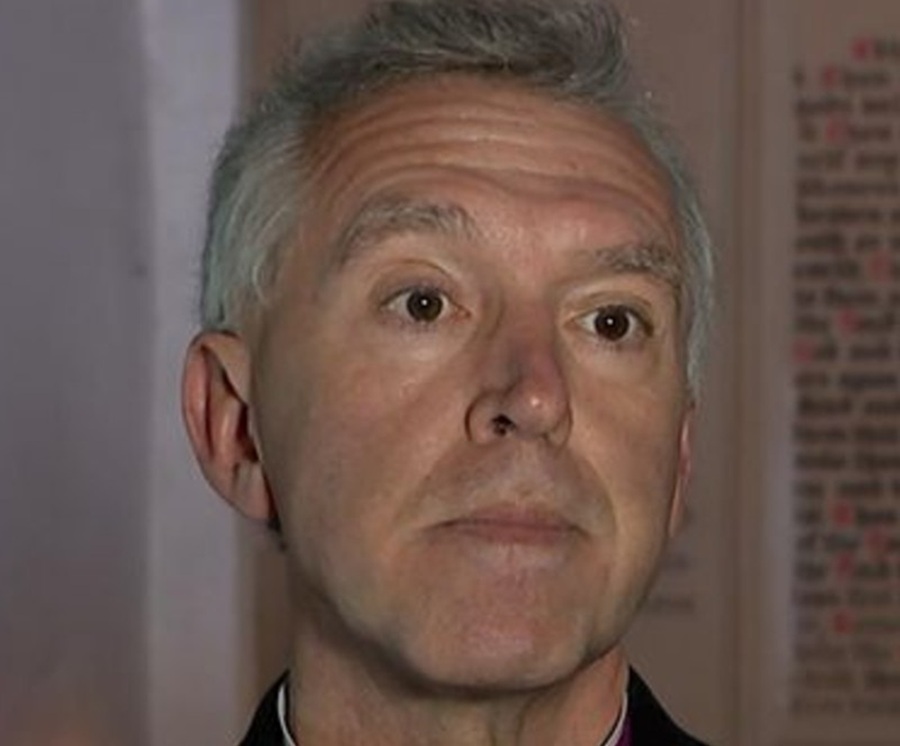
The Charity Commission has opened an inquiry into two Church in Wales charities on the home patch of Archbishop of Wales Andy John, we can reveal.
The move is the latest development in a series of scandals centred on the Diocese and Cathedral of Bangor, where Archbishop John is also the Bishop.
In May 2025, independent investigators reported incidents of inappropriate sexual behaviour and other serious safeguarding concerns that left people feeling unsafe.
The cathedral had been led by its Sub Dean Sion Rhys Evans, whose appointment by the Archbishop had been controversial and who eventually left his post under a cloud after 10 months gardening leave amid concerns about alleged financial irregularities and other matters.
[mid-content-banner]
Personal statement
Earlier this week Archbishop John issued a personal statement in which he said: “[This] is an appropriate time for me to address the whole Church in Wales family regarding what they may have heard, and what has taken place, regarding the situation at Bangor Cathedral and Diocese.
“Firstly, I wish to apologise for errors of judgement I have made that have caused anxiety and hurt. My apology to you all is heartfelt, unreserved, and unequivocal.
“In the autumn of last year, I commissioned two independent reports into Bangor Cathedral. Abridged versions of both are now publicly available on our websites and reveal shortcomings and poor organisational practice which should not have occurred. I deeply regret that they happened under my episcopate and I recognize I ought to have done more to ensure such failings did not occur. I also take full responsibility that I did not address these matters quickly enough. I recognize our witness to Jesus Christ and our mission to Wales has been damaged and I repent and offer no excuses nor justifications. I am committed to an ongoing process of reflection to ensure these unacceptable events do not happen again.
“I am grateful that the Church in Wales is seeking to assist both the cathedral and diocese in re-establishing proper governance arrangements and am also grateful to my episcopal colleagues for their challenge, their love and their support.”
[lower-mid-content-banner]
Regulatory compliance case
Confirming that an inquiry was underway, a Charity Commission spokesperson told Nation.Cymru: "We have opened a regulatory compliance case to assess a number of concerns that have been raised related to Bangor Cathedral and Diocese, including matters reported directly to us by the charities. We are actively examining these matters with the charities' trustees to determine our next steps. As regulator, if we find evidence of wrongdoing, we take robust action using the powers available to us.”
The spokesperson added: “While our policy is not to confirm the detailed contents of serious incident reports or complaints from others, the issues being explored by the Commission relate to safeguarding concerns, sufficiency of financial controls, and management of conflicts of interest at the charity/ies.
“We have made no findings at this stage.
“We don’t put a timeframe on how long our initial enquiries take or for how long any formal case or inquiry would take to investigate and complete.
“The Commission’s role as charity regulator is to oversee charity trustees’ compliance with charity law duties and responsibilities. The Commission’s role is not to investigate allegations of a criminal nature, that is a matter for the police and/or other authorities and should be reported to them.
“We have opened regulatory compliance cases into [charity number] 234156 - Bangor Diocesan Trust, and 1158340 - The Dean and Chapter of Bangor Cathedral.”
'Anger'
Meanwhile Rowena Lewis, who has worshipped in the Bangor Diocese for more than 40 years, has written a letter to the Church in Wales’ Bench of Bishops which states: “I’m aware from media reports, and from talking to other worshippers in the Diocese of Bangor, that you have been on the receiving end of many expressions of sadness, anger and disbelief at the way the Archbishop of Wales has been comporting himself: both as Diocesan Bishop and as Primate. I have held back from writing this until now, hoping that, as a Bench, you would have shown some collective moral courage and made it clear to the Archbishop that his position is no longer tenable or credible. Sadly, sound moral orientation and episcopal ministry in Wales appear to be mutually exclusive. Like many other minority communities in society, it appears that you believe it is acceptable to circle the wagons to defend the indefensible and look after one of your own.
“I have lived and worshipped in the Diocese of Bangor since 1982. I can say, with absolute certainty that, even without the recent debacle at Bangor Cathedral, Andrew John will leave ministry here as the least loved bishop we have had during that period. In fact there will be relief all round when he finally goes.
"When I think back to GO Williams, Cledan Mears, as well as the sadly short tenure of Anthony Crockett, they were genuinely loved as bishops with a pastoral heart, clarity of mind, and who knew their people and were trusted by them. No such thing can be said of Andrew John. Not only did the Diocese not want him when he emerged from the 2009 electoral college (and few of us are under any illusions about the shenanigans that took place, under the Byzantine stage-management of Archbishop Morgan); it became clear from the outset that we had been landed with someone whose personality, lack of cultural sensibility, paucity of learning and barely concealed aloofness, made him completely unsuitable.
“His only qualification for the role, so far as can be discerned, is that he was too easily submissive to Archbishop Morgan’s need to micromanage the Church unchallenged. To say that, during Andrew John’s tenure of office, the Diocese of Bangor has become more anglicised and is more isolated from its societal roots, with the consequent escalation of decline, is a colossal understatement.
“I hope I do not have to spell out in detail why there is so much anger and hurt in the Diocese following events at the Cathedral. That Andrew John was sufficiently deluded to imagine that his arms-length manner of relating to people, following publication of a considerably restrictive and manipulated review, coupled to a belief that he is accountable to no-one, would carry him through tells you enough. You will have spent enough time in his presence to know how the passive/aggressive pathology is deployed when challenged, and how this is all part of an antagonistic impulse when his own inadequacies and poor judgement are exposed (his body language on yesterday evening’s S4C news item conveyed it perfectly – as did the dishonesty with which he purported to be on a phone call as soon as he saw a journalist approach). That is hardly an auspicious basis for sound institutional leadership. It smacks of the transactional politics that is tragically self-evident in the wider world. At least one of you exhibited monumental dereliction of duty in allowing him to become Archbishop in 2022, with all the reputational damage the Church has suffered (and is suffering) as a result.
“However, nothing of what I have highlighted is new – or should cause surprise. You only have to look at the depressingly predictable succession of failed senior appointments, and his willingness to put people who were clearly lacking in suitability into prominent roles.
“ … Meanwhile, the Dioceses of Europe, London, Chelmsford, Salisbury, Guildford and London (to name some) have benefitted hugely from the ministries of two former (and exceptional) archdeacons of Bangor, parochial clergy and a university chaplain, all of whom were ‘native’ Church in Wales clergy, fluent Welsh-speakers, and people who displayed real leadership acumen. No-one is left in any doubt as to why clergy of such quality left the Diocese; nor why Andrew John has been content to surround himself with lightweight sycophants who will not challenge his inept lack of judgement, his arrogance and lack of self-awareness. The sheer contempt towards the Provincial Selectors in disregarding their clear and unequivocal advice that Sion Rhys Evans should not proceed to train for ordination is as typical as it is breathtaking. The unravelling of that ill-judged decision is still unravelling.
“ …I think I know – as you do – how this must be resolved. However, an archiepiscopal resignation is only the start. There needs to be a wholesale re-set of trust across the Province, especially as there remain serious unanswered questions about who knew what, and who was willing to keep quiet for so long.
“ … Throughout my career in public institutions here in Wales, I have had the privilege of working with extraordinarily committed people of absolute rectitude, who always kept the need to maintain the highest standards of integrity and public accountability in clear focus. The fact that the Church in Wales is being shown to have conducted itself on the basis of ‘what we can get away with’ is as deeply depressing as it is wholly scandalous.
“I can only hope and pray for courage, self-searching and a renewed commitment to integrity by all of you.”
Meeting
A spokesperson for the Church in Wales confirmed that there had been a meeting of the Church’s Representative Body earlier this week and that a statement would be issued “in due course”.
Responding to the announcement of the Charity Commission inquiry, Archdeacon of Bangor David Parry said: “It is less than eight weeks since we received and published the independent reports into Bangor Cathedral. In that time however most of the recommendations have already been implemented, thanks to frequent meetings of a local task group and the Cathedral Chapter. Safeguarding, financial controls and managing conflicts of interest are all included in this work. An external Oversight Board will continue to monitor progress for at least 12 months after a new Dean is appointed.”
Dr Hywel Parry-Smith, chair of the Bangor Diocesan Trust, said: “We have robust policies and processes in place for the separate work of our charity.”
Support our Nation today
For the price of a cup of coffee a month you can help us create an independent, not-for-profit, national news service for the people of Wales, by the people of Wales.
Get more trusted Welsh news
Choose Nation.Cymru as a preferred source in Google News to see more of our journalism.