
News
Chemistry textbooks need rewriting after new Cardiff University discovery
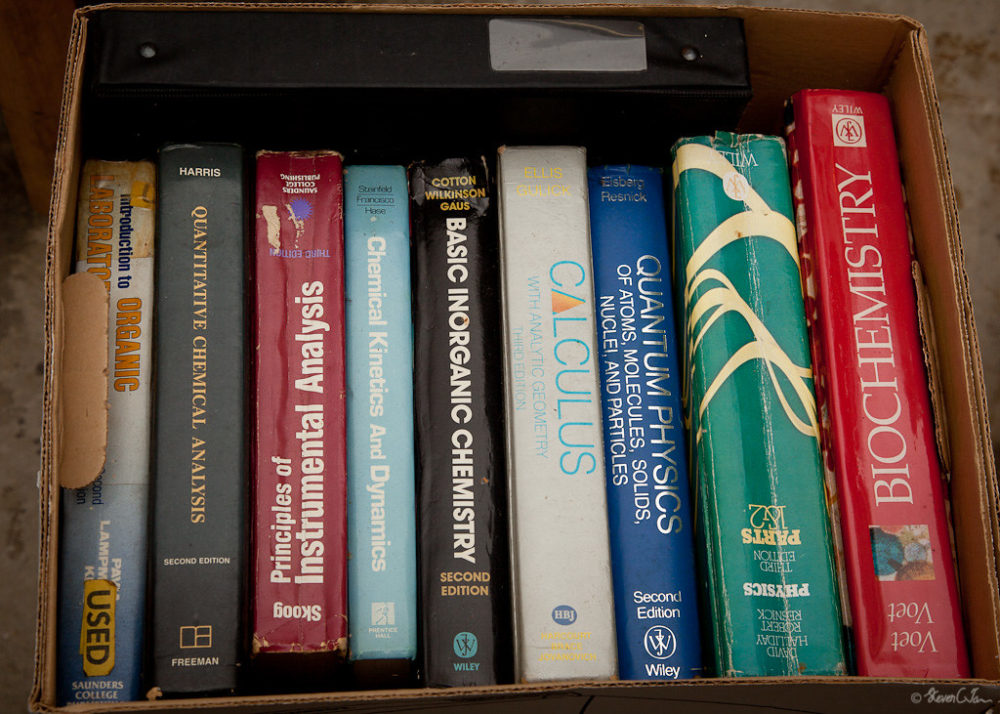
Scientists are calling for changes to chemistry textbooks after discovering a fundamental aspect of structural organic chemistry has been misunderstood for almost 100 years.
The team from Cardiff University’s School of Chemistry challenged the long-held belief that alkyl groups – a chemical group consisting of carbon and hydrogen atoms arranged in a chain – donate electrons to other parts of a molecule.
Instead, their research shows alkyl groups actually pull electrons away from the rest of the molecule, making them electron-withdrawing when compared to hydrogen.
[mid-content-banner]
Dogma
The Cardiff team used advanced computational methods to analyse the distribution of electrons in molecules with alkyl groups.
Their findings, published in the journal Organic and Biomolecular Chemistry, overturn almost 100 years of dogma in the field of organic chemistry.
Lead author Dr Mark Elliott, from Cardiff University’s School of Chemistry, said: “This information on what we call the inductive effect of alkyl groups is found in every organic chemistry textbook, and is used to explain a whole range of properties of molecules.
“It turns out it is incorrect, and alkyl groups are actually electron-withdrawing compared to hydrogen. It is critical that chemists understand the magnitude and direction of alkyl group inductive effects so they can put all the other effects into proper context.”
The distribution of electrons within molecules is central to chemistry and affects all aspects of chemical reactivity.
Some parts of a molecule donate electrons to other parts in a number of ways, the simplest being through an inductive effect.
[taboola-banner]
Surprised
Dr Elliott added: “Since I’d always been taught that alkyl groups were inductively electron-donating, I was quite surprised a few years ago to start having doubts. There are some pieces of data that simply made no sense to me.
“So, I looked at the literature and it turns out that a few other people have had doubts over the years too, but their work has not had much impact in changing the accepted position. Our study provides the hard data needed to strengthen the case.
“Since the information in all textbooks is wrong, they will need to be corrected, which is a pretty big deal, and I cannot remember this ever happening.”
The paper, ‘Alkyl groups in organic molecules are NOT inductively electron-releasing’, is published in Organic & Biomolecular Chemistry.
[lower-mid-content-banner]
Support our Nation today
For the price of a cup of coffee a month you can help us create an independent, not-for-profit, national news service for the people of Wales, by the people of Wales.
Get more trusted Welsh news
Choose Nation.Cymru as a preferred source in Google News to see more of our journalism.