


News
Chancellor ‘must raise taxes to help plug £40bn-plus gap to meet fiscal rule’
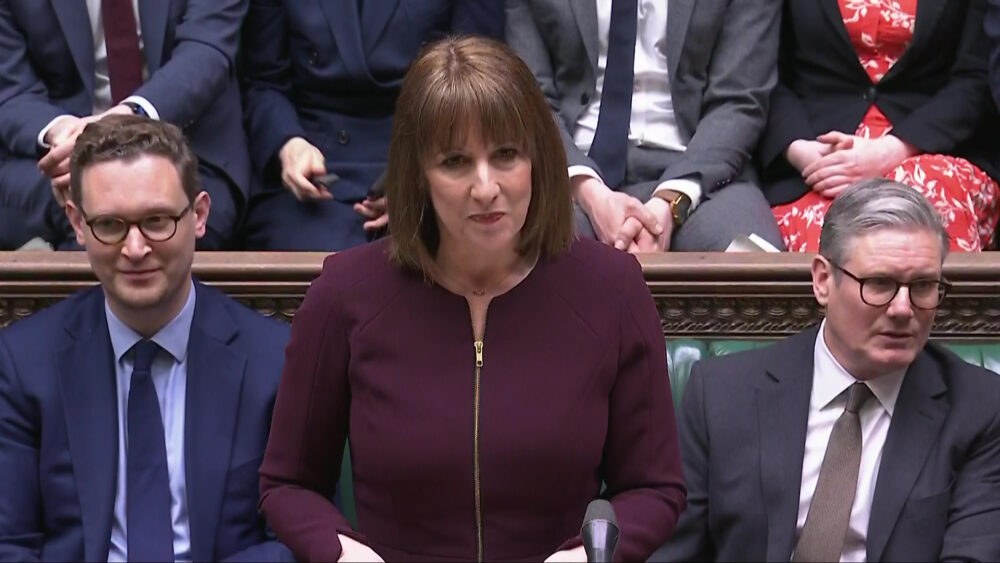
The Chancellor must resort to “moderate but sustained” tax rises to help repair Britain’s battered public finances as she faces missing one of her fiscal rules by more than £40 billion, an economic think tank has warned.
The National Institute of Economic and Social Research (Niesr) said weaker-than-expected recent economic activity, U-turns on welfare cuts and forecast-beating borrowing have combined to create a “worsening fiscal outlook”.
Rachel Reeves is now set for a £41.2 billion shortfall on her “stability rule” in 2029-30 and has been left with an “impossible trilemma” of trying to meet her fiscal rules while fulfilling spending commitments and upholding a manifesto pledge to not raise taxes, it said.
[mid-content-banner]
Economic output
She will need to raise taxes or cut spending in the autumn budget to plug the gap, Niesr cautioned.
This comes despite Niesr nudging up its economic outlook for the UK, with growth of 1.3% now pencilled in for 2025, up from 1.2% forecast in May.
But the group cut its prediction for next year – to 1.2%, down from 1.5% previously expected.
Niesr has urged the Government to look at addressing the public finance woes by building a “large fiscal buffer via a moderate but sustained increase in taxes”.
It said: “This will help allay bond market fears about fiscal sustainability, which may in turn reduce borrowing costs.
“It will also help to reduce policy uncertainty, which can hit both business and consumer confidence.”
[lower-mid-content-banner]
Inflation
Niesr also said the UK was in store for higher-than-forecast inflation, averaging around 3.5% this year and edging back only slightly to 3% in the second quarter of 2026 due to higher wages and Labour’s measures in last autumn’s budget.
Professor Stephen Millard, Niesr’s deputy director for macroeconomics, said: “With growth at only 1.3% and inflation above target, things are not looking good for the Chancellor, who will need to either raise taxes or reduce spending or both in the October budget if she is to meet her fiscal rules.”
Despite the inflation pressures, Niesr expects the Bank of England to cut interest rates from 4.25% currently to 3.5% at the beginning of 2026.
The Chancellor has set herself two fiscal rules – the “stability rule”, which ensures that day-to-day spending is matched by tax revenues so the Government only borrows to invest, and the “investment rule”, which requires the Government to reduce net financial debt as a share of the economy.
Support our Nation today
For the price of a cup of coffee a month you can help us create an independent, not-for-profit, national news service for the people of Wales, by the people of Wales.
Get more trusted Welsh news
Choose Nation.Cymru as a preferred source in Google News to see more of our journalism.
