


Thu, 20th August Cardiff 16°
Nation.Cymru wordmark
Advertisement

News

Cardiff University releases breakdown of academics 'in scope' for redundancy
By Mark Mansfield
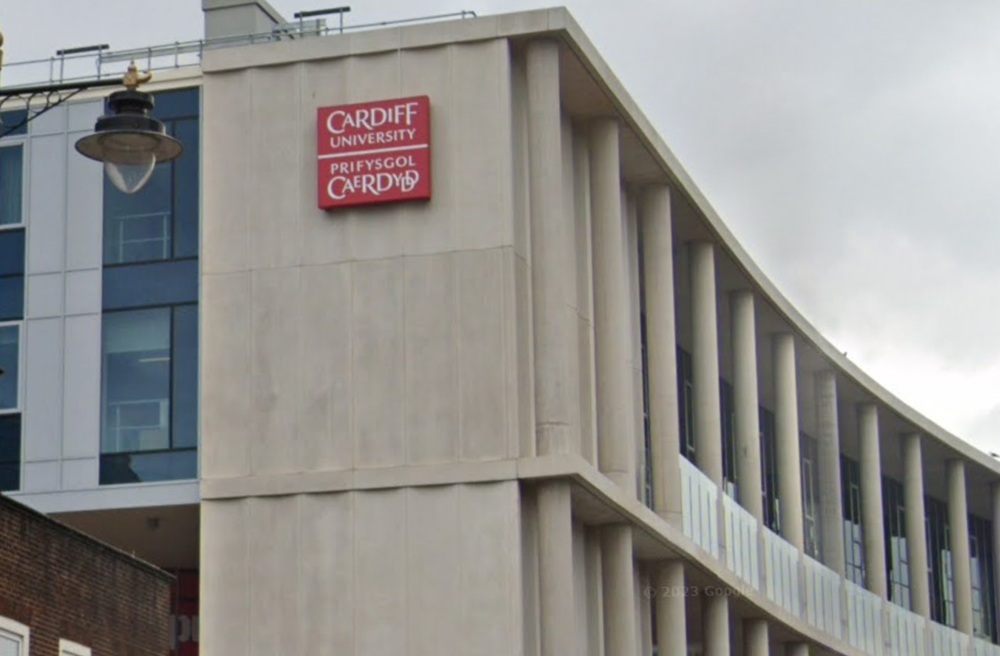
Cardiff University. Photo via Google

Martin Shipton

Cardiff University has released to Nation.Cymru the breakdown by School of the 1,807 academics who have been told their jobs are “in scope” to be cut.

The university announced in January that it intended to delete 400 jobs and close five Schools, including Nursing and Music.

But many more lecturers and researchers than 400 have been told their jobs are at risk. If the plans proceed as announced, only around 22% of those whose jobs are “in scope” will be made redundant.

The university is currently in the middle of a 90-day consultation period over its plans, which are being strongly opposed by the University and College Union.

We asked the university to specify how many academics had received letters on January 29 or thereafter telling them that their jobs were "in scope" for redundancy, both as an overall total and by affected school.

[mid-content-banner]

Breakdown

The university has provided us with the following breakdown:

In the College of Arts, Humanities and Social Sciences, a total of 699 jobs are “in scope”, composed of 232 in Cardiff Business School; 105 in the School of English, Communication and Philosophy; 64 in the School of Geography and Planning; 84 in the School of Modern Languages; 25 in the School of Music; and 86 in the School of History, Archaeology and Religion; 90 in the School of Social Sciences; and 13 in the School of Welsh.

In the College of Biosciences, 892 jobs are “in scope”, composed of 124 in the School of Biosciences; 82 in the School of Healthcare Sciences; and 686 in the School of Medicine.

In the College of Physical Sciences, 43 jobs are “in scope” in the School of Chemistry; 26 in the School of Computer Science; 116 in the School of Engineering; and 31 in the School of Mathematics.

These figures add up to a grand total of 1,807 jobs.

There is, however, no correlation between the number of staff members “in scope” for redundancy in a particular School and the number of redundancies being sought.

In Music, for example, the “implied staff change” as the university calls it, meaning the proportion of job cuts, equates to 100%, as the School is earmarked for closure.

In Mathematics, however, the proposal is for 27% of jobs to be cut.

[lower-mid-content-banner]

Anxiety

A Cardiff UCU spokesperson said: “These numbers speak for themselves on the amount of fear and anxiety at Cardiff university, right now. So many staff are at risk across the University because these cuts are designed to be so wide and deep.

“Analysis of figures carried out by UCU has also shown that staff from minority ethnic backgrounds are disproportionally more at risk. This highlights yet another disturbing side to the cuts. So little consideration and care has been taken around the impacts of these proposals. The lack of clarity around these processes is deeply unsettling, and it is made all the worse by the fact that such huge cuts are not necessary. There are ways of turning our finances around without destroying lives and cutting whole departments.”

Redundancy Committee

Nation.Cymru also repeated its request to find out who, in addition to the Deputy Vice Chancellor, is sitting on the Redundancy Committee and considering the current redundancy round.

The university responded: “The redundancy committee is a standing University committee. It is a subcommittee of the University Council. It meets monthly to consider cases of redundancy as part of business-as-usual processes. The membership of this committee is as outlined in our ordinances. Whilst the membership is set, who sits on the committee changes regularly and would not include any individual at potential risk of redundancy being considered by that committee. Our recognised campus trade unions are not members of the committee.

Asked to comment on the negative publicity the university has received on an international basis following the announcement of its cuts plan, the university said: “Under the Freedom of Information Act 2000, the university is required to provide information held in response to a request. However, we are not obliged to create new information in response to the request or to express opinions on matters not already recorded.

“It is our view that this question cannot be answered by information held in a recorded form, as it is seeking an opinion rather than recorded data.”

For the price of a cup of coffee a month you can help us create an independent, not-for-profit, national news service for the people of Wales, by the people of Wales.

Get more trusted Welsh news

Choose Nation.Cymru as a preferred source in Google News to see more of our journalism.

Choose Nation.Cymru as a preferred source in Google News

11 comments

Evan Aled Bayton

Is the medical school going as well? The government needs to intervene to keep the school of nursing going possibly handed to another institution or run by the NHS or Wales’s hospitals will not be staffed.

Reply
Linda Jones

There is no obligation for newly qualified nurses to work in Wales or even for the NHS

Reply
Ali Morris

No there's not, but a large proportion of students will be from Wales and will stay in Wales. It's also about Wales being at the forefront of innovation and on an equal footing with the rest of the UK.

Reply
Linda Jones

Seems to be a ridiculous amount of potential cuts. I would like information on the viability of courses vis a vis student application ie. information on the criteria used to decide which depts to cut and how much to cut. Are some departments failing to attract enough students for example? There must be some rationale surely?

Reply
Kate

Part of the rationale is pushing the University further up the Russell Group league table - it is currently towards the bottom. Courses like nursing are more applied and take applicants on lower grades than less applied, more competitive subject areas. If you cut nursing, the University will climb the league table. It's quite calculated.

Reply
Marc Evans

I'd be very surprised indeed if the outstanding PR department of Cardiff University hasn't either got an external contract for 24/7 media monitoring, or has set up an internal equivalent; (how else are they going to prove their effectiveness?) In which case, the actual information as to the sentiment of coverage will be a matter of record held by the University and not a matter of opinion, as you don't pay for monitoring (internal or external) without doing the analysis. The philosophy and strategy behind these proposed cuts would seem to justify eventually basing the whole shebang in Astana, Khazakstan not just the proposed satellite (! at least University of Aberystwyth had the hutzbah to place their similar proposal in a country with tropical beaches...) It seems that whatever the 'smaller, more elite' vision being proposed is, Cardiff is heading 'offshore' and saying goodbye to the deeply and sacrificially held principles of the University of Wales' founders. They saw the academic institution as serving the needs and aspirations of the nation - hence the strength of teaching in engineering, the presence of teaching of Welsh and education in all its Colleges, and the internationally acclaimed achievements of its several departments of music (and many other subjects, now threatened with being extirped). These national priorities remain vital to the interests of Wales, regardless of what international trends the University of Cardiff hopes to luck out on in the lottery of aggrandisement it currently endorses. Our hospitals are crying out for nurses, doctors and similar professions (and those who can practise bilingually or multilingually are rarer then hen's teeth). Our internationally renowned orchestras need graduates; our tv, film and digital media productions have openings for composers and musicians; there are opportunities across all of Wales for those with the marketing and communications skills for which Cardiff's postgraduate courses have won it international acclaim. The sharp end of these cuts for even those disciplines not heading for death row is that PhD research and teaching supported postgraduate research will suffer first and most. That inevitably (and rapidly) leads to decline in quality and reputation. Cardiff may play the REF review coming up with its usual skill at costly Premiere League talent scouting to boost its score, but these corrosive and uncalled for cuts will inevitably put it in danger of relegation from the Russell Group. A University that doesn't serve Wales and the priorities of our national strategies and put Welsh students first and foremost isn't worth our support. The Welsh government needs to step in now.

Reply
hdavies15

A sound point made succinctly : "A University that doesn’t serve Wales and the priorities of our national strategies and put Welsh students first and foremost isn’t worth our support." Another valid statement : "The Welsh government needs to step in now." Sadly I don't think our Bay regime has the intellectual and political horsepower to tackle the issue, nor the inclination to get off its collective derrier in response.

Reply
harrisR

It's a sectoral collapse, Dundee University..."More than 600 jobs face axe at University of Dundee to tackle £35m deficit.. More than 600 staff are set to lose their jobs at the University of Dundee as its deficit is set to hit £35 million this year" Also Brunel is looking at professional support cuts of 500. And many many more across the UK. University VCs and managers have made individual fortunes for years using any means necessary - max overseas student instake, franchised overseas campuses, endless property deals and now... the bubble has TRULY burst. As with the Financial Crisis, no one will pay, no heads will roll, the current incumbents will cling to the wreckage and issue platitudes, remaining hugely lucratively in post. Britain (and our very own Wales) is truly a failed state.

Reply
Pete Cuthbert

Perhaps it is time for the Senedd to propose that we set up a University of Cymru and then invite institution in the country that are in financial trouble to join it as subordinate Colleges. In doing so there would be no need to transfer in the 'top' 3-4 levels of management. Anything that such folk did would be covered by the small and efficient 'Nation First' University of Cymru managers. Obviously the departments and buildings would be taken over when a former 'University' signs up to become a University of Cymru College. The latter should probably be re-designated at Co-operatives to improve both morale and working conditions. It all started out that way funded by the working people of Cymru for the people of Cymru. That was a model that worked well.

Reply
hdavies15

It was greed and perverse self interest that destroyed the original model pumped up on a dose of Thatcherite influences where well educated people thought that having a rack of degrees was enough to embrace a competitive, commercially driven global market. No idea about confronting a downturn or change in those markets.

Reply
John

Heres an idea... make the Executive Board redundant, save a couple of million per annum and I bet the place will still be operational and more likely better run. The people at the top are always far to removed to make any meaningful decisions.

Reply

Leave a reply

Replying to hdavies15 Cancel

It was greed and perverse self interest that destroyed the original model pumped up on a dose of Thatcherite influences where well educated people thought that having a rack of degrees was enough to embrace a competitive, commercially drive...

Comments are reviewed before they appear.