


News
Cardiff University refuses to publish due diligence report on Kazakhstan 'branch campus'
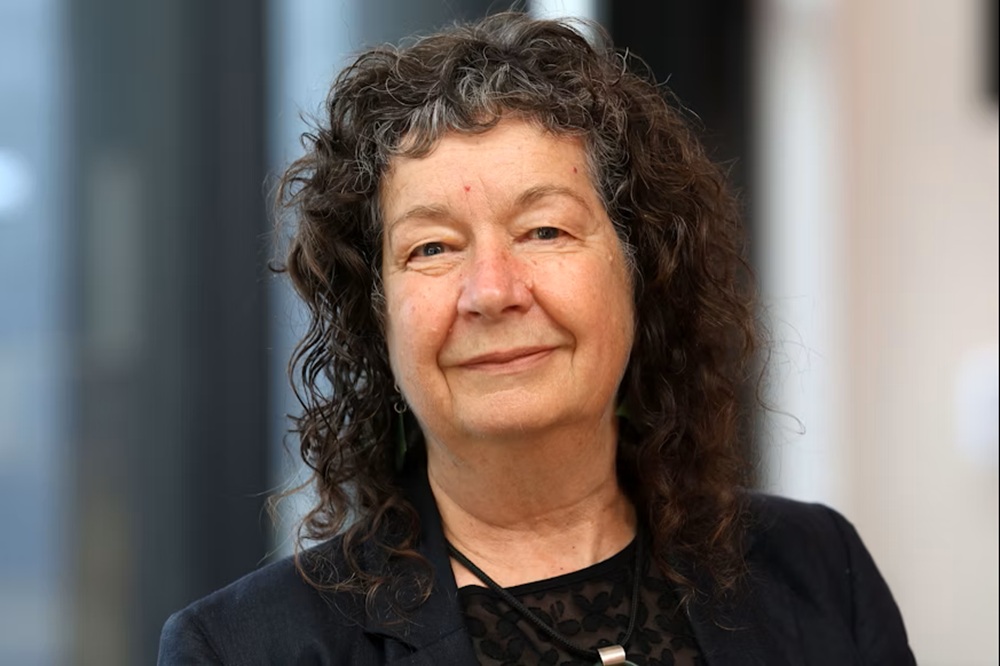
Cardiff University has refused to publish a due diligence report on its decision to open a “branch campus” in Kazakhstan, despite concerns about the lack of information in the public domain about the project’s partner.
Eyebrows have been raised about the university’s decision to open its new offshoot in Astana, the capital of the former Soviet republic in Central Asia, at a time when hundreds of job cuts and School closures have been proposed for the core operation in Cardiff.
Following revelations in Nation.Cymru about governance failings in the approval process for the branch campus in Astana, Private Eye magazine has drawn attention to the very sketchy nature of searchable data relating to the Qualified Centre of Education Public Foundation (QCEPF), which is bankrolling the project.
[mid-content-banner]
Private body
Describing it as a private body apparently set up by Kazakh entrepreneurs, Private Eye states: “It has no track record of any kind, describing the Cardiff scheme as its ‘first step’ towards improving top-tier education in the country.
“QCEPF executive director Kuanysh Kuchekbayev, the only individual named on the organisation’s website, is described as a seasoned leader from, er, the construction and logistics industries. There’s vanishingly little other information available about his credentials, and his LinkedIn account lists his role at QCEPF and nothing else.
“What Cardiff brings is an international reputation and branding as well as designing and providing quality control for the courses.
“Lecturers’ union UCU has warned that it would require ‘significant and time-intensive planning’ to protect against lowering academic standards.”
In April Nation.Cymru revealed how the university had admitted that no formal vote was taken at its supreme governing body, the University Council, to endorse the project in Kazakhstan.
[lower-mid-content-banner]
Governance failure
At the same time, the university’s Vice Chancellor, Wendy Larner, ordered that an email about the governance failure sent by the Council’s Chair to its members should not be released to Nation.Cymru.
Despite the university’s admission that no formal vote on the project took place, the university issued a press release in the wake of the University Council meeting stating: “Last week, our Council met to consider the proposal for Cardiff University to establish a branch campus in Astana, Kazakhstan. After extensive discussions, including contributions and questions to the HM Ambassador to Kazakhstan, Ms Kathy Leach, Council has approved the proposal, subject to final legal agreement, marking an important step in Cardiff’s global engagement strategy.”
In March 2025 a Nation.Cymru journalist submitted an FoI request to the university stating: “Please let me know if there was a formal vote at the last Cardiff University Council meeting to endorse Cardiff University's plans for its Kazakhstan development; and what was the content of the email that was subsequently sent by the Chair of Council, Pat Younge, to Council members.”
The university responded, stating: “There was no formal vote undertaken at the last meeting of Cardiff University Council.
“The subsequent email by the Chair to Council members was sent in the expectation of confidentiality and without prejudice in order to inform the University’s approach to areas of institutional vulnerability or strategic risk. Council are the supreme governing body of the University. They must be able to conduct their business and the business of the University in a safe and secure way. Aligned, individual Council members must feel safe to express their views on such matters without fear.”
Internal review
Nation.Cymru has requested that the university conduct an internal review of Prof Larner’s decision to block release of the email.
We have also written to Cardiff University asking how extensive was the due diligence undertaken by the university to establish the ability of QCEPF and its executive director to deliver an HE institution commensurate with the high standards expected of a Russell Group university. We also asked who had undertaken the due diligence and sought disclosure of the contents of the report that was produced.
A Cardiff University spokesperson responded: “We have undertaken extensive due diligence. This includes external consultants and a strategic intelligence firm. We’ve also consulted with the UK Embassy in Astana, the British Council and other relevant bodies before proceeding.
"We have confidence in the process undertaken. In the interests of openness and transparency, we have kept our staff updated on the project. As is the case with most due diligence reports, they contain personal and commercially confidential information. As a result, they are not routinely published. Where appropriate, we will provide as much information as we can to our staff, students, trade unions and other relevant stakeholders.”
Former Welsh Liberal Democrat leader and ex-Deputy First Minister Lord Mike German has said that the project came about as a result of his friendship with Kazakhstan’s Higher Education Minister.
Support our Nation today
For the price of a cup of coffee a month you can help us create an independent, not-for-profit, national news service for the people of Wales, by the people of Wales.
Get more trusted Welsh news
Choose Nation.Cymru as a preferred source in Google News to see more of our journalism.
