


News
Cardiff University academics publish alternative plan to avoid 'macho' cuts
Martin Shipton
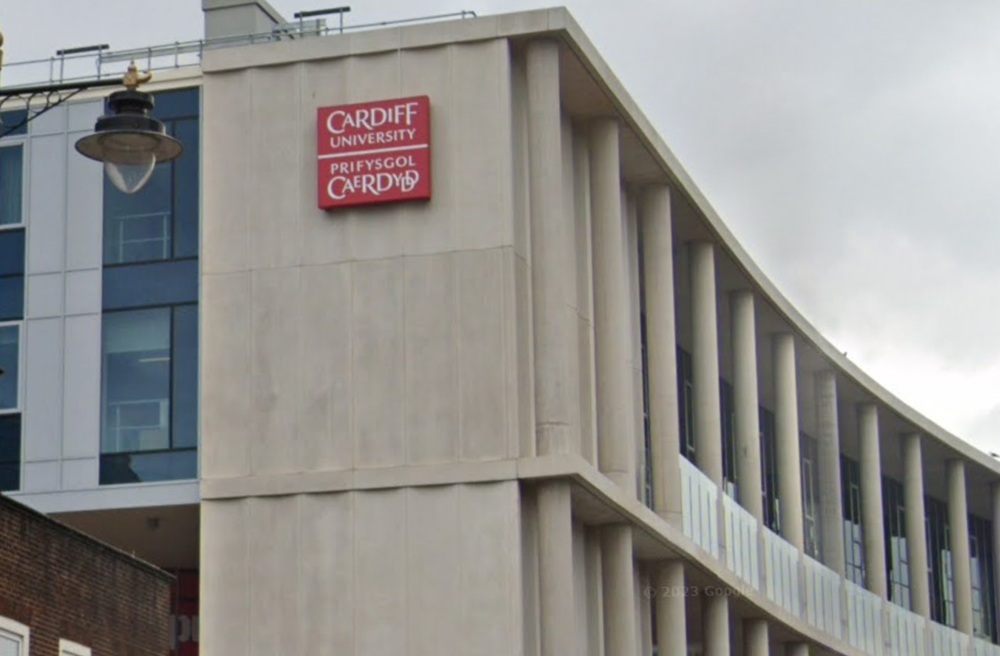
A group of academics including former Education Minister Leighton Andrews has released details of an alternative plan to avert "macho" cuts at Cardiff University by drawing on £285m in cash reserves and investments.
They say the money could be used to spread the university’s transformation plans over a longer time period, avoiding compulsory redundancies.
In January the university announced proposals that would involve the deletion of 400 academic jobs and the closure of five Schools including Nursing and Music.
Members of the University and College Union have voted overwhelmingly for strike action.
Mr Andrews is now a professor in Cardiff Business School, all of whose academic staff are “in scope” for potential redundancy.
[mid-content-banner]
'Scrutiny'
In a Substack article, Prof Andrews states: “University finances are less transparent than those of governments or public limited companies. Government finances are set out in detail and crawled all over in public by parliamentary committees and independent bodies. Public Limited Companies publish quarterly results with considerable detail and hold investors’ and analysts’ meetings. Universities have to prove to their regulators that they are going concerns, but beyond that? Far less scrutiny.
“I could find no publicly available minutes for the Finance and Resources Committee. Is it any wonder that people are now asking serious questions about University governance?
“As I write, we are nine weeks into the consultation. Nine weeks in, the university has still not published the ‘critical friend’ report on Cardiff Business School promised in the consultation, yet all Cardiff Business School staff, myself included, remain at risk of redundancy.
“Our alternative is credible, strategic and incremental, and more sustainable than the ‘big bang/shock and awe’ macho management approach which the university launched on January 28, at a high price to staff trust, goodwill and morale, to the university’s reputation, and the University Executive Board’s credibility.
“Our alternative has been written in light of the situation which the university’s self-destructive announcements have left us in, with a real need to rebuild morale, trust, goodwill and credibility. It is a genuine attempt to reset the university on a course which can carry its staff with it. Its principles are relatively simple. It is not a soft option and it includes tough messages.
“We suggest that the university changes its Transformation Timescale from one concluding at the end of the 2025-26 academic year to one concluding at the end of the 2027-28 academic year. This is a two-year extension. The university would progressively reduce its deficits in the meantime and record a surplus in 2028-29. The revised Transformation Timescale would be based on a clearly costed programme of change with definite time scales not vague ‘Horizons’, using available reserves within the university’s ‘liquid cash and investments’ to manage this process.”
[lower-mid-content-banner]
Plan
Prof Andrews goes on to explain that the alternative plan:
returns responsibility for achieving realistic contribution levels and staff student ratios to Schools, to be achieved on a staged basis within the extended Transformation Timescale. Schools should achieve this through measures including voluntary severance/ voluntary redundancy; natural attrition; a recruitment freeze until targets are achieved; and a promotion freeze for an appropriate period;
takes staff in affected Schools out of scope for redundancy, removing the threat of compulsory redundancies;
defers inessential infrastructure investments if necessary to free up further cash reserves for the Transformation process in the short-term to the end of 2027-28;
draws down a tightly controlled and minimized portion of the university’s ‘liquid cash and investments’ to offset the deficits that will be incurred, noting that these deficits will reduce rapidly in successive years given the savings measures outlined;
requires preparing and using fully detailed financial models to enable Schools and university management to test scenarios and track progress towards financial objectives; and:
requires completing the work-streams in the Transformation Roadmap before implementing further changes, unlike the present chaotic and disorderly university approach.
Financial reserves
Prof Andrews says it appears that the university has a larger financial reserve than almost all the other Russell Group universities: “We take reserves as meaning the ‘liquid cash and investments’ set out as totalling £426m on page 25 of the most recent University Annual Report, published at the end of January. This total is divided into named types of holding. We understand that of these holdings (1) the £53m in ‘endowments’ cannot be accessed by the university, and (2) the £7m in ‘approved capital projects’, £19m in ‘capital commitments’, and the £62m in ‘bond repayment’ may be at least partially accessible but that it would not be prudent to do so.
“This leaves £41m in ‘freely available to spend’, £144m in ‘bond funds’ and £100m in ‘long term reserves’. These three sums add up to £285m. There do not appear to be any legal reasons preventing the university from accessing these funds. We are suggesting drawing down only part of this - a tightly controlled and minimised portion of the university’s ‘liquid cash and investments’ - as necessary to offset the deficits that will be incurred.
“At the same time, we suggest that the University Council requires its senior leaders, senior academic management and PS management staff to undertake appropriate management and leadership training, and that the university:
Commences urgent discussions with the Welsh Government to demonstrate how Cardiff University will play its full part in the Welsh Higher Education landscape;
Makes the case to Welsh Government for a fundamental review, and subsequent rebalancing, of higher education finance and student support;
Continues to argue to the UK Government for international students to be removed from short-term immigration statistics or accounted separately from those, and for a complete reversal of the last government’s visa restrictions.”
Strike vote
Prof Andrews concluded: “This week, the UCU union revealed the details of the strike vote at Cardiff University. Overwhelming votes of well over 80% in favour of strikes and other action on a 64% turnout. That is some mandate, and it reflects the anger and sadness across the university. I have yet to see any evidence that the University Executive Board has any kind of plan to address staff goodwill, morale and trust.
“If Cardiff University’s Council wishes to rescue the university from the spiral of decline into which the university is heading, then it will look seriously at our proposals - and soon.”
Meanwhile, it has been confirmed that the university’s Vice Chancellor, Professor Wendy Larner, will give evidence about the cuts to the Senedd’s Children, Young Persons and Education Committee on June 12.
This is likely to be after decisions on the proposals have been taken by the University Executive Board and the University Council, both of which will be meeting in “early June”.
Support our Nation today
For the price of a cup of coffee a month you can help us create an independent, not-for-profit, national news service for the people of Wales, by the people of Wales.
Get more trusted Welsh news
Choose Nation.Cymru as a preferred source in Google News to see more of our journalism.
