


Feature
Why the autism jigsaw puzzle piece is such a problematic symbol
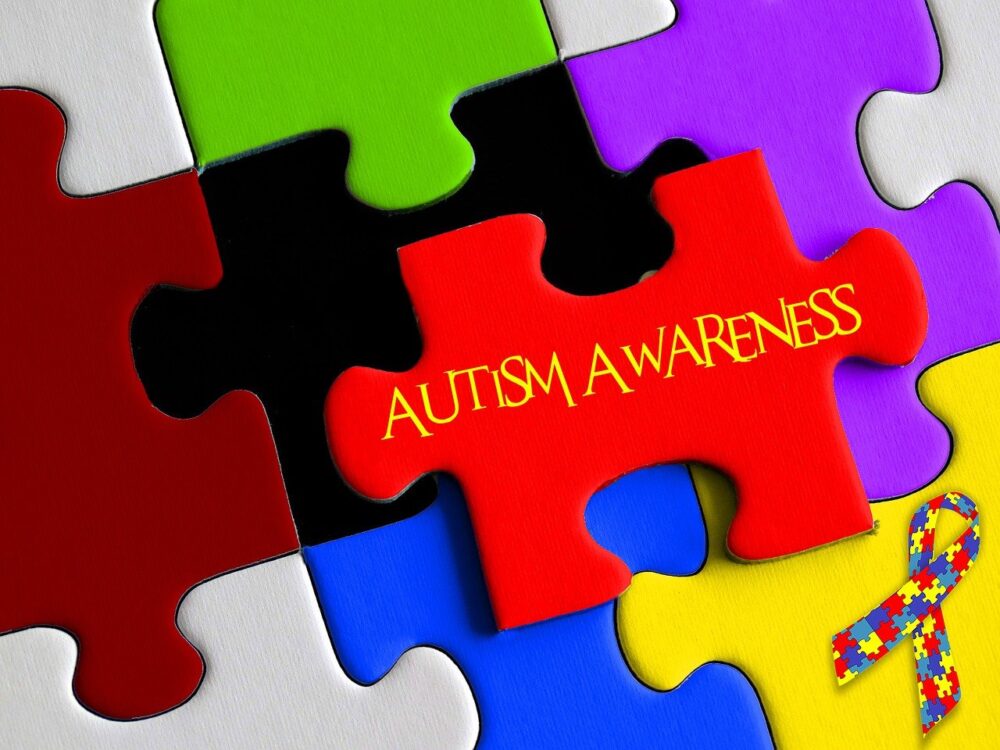
Aimee Grant, Senior Lecturer in Public Health and Wellcome Trust Career Development Fellow, Swansea University
For decades, a jigsaw puzzle piece has been used to symbolise autism across the world. It has been used for charity logos and awareness ribbons, and even tattooed on to the bodies of well-meaning parents.
But for many autistic adults, the puzzle piece isn’t just outdated – it’s offensive. Some consider it a hate symbol: a reminder of how autistic people have long been misunderstood, pathologised and excluded from conversations about their own lives.
The puzzle piece first appeared in 1963, when the UK’s National Autistic Society adopted a logo designed by a non-autistic parent of an autistic child. It featured not just a puzzle piece but the image of a crying child, meant to depict autism as a puzzling condition that caused suffering.
[mid-content-banner]
Ribbon
In 1999, the Autism Society of America introduced a ribbon covered in colourful puzzle pieces. This reinforced the idea that autism was something to be solved. The imagery gained even more prominence when the US-based organisation Autism Speaks, founded in 2005, adopted a blue puzzle piece as its logo.
One autistic advocate described the symbol as a “red flag” – a warning sign that the person or organisation using it may not fully respect or understand autistic people.
So why does the puzzle piece provoke such a strong reaction?
To many, the symbol suggests that autistic people are incomplete, a mystery or a problem in need of fixing. This fits with the medical model of autism, which focuses on deficits and aims to make autistic people behave more like non-autistic people, rather than letting them live authentically.
[lower-mid-content-banner]
From deficit to difference
Because of these criticisms of the medical model, some autistic people subscribe to a social model of autism. This sees autism not as a problem to be fixed, but as a difference to be understood. According to this view, many of the challenges autistic people face stem not from autism itself, but from a lack of understanding and acceptance in society.
The social model is followed by a growing group of autism researchers, including through the Participatory Autism Research Collective. In 2022, the Welsh government affirmed its commitment to a social model of disability.
However, it can be difficult to put this social model of disability in practice in under-resourced healthcare systems.
It is closely tied to the “double empathy problem”. This is the idea that communication breakdowns between autistic and non-autistic people go both ways. In other words, if autistic people are “puzzling”, it’s often because the wider world hasn’t taken the time to understand them.
The neurodiversity movement goes one step further, arguing that neurological differences such as autism, ADHD and dyslexia are natural variations in the human population. Just as biodiversity is good for the environment, neurodiversity is arguably good for society.
In recent years, several major autism organisations have taken steps to distance themselves from the puzzle piece. The National Autistic Society dropped the symbol in the early 2000s, and the Autism Society of America followed suit in 2023. The academic journal Autism removed the puzzle piece from its cover in 2018, in recognition of its harmful connotations.
That said, the symbol is still frequently used, appearing in search engines and image databases.
Research has found that puzzle piece imagery tends to evoke negative associations such as incompleteness and imperfection, whether it’s connected to autism or not. It’s no surprise, then, that many autistic people ask for something more positive, respectful and inclusive.
One popular alternative is the rainbow infinity symbol, first developed by autistic advocates in 2005. It represents the diversity of the neurodivergent community, including autistic people.
The gold infinity symbol, meanwhile, is used specifically to represent autism. The chemical symbol for gold is “Au”, the first two letters of autism.
The puzzle piece was created in the 1960s by non-autistic people to represent a condition they saw as tragic and mysterious. But today, autistic people are speaking for themselves. The overwhelming message is clear – the puzzle piece doesn’t represent us.

Support our Nation today
For the price of a cup of coffee a month you can help us create an independent, not-for-profit, national news service for the people of Wales, by the people of Wales.
Get more trusted Welsh news
Choose Nation.Cymru as a preferred source in Google News to see more of our journalism.
