


Tuesday, 14th July 2026 Cardiff 27° · Clear sky
NationCymru A news service by the people of Wales, for the people of Wales.

Feature

Why tactical voting still matters: Welsh polling and the voting system
By Mark Mansfield
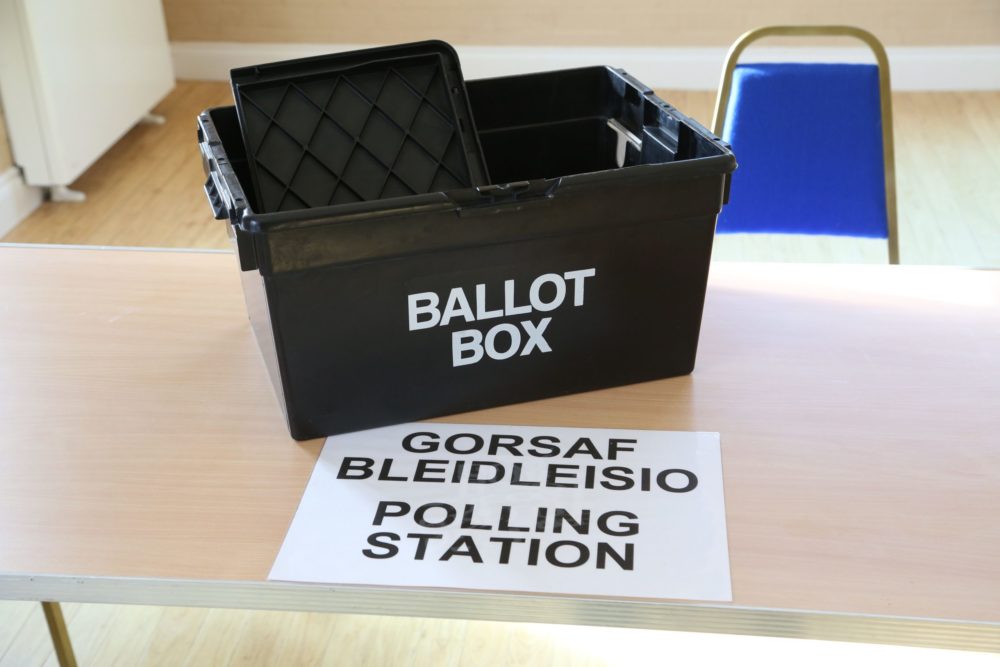
Blwch Pleidleisio Ballot Box. Photo Ceredigion County Council.

Richard Wyn Jones

The prospect of change and, specifically, the end of Labour hegemony has already led to an unprecedented amount of polling ahead of the Senedd election.

We can expect more between now and the 7th of May. While some of the pollsters have substantial experience in Wales, others have yet to test their methods and assumptions against the results of a real-world Welsh election. No doubt this is contributing to some of the differences in the current polling.

But beyond the noise, there is in fact substantial consensus on some very important things.

First and foremost, two parties have pulled ahead of the pack. Whether Plaid Cymru and Reform are effectively in a dead heat or Plaid slightly ahead of Nigel Farage’s latest political vehicle, it is clear that they are the only two with a realistic chance of being the largest party in Wales.

Labour, for so long the dominant political force in Wales, is in third place. While some polling suggests that it’s merely very bad for the party, most pollsters concur that its position is calamitous. Indeed, if the latter are correct then Labour may even find itself in a tussle with the Conservatives and the Greens to secure that third position.

Yes indeed, how the mighty have fallen.

Meanwhile, the pollsters agree that the Liberal Democrats – the contemporary inheritors of the once dominant Welsh Liberal tradition – are trailing in sixth place.

Let’s assume that this is broadly the structure of political opinion as we approach polling day. What might this mean when translated through the new electoral system that has been adopted to elect Senedd members?

Let me make two inter-related points.

First, this system – and in particular the use of the d’Hondt system to apportion seats between the different parties – favours the largest parties. This is because in any given constituency it will require progressively fewer votes for a party to win each additional seat after winning the first. So not only does size matter – it is actively rewarded by d’Hondt.

Second, the threshold to win that first seat is high. Exactly how high will depend on the relative performance of each party in any given constituency. My colleague Jac Larner’s various election simulations suggest that it will vary from around 10% to perhaps 16%. But let’s say, on average, around 12.5%.

If the polls are broadly correct this means that, outside a few constituencies where their party has a realistic chance of reaching that threshold, there will be a lot of wasted Conservative, Green and Liberal Democrat votes.

If the more pessimistic prognoses for Labour support are correct there is also every prospect that a substantial number of that party’s votes will also be wasted.

Campaigning

Readers will know that I’m sceptical that campaigning makes more than a marginal difference, at least in devolved elections. But it should nonetheless be obvious from the preceding analysis that there is potentially a large prize at stake for Plaid Cymru and Reform as the current campaign reaches the final stages.

If Dan Thomas and his colleagues can manage to persuade sympathetic Conservative voters in those constituencies where Tory candidates have no chance of being elected to vote for Reform, then their party will maximise the benefits of the d’Hondt bonus for larger parties – potentially increasing its number of seats from 1 to 2, 2 to 3, or even 3 to 4 in each of the 16 Senedd constituencies.

But similarly, if Plaid Cymru can persuade Liberal Democrat, Green or Labour supporters in their parties’ ‘no hope’ constituencies to vote for Plaid if only to ‘stop Reform’ from being the largest party, then d’Hondt will do its thing and the party’s prospects will be strengthened still further. And the potentially great news for Plaid is that the pool of progressive voters is larger than the pool of more conservative voters in Wales.

Yes, this is a more proportional voting system, but given the structure of party support in Wales and the specific details of the operation of the new electoral system, the incentives for tactical voting are still very much in place. That is, if the electorate can recognise them.

Professor Richard Wyn Jones is Director of the Wales Governance Centre at Cardiff University


Support our Nation today

For the price of a cup of coffee a month you can help us create an independent, not-for-profit, national news service for the people of Wales, by the people of Wales.

12 comments

Steve D.

It does look like a hung parliament and even if Reform do get the largest amount of seats - it would probably struggle to form a government. Other than the Tories no one else would work with them. Which would probably mean a coalition of progressive parties being the only answer. However, that wouldn't look good for our democracy and Reform would use it against the new Senedd government and undoubtedly the legitimacy of the parliament itself. So hopefully this will be a strong reason for many to vote tactfully next month, and vote Plaid, the risks to the very existence of the Senedd are very real if they don't.

Reply
Llynn

I agree Reform winning the most seats and forming a government would to many not look good. I would if Plaid in that position go to Reform and give them a number of requirements for support and let Reform turn them down, then turn to the Welsh public and say see Reform aren't serious about forming a government we have to form an alternative. Secondly it must be remembered that Reform in another guise UKIP in 2016 (with a number of current candidates in the then Assembly), along with Dan Thomas' then party voted for Leanne Wood as FM not the leader of the largest party Labour; as we speak Reform are in Scotland trying to get other parties to form a government of the smaller parties rather than the SNP and this is a proportional system. Sadly I fear in the circumstances above the cowed media will simply trumpet Reform propaganda about a stolen election.

Reply
Richard Jenkins

I’m grateful for the guru of Welsh political reality for being clear on this! Tactical voting is very much in play here. It’s time to put down your prejudices & put your cross on the only party that can stem the attack on our democracy. Vote Plaid Cymru to vote for the future of our Nation! Reform will turn us into a county of England. Don’t let English nationalists will finish off what Edward I started! Yma o’ Hyd!

Reply
Llond bôl

The new voting system is a disgrace. Closed lists and massive constituencies only lengthen the distance between the electorate and their representatives. This will not improve democracy, only make people feel like the Senedd is much further away from them and is listening less. The only positive I can see of this system is that it was chosen to keep Labour in power and it is gratifying to see it backfiring on them!

Reply
Dom

It's a stepping stone to something better. For years folks on the left were convinced PR was the answer. It's why they refused to back AV in 2011. But now they have PR, they don't like it because it doesn't feel very democratic.

Reply
Llond bôl

Why do we have to have 'a stepping stone to something better'? Why won't our politicians just deliver what is better?

Reply

In reply to Llond bôl

Dom

Like I explained, they thought PR was better. And it is better than FPTP, just not as good as STV.

Reply
Alun Smith

Absolutely. Lend your vote to Plaid Cymru because the alternative is unthinkable.

Reply
Hywel Davies

Tactical voting isn't just about lending a vote to Plaid to keep Reform out, or vice-versa. It's also about who gets the 5th & 6th seat in each constituency. A point is reached in each round where the smaller parties come in to play when the Plaid/Reform votes are d'Hont-ized down to rumps. It might be better for *some* Plaid supporters to support Gwlad/Propel for an independence-supporting candidate in 6th place, rather than a wasted Plaid vote when Plaid already have 3 or 4 seats. Similarly for Reform supporters to lend a vote to the Tory candidate for them to get the 6th berth. It's a gamble - but that's tactical voting for you. STV would sort it out properly

Reply
Editors Assemble

I haven't seen any polling that suggests that voting for Gwlad/Propel will be anything other than an entirely wasted vote. I expect Propel to get a few votes in West Cardiff but still come nowhere near getting a seat. Elsewhere they'll be entirely irrelevant.

Reply
Blodwen

I am surprised that I have to disagree with Prof Richard Wyn Jones on one important point. The absolute maximum threshold to get a seat is 14.15% (or to be exact, one seventh plus one vote). It is wrong to say that the threshold might be as high as 16%. In fact, if you look at the constituency scenarios (using the projections on Jac Larner's excellent resource) you will very often see the Green Party taking seats with 11.5%, 11.0%, even 10.8%. (I am referring here to the projections using the data from the latest YouGov poll that gave the Greens 7 seats, including places like Mynwy-Torfaen and Fflint-Wrecsam). So, for anti-Reform voters in a number of constituencies, voting Green gets a Green MS. However, no-one can dispute the fact that the Lib Dems are no-hopers almost everywhere

Reply
Y Cymro

Tactical voting has always occurred in Senedd elections, and it will again in May. However, with Welsh Labour having been in power for 27 years and the shambles that is UK Labour, this creates a political perfect storm. Reform UK, like the Brexit Party and UKIP before it, is effectively a one-hit wonder—here today, gone tomorrow. Plaid Cymru, by contrast, is a serious party that is in it for the long run and does not seek to use Wales as a doormat for Westminster power, as Nigel Farage and his allies do. Does Reform, with its parachuted leader Dan Thomas, deserve the reins of power? No. It lacks real policies and shows little respect for devolution, whereas Plaid Cymru has deep roots in Wales and an ambitious manifesto. There are two types of voter: those for Wales and those against. I would never vote for a party like Reform that, in my view, would harm Wales. That is the choice facing the Welsh electorate on the May 7th: either you want the best for Wales, or you are willing to put Nigel Farage's interests first.

Reply

Leave a reply

Replying to Blodwen Cancel

I am surprised that I have to disagree with Prof Richard Wyn Jones on one important point. The absolute maximum threshold to get a seat is 14.15% (or to be exact, one seventh plus one vote). It is wrong to say that the threshold might be as...

Comments are reviewed before they appear.
