Friday, 17th July 2026 Cardiff 20° · Clear sky
NationCymru A news service by the people of Wales, for the people of Wales.

Feature

Welsh historian calls for urgent overhaul of GCSE history qualification
By Emily Price
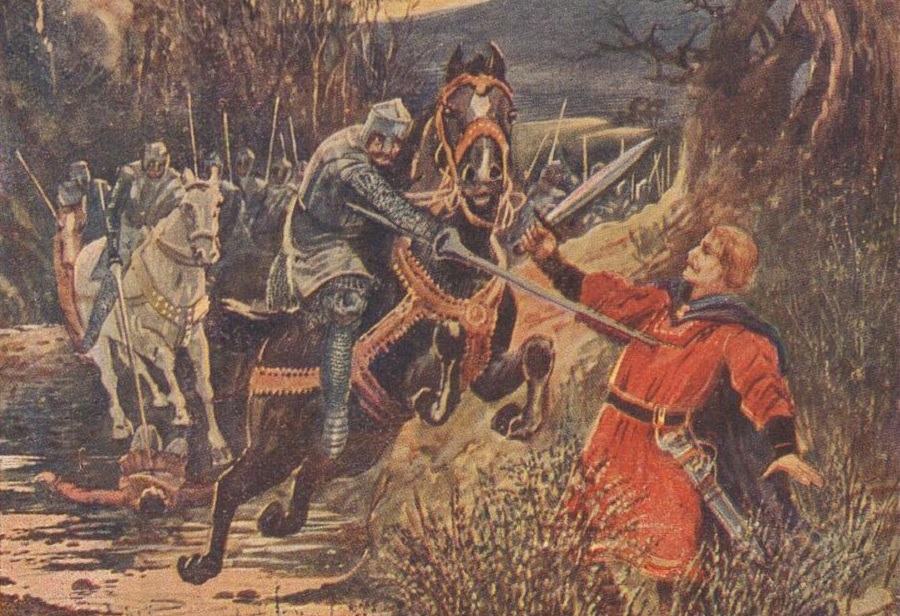
Llywelyn ap Gruffudd's death in 1282. Picture by the National Library of Wales (Public Domain).

Emily Price 

Welsh history is being sidelined in secondary schools and a complete overhaul of  Wales' GCSE history qualification is urgently needed, a prominent historian has warned.

Dr Huw Griffiths is a Senior Lecturer in Education at the University of Wales Trinity Saint David and is an expert in Welsh history with a book on the Welsh and the American Civil War due to be published next year.

Around ten years ago, he was one of 200 teachers that had a hand in compiling the content of Wales' GCSE history qualification.

But Dr Griffiths says that despite his best efforts, the resulting qualification never had enough focus on Welsh history. He is now battling for this to change.

[mid-content-banner]

'Battle'

With a new GCSE history qualification set to be introduced in Wales in September 2026, Dr Griffiths has called for a complete re-design of what 14 to 16-year-olds are taught about their own country's history.

The education academic has suggested that the people of Wales themselves should have a hand in what content should be include in the next GCSE history qualification.

Dr Huw Griffiths - Senior Lecturer in Education at the University of Wales Trinity Saint David

Dr Griffiths said: "We are fighting a battle to get Welsh history in our schools.

"As a country we should look together and decide what are the 10 or 15 key facts, events, dates, or figures that every pupil in Wales ought to learn about.

"Every child in Wales should know about Aneurin Bevan and events like the Aberfan disaster. Dates like 1812, 1822 and 1847 are important too.

"Children in Wales should know these things -- about who we are as a people. It’s just bonkers that we don’t emphasise it in schools."

[lower-mid-content-banner]

American history

Dr Griffiths added: "Every school in Wales has to do one unit on Welsh history. The way that the curriculum has been written says children have to do three different periods in history. Modern history, the Middle Ages and early history.

"What will happen in every school in Wales is for the modern period they’ll either do Nazi Germany or they will do American history to draw students in.

"The middle period is quite a dry period for Wales -- there’s two units that can be chosen, children will either do the plague or the Civil War.

"But the plague affected almost every country in the same way and the Civil War is called the English Civil War for a reason. Because it predominantly happened in England.

"Apart from St Fagans, there was no other major incident in Wales -- the Welsh were predominantly supporting the Royalists -- there’s very little Welsh history in the Civil War period.

"For the early period one of the units is Lord Rhys. I'd argue that four months just looking at Lord Rhys is too much."

Key topics

Dr Griffiths says that Welsh language departments in both Welsh and English medium schools do a "far better job" of teaching Welsh history than school history departments do.

He has also compiled and studied the details of history curriculums taught in schools across the world and compared them with Wales.

Dr Griffiths said: "It’s an eye-opener. The amount of history being taught in other countries is vastly different to Wales.

"In Wales, children know far more about Nazi Germany and American history than they do about the Aberfan disaster. They know who Rosa Parks is, but they haven’t got a clue about important figures from their own country."

Dr Griffiths has suggested several key Welsh historic topics that should be taught to children in Wales.

These include the death of the last Prince of Wales, Llywelyn ap Gruffudd, and the 1847 Blue Books report -- a three-part government publication about the state of education in Wales that was branded a disparaging and prejudiced attack on the Welsh people.

Dr Griffiths said: "If you were to ask the majority of young people in Wales what happened in 1966 they are far more likely to say that England won the World Cup.

"That shouldn’t be the answer, the answer should be Aberfan. There are certain dates in Welsh history that are very important.

"1282 was when Llywelyn, the last Prince of Wales, was killed. 1847 was the Blue Books report which had a massive impact on the Welsh language. These are the dates people in Wales should know about.

"We should take pride in the fact that Lloyd George brought the pensions in and changed British society as a result.

"Aneurin Bevan brought the NHS in. These people changed our society and we should feel pride towards this and make our young people aware of it."

'Pride'

He added: "Our story and who we are is important. Look at Nobel Prize winners - Wales has created five or six - no other country of our size comes close to that.

"In drama and television, there’s no higher award than the Oscars. Wales have won seven Oscars for best supporting actors and actresses.

"Even if you look at the subject of maths. The equals symbol was created by Welsh mathematician Robert Recorde. William Jones created the Pi symbol - these are symbols that are used worldwide.

"People in Wales can lack confidence and by teaching children about Wales’s past we’re building that confidence and showing that we are an amazing people with amazing stories."

Politics 

Dr Griffiths has believes that the quality of Wales' curriculum is down to politics.

He said: "We’ve had the Labour Party in the Senedd for over half a century and a national curriculum for 38 years.

"And yet we are still ensuring that young people in Wales have no awareness of the story of Wales and who we are.

"You’ve gotta start asking the question why? Why are we doing this?

"I feel like I’m banging my head against a brick wall - we don’t seem to be moving on with any of this in Wales."

The new GCSE History qualification will be introduced in September 2026, as part of the new National Qualifications for 14 to 16-year-olds in Wales.

The redesigned qualification has been updated to relate to and support Wales' new curriculum and Welsh history will be mandatory.

Mandatory

A Welsh Government spokesperson said: "Welsh history has been mandatory as part of the Curriculum for Wales since 2022: including learning about children’s own locality.

"Learners are taught how history, language, diversity and culture have shaped Wales to become the proud and unique nation it is today.

"We are working with Adnodd to support teachers with resources, advice and information.

"Qualifications Wales, as the independent regulator has developed new Made-for-Wales qualifications to align with the Curriculum for Wales. They have engaged extensively with teachers, universities, colleges and professional bodies."

Plaid Cymru spokesperson for Education, Cefin Campbell MS said: “Understanding Wales begins with knowing our own history. Plaid Cymru has long championed putting Welsh history at the heart of our curriculum, so every young person grows up with a full understanding of our nation’s story.

"We’ve consistently pressed the Welsh Government to ensure it’s taught meaningfully and with pride in every school and forms part of our qualifications. In government, Plaid Cymru would make sure Welsh history is a core part of our curriculum and qualifications, supported, celebrated, and given the importance it deserves.”

For the price of a cup of coffee a month you can help us create an independent, not-for-profit, national news service for the people of Wales, by the people of Wales.

Get more trusted Welsh news

Choose Nation.Cymru as a preferred source in Google News to see more of our journalism.

Choose Nation.Cymru as a preferred source in Google News

28 comments

John Glyn

When the Labour - Plaid package was first revealed, 22 November 2021, the Wales based optional modules appeared at first sight to represent progress - the Lord Rhys and Owain Glyndwr. Laborious perhaps to study for four months according to one critic. However, the greatest fear is that Wales's learners would still end up as always mainly studying the 'Welsh' Tudors and consequently how benign, inevitable, beneficial, the Union was to Wales in all respects. Plus, the six wives of course. Most likely they would also be persuaded to choose the 'Civil War' module. Not an 'English Civil War' module because there isn't one – oh well. However far more worrying is that there is nothing at all in the more compulsory part of the curriculum about the state building efforts of the princes in 12th-13th centuries. There is effectively no explanation whatsoever as to why innumerable castles pepper our land - even though again, according to the same critic, our primary school children have traipsed up to the see them in all weathers - but now there is to be no follow up. But then again of course our own particular takes on history are never politically value free are they. Further - whoever in our 'Welsh' Labour administration gave the nod to the module title - 'The Third Reich - a case study in modern Nationalism' - knew very well what they were doing. Likewise, those historians who came up with the module - 'The Spanish conquest of the Aztecs - a case study of early Colonialism' and then 'Süleyman - a case study in early modern Imperialism'. These, whilst there is nothing in the curriculum as far as I can see about the horrors inflicted by the greatest imperialists and colonizers of all. Hopefully the architects of this curriculum can rest easy that they've not unduly distorted Welsh children's understanding of their history yet again by omission.

Reply
John Glyn

The greatest failure, transgression, here in my view is the persistent and stout refusal to 'tell the story of a nation' - a political decision of course. Our ruling British nationalist status quo's apologia always being - 'Wales has no recognizable continuum in terms of a *national history*, only the multiple *histories* of diverse groups/identities in differing locations within a geographical 'Wales' at various points in time.' Other countries would not put up with this ignominy. Other countries, for better or for worse, tell 'the story of their nation' unashamedly.

Reply
Frank

Teaching true Hanes Cymru/Welsh history would be a huge embarrassment to England. The painting above depicts a true picture of how "brave" English armies went around Britain slaughtering individuals. Outnumbering in large numbers was their key to conquering innocent and often armless farmers and smallholders just to take their land. Very very embarrassing. They don't want anyone to know. Modern day warmongers could be described as tame in comparison.

Reply
andy w

I am a great supporter of Welsh history being taught for all. Currently in the absence of proper teaching, Welsh individuals share versions of history and may make mistakes. It should be noted that some of England’s initiatives to influence the Welsh have backfired. In 1990s Europe set transport plans linking the rail and ferry networks https://transport.ec.europa.eu/transport-themes/infrastructure-and-investment/trans-european-transport-network-ten-t_en Englands Department for Transport cancelled with no consultation the plan to link Rosslare and Fishguard / Dublin and Holyhead / Belfast and Stranraer with the rail and replaced with Dublin to Liverpool (not on rail network). Following networking events between Welsh and Irish academics the Liverpool to Dublin route was cancelled and the Dublin government involved the European Union and made comments about England that I cannot publish.

Reply
Amir

History is brutal and as described often one sided. I agree, Welsh History is rich and needs to be taught in our schools. Additionally this will demonstrate why the actions of deform are troubling for Wales and the Welsh people and the Welsh language.

Reply
Steve D.

It's not until I had to educate myself, regarding Welsh history, that I realised it is so important for the survival of our culture and nation. I was told nothing about Wales' past in school in the 70s and 80s - just English or 'British'. I believe it's better now but still needs to become far more intensive and comprehensive. The education system in Cymru owes it to our younger generation in order to keep our country alive and relevant.

Reply
Owain Morgan

26 years after the devolution of education and we still don't teach children about Rhodri Mawr, Hywel Dda, Gruffudd ap Llywelyn, Llywelyn Mawr, Llywelyn ap Gruffudd, Owain Glyndŵr, Mam Cymru, the treachery of the blue books, the Welsh knot, Lloyd George and the People's Budget, Aneurin Bevan creating the NHS, the Aberfan disaster and the Miner's strike. WTAF!! I'm ashamed of how little we have actually done with devolution to teach future generations the history of Cymru/Wales.

Reply
Wrexhamian

Hopefully a Plaid Cymru government will attend to this if they win next May.

Reply
Amir

Yes please

Reply
Mab Meirion

Every parent can attend to this, how? Books, put the games and the fiction down, you can't beat Hanes Cymru... The idea that an education system will not teach their children the history of the country they are in is crazy but par for those who manage greater Cymru... Google Welsh Historians, what a list; Gwyn A. Williams John Davies... Just bought y'day for a fiver The Heart of Northern Wales two vols 1912, 1927 rough reading copies but sound. The information contained there-in immense...

Reply

In reply to Mab Meirion

Mab Meirion

Charity shops are turning books away, every town should have a history book bank with volunteers with teaching skills for basic reading and numeracy. . Be proactive in the education of our kids...

Reply
Ben Davies

Growing up in the Amman Valley in the 70s and 80s I remember being taught local history in primary school (how Y Gwter Fawr became Brynaman) but also had the Anglo-Saxon conquest shoved down our throats. I was left thinking that we were the Saxons. And even had a sense of pride when we watched a programme about the battles and the Saxons clonking the Britons. I was horrified when our teacher then said that we were the Celts. All our teachers we Welsh-speaking and so were all the kids, save for a couple of kids from Swansea, the Pakistani doctor's kids and a few from over the border. A couple of the older teachers pretended not to speak Welsh and would refuse to answer you in anything but English. Roll on my time at the comp. We studied the Roman invasion of Wales in the first year and then in the second year we looked at all things English. Our teacher, fair play, gave us a page of Welsh history on our princes. Then it was back to English history with a tenuous link to the Tudors being Welsh. I never felt the need to study history after that. I knew I would not learn anything about myself, my area or the country that I love dearly. Our history is ours to teach, share and rejoice in. There are things the Welsh have done that we should be ashamed of. But, everybody should know about it and own it. After all, this is who we are, or at least should be.

Reply
Alan Thomas

Neil Kinnock said with his Labour Party mentality, “Between the mid sixteenth and mid eighteenth centuries Wales had practically no history at all…before that it was a history of rural brigands who have been ennobled and called princes”

Reply
John Glyn

Kinnock's 'Rural Brigands'. Prince Llywelyn ap Iorwerth - husband to Princes Joanna Plantagenet, daughter to King John of England – their son Prince Dafydd ap Llywelyn, was therefore a grandson to John, and great grandson to Henry Plantagenet, Henry II of England. Prince Llywelyn ap Gruffydd – was husband to Eleanor de Montfort, daughter of Simon de Montfort, Earl of Leicester, the most powerful baron in England in his day. Eleanor de Monfort, mother Eleanor of England, was also a first cousin to Edward the 1st. Prince Dafydd ap Gruffydd – husband to Elizabeth Ferrers, daughter of Robert de Ferrers, Earl of Derby. Owain Glyndwr, father of Catrin Glyndwr – wife to Edmund Mortimer, brother in law of Harry Hotspur. Owain ap Maredydd Tudur – husband to Catherine de Valois, widow of Henry V – grandfather of Henry Tudor, Henry VII of England...

Reply
Mab Meirion

Bit like that in the fifties, gentlemen who became brave officers leading the fight against the 'nazis', decorated they often became ennobled and called Sir... I have know several just on the Mawddach and its tributaries...

Reply
Zarah Daniel

Sure. Blame the Labour government. Blame the iniquitous Tories who held Westminster for so long if you like - it feels good to have someone to blame. Or we could look closer to home......... Do you remember the Poll-Tax demonstrations? The women at Greenham Common? There was a time when people in this country cared enough to demonstrate about things that mattered, to organise, to start letter-writing campaigns and sit-ins and protests. When something wasn't right, people made sure the world heard of their displeasure. Nowadays (and for far too long) people are so busy on their phones/computers/gaming machines of whatever variety, that they "don't have the time" so they stick a comment on social media or sign an online petition and call that "getting involved". Then they say "Well we showed how important it was to us and the government did nothing"........ well yeah, you showed exactly how important it was - less important than a few hours of C.O.D. or YouTube or Netflix and so they treated it as that important. Nowadays, if someone actually demonstrates people tut about being inconvenienced. Our priorities are messed up. Who among us ever really fought for better representation of Welsh history in the curriculum? How many of us actually wrote to our MP? How many wrote to the Secretary of State for Education? Who wrote to their MS? Who wrote to the Senedd member responsible for Education? How many of us wrote to the press to ask them to raise public awareness of the issue? No? Me neither. We all expected the government to know that this was a priority for us along with all of the other things that people keep telling government are priorities. We expected the people involved to just know that it mattered to us. I'm not blaming anyone - I'm no better - I'm just saying that rather than blame a government for this or any other issue (and then imagine that the next government will fix things) members of the public should be more engaged with what is going on and with the decisions being made in their name in stead of sitting back passively and complaining later.

Reply
John Glyn

But it is right that we hold the Labour party to account for this travesty. Wales has faithfully voted for it for nigh unto a century. If it has taken upon itself to rule us, care for our best interests, then surely we have the right as a people to expect better than this from it.

Reply
Andy w

If I have followed Welsh politics correctly, Plaid Cymru and Welsh Labour have similar policies that Reform / Conservatives (oil exploration, more motorways built etc). No party may win Senedd, but Plaid Cymru and Labour partnership may be a good option for Wales as then Westminster will have to listen more to Wales. Labour has benefitted in the past from politicians such as Rishi Sunak visiting Wales and him telling everybody that he will not be calling the Brecon Beacons by its’ Welsh name. A good strategy for both Plaid Cymru and Labour would be to let Reform have unlimited airtime for the public to then listen and wake up!! One of my friends in the UK lead at The World Bank and is a career civil servant - if they don’t like the politicians the civil service has always let them fail. The next year will be interesting to observe, but whoever you vote for the government always gets in!

Reply

In reply to Andy w

John Glyn

Why still apologize for Labour when it has clearly failed miserably on this issue - the teaching our history? Please don't change the subject Andrew. On our placenames Labour refuses to legislate to protect them does it not?

Reply
Amir

When it is obvious a particular political party is attacking the Welsh language and drawing the English flag on roundabouts here is Wales, then our government should have been more proactive on countering this move, making changes to the curriculum and speaking louder rather than covering in the back of the closet.

Reply
Tomi Benn

We oldies (I’m in my 80th year) need to learn or relearn more of the history of Cymru and BBC Cymru/Wales should be tasked alongside education establishments with programmes/courses for people of all ages. It will then be our responsibility to ensure that the history is passed on to the next generations of Cymry, whether they live here or not.

Reply
Cymro Sir Fynwy

Cytuno 100%. Wnes I Lefel A a ddysgu am polisi tramor Otto Von Bismarck a dim byd o werth am Gymru. Oedd hwn nol yn y saith degau a mae'n debyg bod dim lot wedi newid. Mar rhaid I blant ni dysgu am hanes Cymru

Reply
Frank

We have a television channel in Cymru, S4C, who could run programmes on Hanes Cymru/Welsh History to adults and children in Cymraeg and Saesneg/English but are too afraid to do so just in case their budget would be stopped to shut them up. Until then the channel will be showing cartoons and the usual boring evening programmes. Money for old rope.

Reply
Frank

Gwynfor Evans would be shocked and sad at the way the channel he fought so hard for is not being used to its true potential. It was once said many years ago that if you wanted to know how S4C's budget was being spent the answer was to "look in the studio's car park at the cars".

Reply
Mab Meirion

Worked for Oxfam...

Reply

In reply to Mab Meirion

Frank

???

Reply

In reply to Frank

Mab Meirion

Round the back of their office in Oxford was found a row of shiny BMWs bought with donations years ago no ref on google...

Reply
James Edwards

Absolutely crazy that we have to fight for more history of our own country to be taught in our schools. Just reveals the kind of weak subservience that we’ve been subjected to. Young people want better than this and they are our future

Reply

Leave a reply

Replying to John Glyn Cancel

Why still apologize for Labour when it has clearly failed miserably on this issue - the teaching our history? Please don't change the subject Andrew. On our placenames Labour refuses to legislate to protect them does it not?

Comments are reviewed before they appear.