


Sat, 18th July Cardiff 18°
Nation.Cymru wordmark
Advertisement

Feature

Wales railways caught in the business case trap
By Mark Mansfield
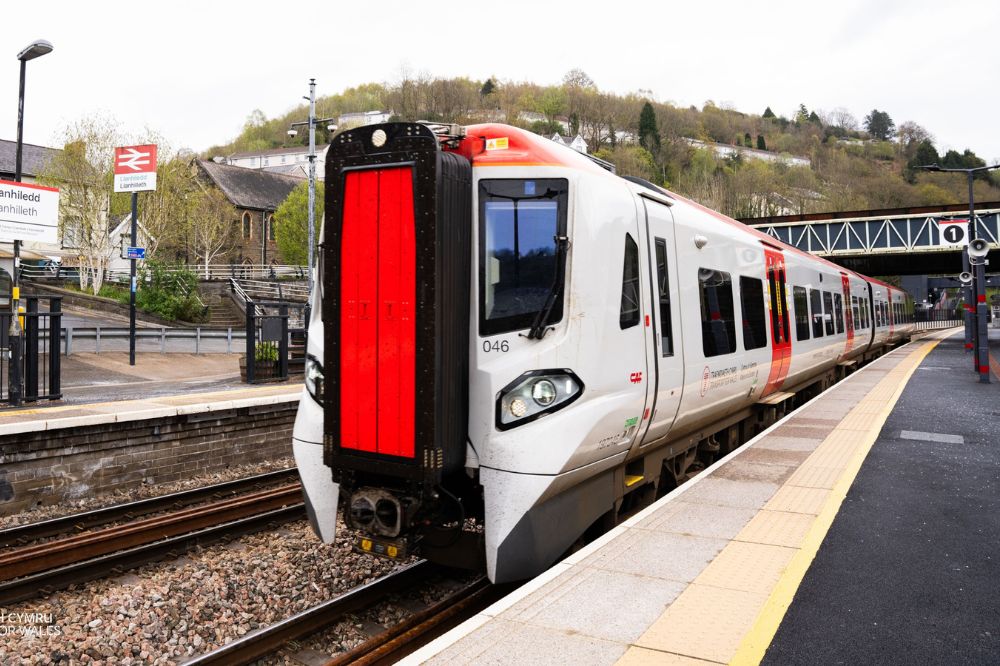
197 train launch on Ebbw Vale line at Llanilleth

Professor Stuart Cole, CBE. Emeritus Professor of Transport Economics and Policy, Prifysgol de Cymru / University of South Wales

Several local groups in Wales have gathered support for rail reopening schemes and some have been successful because of land developments with new houses or industrial/commercial premises, or resulting from pre-election political manifesto commitments. Many however have hit the buffers.

There is a daunting process facing local campaigners and in this column I will look at how many hurdles they have to overcome through admirable tenacity.

In the cases of, for example the Ebbw Vale Line, it was successfully re-opened (but at Welsh not UK government expense and was a Senedd election manifesto commitment) and has exceeded its passenger demand forecasts.

The rail routes between Bangor and Afon-Wen and Carmarthen and Aberystwyth are in early stages of any reopening process.

[mid-content-banner]

HM Treasury Green Book

I admit that this column has been somewhat realistic (some might say pessimistic) in terms of reopening lines especially in rural Wales and I have referred to the HM Treasury Green Book and to the business case process.

The Green Book’s objective is to provide a common set of criteria to evaluate investment projects taking into account costs and economic, financial, and social benefits. Then it aims to deliver a priority list within the budget available.

Despite working in transport economics for fifty years with considerable reliance on economic evaluation of schemes, this columnist will play devil’s advocate to show what hoops have to be gone through to reopen a railway.

[lower-mid-content-banner]

Strategic Outline Business Case

The first stage is the Strategic Outline Business Case (SBOC) which considers two key elements:

  • Does it solve a transport problem (e.g. road congestion)?
  • Does it fit into the government’s strategic transport plan?

A potential stumbling block is – which government must be persuaded? National roads are the concern of Welsh Government. Railway infrastructure in Wales (outside Cardiff Valleys) is the responsibility of England’s Department for Transport (DfT).

This dichotomy has affected the North Wales Main Line (NWML) electrification and line speed increase despite being a strategic route for Welsh Government.

Since the 1970’s the DfT has not appeared to see the NWML or Valley Lines electrification as strategic routes.

HS 1 (London to the channel Tunnel), the Ebbw Vale to Newport/Cardiff, line the Dartmoor Line (Exeter to Oakhampton rural/tourism railway), the Borders railway (Edinburgh) and another eleven schemes  all came out on budget.

Many lines in Wales and England have been suggested for reopening but have not been successful in persuading the DfT to invest despite many plans and evaluation. Transport for Wales spent over £300,000 on a feasibility study the for the Carmarthen – Aberystwyth line with no impact on the DfT and commissioned transport consultants Atkins Realis to include the Afon-Wen to Bangor line in its recent north Wales rail study.

Outline Business Case

Such feasibility studies provide much of an SBOC which if it shows a potentially workable scheme it progresses to an Outline Business Plan where, I understand, the Swansea District Line proposal has lain for six years at DfT though it reduces journey times between Cardiff and west Wales by up to 22 minutes.

At this stage there is serious quantified analysis (still in London, not Cardiff) of detailed costs and benefits.

Even though HM Treasury made changes to the Green Book in 2018 to give greater emphasis to the strategic case, it is the guardian of the public purse and the benefit cost ratio (BCR) that  becomes a key factor in approving the scheme. Using funds outside its own resources (e.g. borrowing) Welsh Government would have to apply HM Treasury criteria.

The Treasury will look for a typical BCR of 2:1 or above although as we have seen with many schemes this may have been the original figure but fell as construction progressed.

Final Outline Business Case

Any group will need some combination of Welsh Government, local authority and private funding support in preparing the OBC. Producing an approved result at this stage is critical to the scheme going forward to the Final Outline Business Case (FOBC).

A quicker and easier process

This is a long process and can take many years. But does it need to take so long and be so complex?

Many plans and papers are prepared which may show the value of re-opening a line and this generates further frustration amongst local supporters. It requires considerable resource and expenditure. There can be a simpler, quicker, approach than the existing modelling process.

During this columnist’s fifty years of transport economic analysis it has been possible for experienced transport economists, engineers  and planners using DfT criteria, on a less complex basis, to assess the local land position for the route and can use other economic models to forecast future costs and overall market demand/revenue.

Cost inflation will be much the same for any railway scheme. This would be sufficient to show if the scheme has value.

The evaluation process is no different from that for private sector commercial developments. The business case for  a retail park must estimate costs, the construction period, and will its tenants attract/satisfy demand sufficient to generate revenue for the developer and the retail park commercial users.

A parallel is where Network Rail provides the new railway and the train company provides sufficient revenue to cover the track access charges and operate within the revenue support resource available. These represent economic growth, reduced road congestion and air quality elements
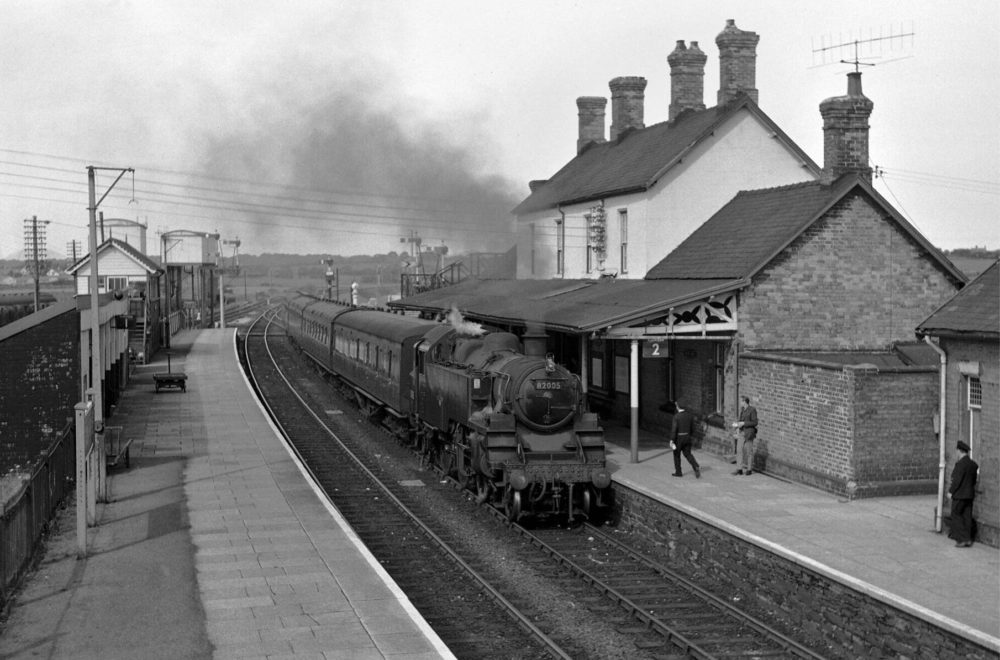
A train arriving at Afon Wen in August 1962. Photo by Roger Joanes is licensed under CC BY-NC-ND 2.0.

Risk-averse paymasters

However as so many schemes have exceeded budget and time scale the DfT has become risk-averse and so requires robust revenue forecasts including modal shift from road to rail for both passengers and freight. DfT and Welsh Government want value for money from the Afon-Wen to Barmouth route which Lee Waters has reasonably estimated will cost £2 bn.

Considerable work (unpaid in their own time)  is being carried out by local group members at Afon-Wen /Bangor and Carmarthen/Aberystwyth. Welsh Government, local authorities and others will spend money on expert advice. Hopefully that does not come to naught.

However,  DfT and Welsh Government will  ultimately use travel time saving as a key criterion because most travellers want to get to their destination in the shortest possible time and their message has been extended to political decision makers.

For the paymasters, (currently the DfT for Wales’ rail infrastructure) journey time saving is the key criterion rather than economic growth through tourism or employment.

This column would advise a close look-between-the-lines at the Dartmoor Line. After many years that hard-working group had employment creating schemes to put forward but had to put an emphasis on what the DfT want to see – an acceptable BCR – for their scheme to be considered.

For the price of a cup of coffee a month you can help us create an independent, not-for-profit, national news service for the people of Wales, by the people of Wales.

Get more trusted Welsh news

Choose Nation.Cymru as a preferred source in Google News to see more of our journalism.

Choose Nation.Cymru as a preferred source in Google News

20 comments

Boris

It's extraordinary that economic growth isn't considered important when funding transport projects. This is presumably because central government doesn't have a department for the economy and short-termist Treasury beancounters have total control. Liz was right when she talked of an anti-growth coalition.

Reply
Lord Custard

Wales needs rail infrastructure to be devolved. The DoT are useless for anything outside London. The Portishead reinstatement being a prime example where an overwhelming business case has been ignored with delay after delay.

Reply
Ap Kenneth

The Lower Thames Crossing appears to have a Cost Benefit Ratio of only 0.48 (ie it returns 48p for every pound spent) and yet it was allocated £500 million for plans and will have a total build cost of £12 billion plus, but then it is not in Wales. One rule for the already rich (infrastructure wise) as against those that do not?

Reply
Peter J

I enjoyed the article; thanks to the author for the in-depth view. This largely reflects my own (less educated) perspective. It's very difficult to see how proposed lines such as Bangor–Caernarfon or Afon Wen will ever be approved under the Treasury Green Book assessment. Especially when you see what does get approved. The benefit of lines like Ebbw Vale, Ashington, or Dartmoor is that they were already in use for freight or heritage rail before being reinstated as functioning passenger railways. As a result, the infrastructure costs were low. That’s not the case for Bangor–Caernarfon or Carmarthen–Aberystwyth. Another aspect is whether the WG, via TfW, would want to operate these lines on an economic basis. It’s fairly well known that much of the North Wales main line operates at a loss, and these new lines are unlikely to be much different. There are positives, however; all three of those reinstated lines listed aobve proved far more popular than their business cases predicted. And the case needs to be made to the treasury, it will be unwise to write off large parts of the country. That said, I don’t quite understand why rail has become such a major issue in welsh politics. In my part of north wales, only 0.7% of the working population commutes to work by train. Buses are far more widely used, and that’s where real improvements in people’s lives can be made - and quickly. My guess is that the opposition has very little to say on key issues like health, economic development, or education.

Reply
Boris

The reason is resonates is the stitch up is undeniable. There's absolutely no legitimate excuse for 5% of the population getting 2% of the rail funding. All this talk of value for money is fine but it should be used to decide which projects in Wales to fund with 5% of the pot, not used as an excuse to spend the Welsh share in London.

Reply
Peter J

If it is supposedly 2% of infrastructure funding, which I agree is lower as a % of population. But it's worth remembering most UK government spending on railways is actually on running the network through subsidies. This is largely unknown across the different train operating companies as it is commercially sensitive and not in the public domain. Because it's unknown, it gives plaid the ammo it wants, but if the network is fully nationalised this number could become public, presumably. In any case, I think it's fairly obvious TfW receives a lot more support than say, south western, does. Its worth thinking about perspective and understanding others arguments. Sadiq Khan, for example, once said as 55% of all railway income into the UK is through sales comes in and around London, so that justifies it's extra funding it gets. Wales by the way is around 1%. My view is I'm yet to see a detailed report on what devolved railway would look like, even if we lose money. I think we need to use trains more in Wales to justify expanding the network (if it's devolved or non devolved) . And why invest in this when buses are far more important to people's lives anyway. Look over at Ireland, unless you're travelling Dublin to cork, you take a bus., because it's reliable, cheap, has a wide network and is regular.

Reply

In reply to Peter J

Boris

You can't use the consequences of underfunding to justify further underfunding. People can't use a network that doesn't exist, or isn't affordable or reliable. The UK's economic model is that the regions and nations have their hands tied to ensure that London is the sole breadwinner and in return it subsidises the rest of the UK. Of course this means rail serving London will be the most profitable. But it should also mean that there is much greater subsidy of rail outside of London, a population share of funding is the minimum not the target. And even central government analysis confirms this isn't happening: https://www.gov.uk/government/statistics/rail-factsheet-2023/rail-factsheet-2023#rail-finance-and-government-support The above link suggests Wales gets 3% for a 5% population share, which presumably includes all forms of spending. And Ireland's railway is far more extensive than just Dublin to Cork. Is your view from before all the EU investment?

Reply

In reply to Boris

Peter J

I think you miss my point. 'Underfunding' means different things to different people first of all. London would say it's infrastructure is underfunded also because it recovers 55 times more train revenue than Wales plus it receives far less on subsidies to run the network. To quote plaid, if you had a 'needs based formula', london will receive more money!! The world doesn't revolve around Wales. And only one part of railway is underfunded if you use a population based assessment. The other part (running the network) is well supported. I'm often playing devil's advocate; the problem with this forum is that people seem to ignore that other regions or people have opinions also! Common grounds are always needed in real life

Reply

In reply to Peter J

Boris

Higher revenues aren't a sign of underinvestment, they're a sign of successful investment.

Reply

In reply to Peter J

Glwyo

Indeed, London, which has had the benefit of its public transport infrastructure not been destroyed on anything like the same scale as happened elsewhere in Britain, is now in the position that its public transport can boast a higher BCR than anywhere else. But I wouldn't expect anything else.

Reply
Ap Kenneth

Open railway lines and the passengers come, the recent opening of the Northumberland line saw, in the first three months 250,000 journeys as opposed to the estimated 50,000. The Oakhampton line in the first 20 weeks was double the expected passenger numbers. The Borders rail link had the same effect bigger numbers than planned.

Reply
Gareth

The biggest trap for our country, is being in the UK, never mind the business case trap. It is only 18 months ago that the valley lines were upgraded from Victorian era signalling, and the first mile of electrification of our railways followed. When you compare what we have, and some of the "poorer" former Soviet countries now have, for a very rich UK, we have nothing, and are told to be grateful for it, Strange also that now Labour are low in the polls, they seem to want a better funding system for us, and a needs based spending on health, education and infrastructure, what has taken so long.? Plaid in the lead in the polls maybe. Look outside of the UK to see how small nations can prosper.

Reply
John Ellis

I'd suggest consideration of restoring rail passenger services from the north Wales to Holyhead main line up the branch to Amlwch. The track on that line is still in place which should considerably reduce the cost of restoring a service, and, to judge from what I read, Wales's most northerly town has suffered economically in recent years and thus could benefit from some investment. And surely there's a case to be made that improvements to rail services shouldn't all be focused on the more urbanized eastern parts of of Wales - whether south-east or north-east - but should also be considered as a means to boost the prospects of the less populated and more rural western parts of our nation. There's likely to be wider support across Wales for projects of this nature if folk felt that were the case.

Reply
Boris

I wonder what business case the Spanish used to justify building 2500 miles of high speed rail in the time it took Whitehall to build 70.

Reply
Peter J

Its a cracking point. Spain benefitted from EU regional funds - as much as 50% on some lines were funded by the EU. Whereas we built science parks in Anglesey with the same money! Amazingly the whole network costed less than HS2 (though not adjusted for inflation). I can't put my finger on exactly what they did right, but the development was well managed with a strong will to succeed. They did also have the benefit that lots of the country is deserted. It's worth mentioning that the spanish local network isn't great. Going from Madrid to a big city is great, but going cross country isn't so much fun.

Reply
Boris

The only difference is they have a central government that doesn't abdicate its responsibilities.

Reply

In reply to Boris

Peter J

It was the support and ingenuityl of the regional governments that made it possible. Read up about it.

Reply

In reply to Peter J

Boris

Without central government involvement?

Reply
Mark Barry

Some good points in the comments and quite a few misunderstandings. Eg WG is responsible for the subsidy it provides to TfW rail ops...not UK Gov. But UK Gov are responsible for the persistent underfunding of rail infra enhancement in Wales which may make rail ops more efficient. WG also has to pay for the bulk of the Metro ~£1Bn from its block grant that does not include a provision for rail infra...so has to take out of funds intended for devolved matters like health, education etc. This is a constitutional and financial double whammy. For a fullish analysis pls read... The rail industry, Wales & HS2 - and the Barnett Formula Background and context for the development of the South Wales Metro

Reply
Ap Kenneth

I like it when the author responds to the comments, it helps deepen our understanding of the issues. :-)

Reply

Leave a reply

Replying to Gareth Cancel

The biggest trap for our country, is being in the UK, never mind the business case trap. It is only 18 months ago that the valley lines were upgraded from Victorian era signalling, and the first mile of electrification of our railways follo...

Comments are reviewed before they appear.