
Feature
Travelling in rural Wales with no car
Professor Stuart Cole, CBE, Emeritus Professor of Transport Economics and Policy, Prifysgol de Cymru / University of South Wales
Earlier this month the UK Government began a consultation exercise on several aspects of driving law in Wales and England.
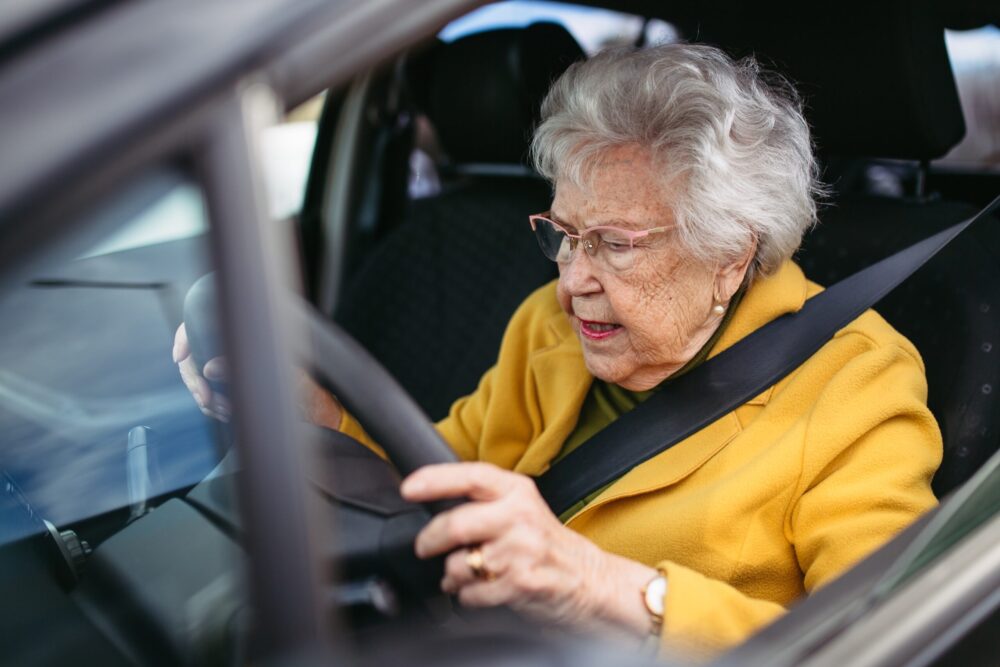
They included a proposal to require people over 70 to undergo an eye test every three years in addition to having to renew their driving licence. This raised two issues:- medical solutions, and in relation to older people’s ability to ‘get around’ by public transport for work, medical, caring or volunteer work.
It is essential that all drivers have the full set of faculties including good eyesight to be allowed to drive. There is a statutory level in place which can be related to the different sized letters chart in the optician’s surgery with which many of us will be familiar.
[mid-content-banner]
Free eye testing
The Wales NHS provides free eye testing for those sixty-years-old or over at most local opticians. They give an accurate report on the state of a patient’s vision and whether or not spectacles are needed for e.g. reading, computer/factory work or driving.
However several things are being missed here. If such legislation is introduced, there will be on the one hand a need for increased medical provision for eye-testing for those with poor eyesight and free NHS treatment such as a cataract operation which in theory takes 18 weeks.
This can be longer in practice and demand is expected to rise by twenty-five percent over the next few years. In any event it requires funding which the NHS doesn’t have.
This may yet be a case of the UK Government’s departmental ‘silo’ mentality where one government department introduces a policy the consequences of which have to be served by another department.
The problem is that the second department has no provision for this nor any funding. The UK Department for Transport and the UK victims minister believe this is a safety move while the NHS cannot afford to provide the services required for those affected by the proposal if introduced.
The AA has questioned the age selected (70) and would a younger age be preferable.
The Older People’s Commissioner for Wales (OPCW) has indicated that older people are more careful drivers and that they should not be singled out.
[lower-mid-content-banner]
Increased frailty
While agreeing that over 75’s are generally safe drivers, research at Aberystwyth University points to increased frailty and that there are a few older people who should not be continuing to drive.
It may be that younger people also have eyesight problems and may not be tested as they fear losing their licence. This would suggest that solutions are needed for drivers of all ages.
The media attention to this proposed eyesight legislation has been largely directed at older people in relation to the impact on their opportunities to travel.
This column would widen the discussion to an additional range of travellers who do not have a car available to them.
They are dependent on public transport (mainly buses) and where this is not available on family, friends and on the volunteer-based transport services. This is particularly relevant in rural areas compared with towns and cities and where older people with no car would be the worse off group.
For those with no car available to them and relying on rural buses the reality is that:
- many areas are not served conveniently
- service frequency has been reduced / closes down at 7 pm
- the number of vehicles using an old road system designed for fewer cars causes service delays to buses and so passengers have to wait longer at a cold and wet bus stop
- On-line bus information sources are generally good with bus location apps indicating in real-time when the service will arrive at your bus stop. Updating timetables on-line is done at one central point and Traveline Cymru provides interchnage information.
- Off-line channels are often not considered as an integral part of providing bus information although for many the bus stop panel and printed copy may be an easier option. This is not something to be a ‘bolt-on or to be solved later’ (OPCW).
- Bus stops which are the ‘shop-window’ for bus services are of high quality in some counties (e.g. Carmarthenshire for rural; Cardiff for urban) but often uninviting in some others.
These factors are particularly relevant in rural parts of Wales.
Bwcabus (renamed Flecsi) was created by this columnist, introduced in Carmarthenshire/ Ceredigion in 2010, and funded by Edwina Hart as Minister for Transport.
The minister intended Bwcabus to be ‘rolled out’ all over Wales and feed into/out of TrawsCymru and primary local bus services. That service model has been extended to other parts of Wales by subsequent ministers but by no means to the extent originally envisaged to provide a comprehensive rural bus service.
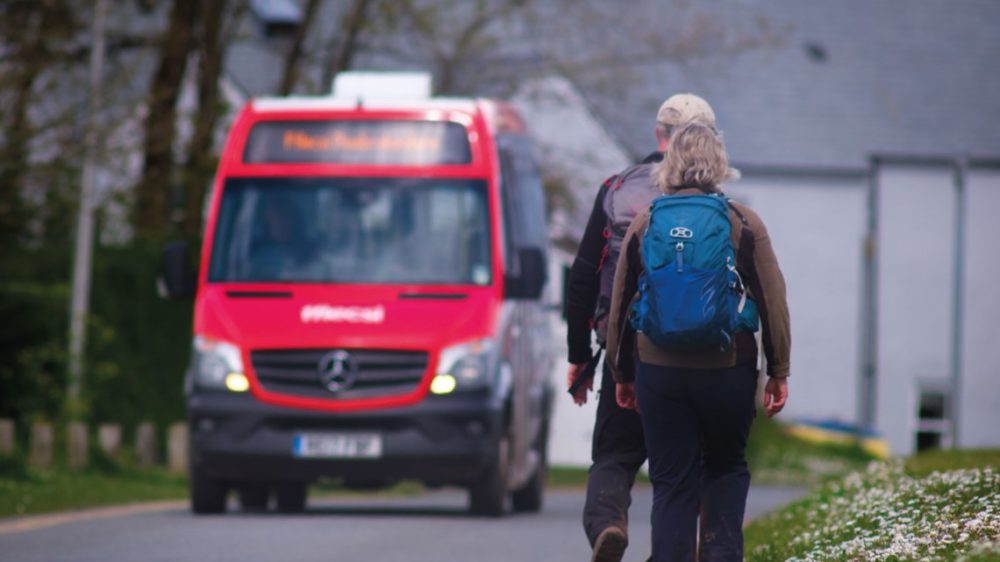
Ironically, last year, the funding for that original Bwcabus/Fflecsi service was withdrawn by a minister on officials’ advice based on cost. This illustrates a position where provision for those with no car in rural areas was withdrawn by a government whose Buses Bill currently before the Senedd intends to make buses ‘more available to the public’. Not so in that part of west Wales.
The end-to-end journey for some travellers may involve several changes. At present inter-route or inter-modal services are often jointly operated by an individual company / local council / TrawsCymru and unless carefully planned may result in waiting times so extending the journey time for travellers. Many medical facilities are not served by public transport or require a change of bus and an understanding of bus time tables.
Financial sustainability
Commercial operations have to put financial sustainability first in order to survive. Welsh Government’s One Network, One Timetable, One Ticket has a considerable challenge if it is to establish a structure for those with no car accessibility.
The alternative to the bus is the taxi. This is often too expensive but often the only mode providing access to remote medical or advice facilities.
This column began with a pointer towards older people. However the issues faced by them are paralleled for anyone who has no car available.
The needs of rural residents may be more expensive to provide but surely that cannot justify a ‘second-rate’ quality of provision.
Support our Nation today
For the price of a cup of coffee a month you can help us create an independent, not-for-profit, national news service for the people of Wales, by the people of Wales.
Get more trusted Welsh news
Choose Nation.Cymru as a preferred source in Google News to see more of our journalism.