


Fri, 17th July Cardiff 27°
Nation.Cymru wordmark
Advertisement

Feature

17 March: The story of St Patrick the patron saint of Ireland… from Wales
By Stephen Price
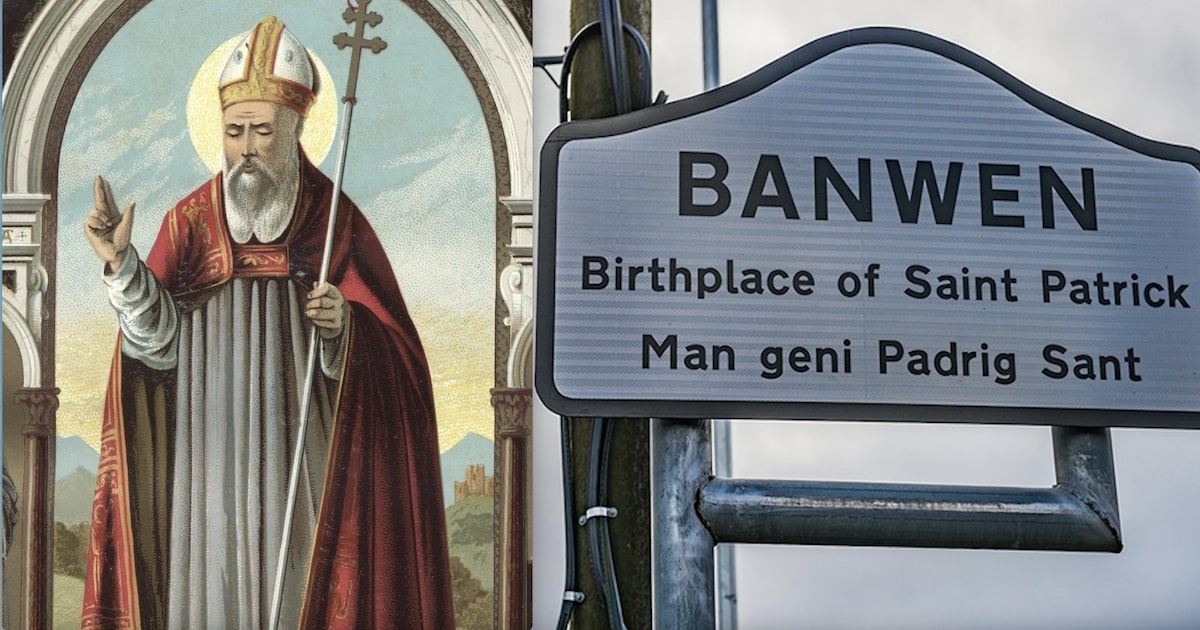
Saint Patrick and his birthplace, Banwen in the Dulais Valley (Credit: Wikipedia)

Owen Williams

In 387 AD, a saint was born in Banwen, high in Wales’ Dulais Valley.

He would become the Celtic world’s most iconic figurehead. Every March, he is celebrated in towns and cities across the world.

To his adopted Irish home and kin, he is known simply as Saint Patrick.

[mid-content-banner]

Six years a slave

Born Maewyn Succat (Maewyn: Welsh for devoted friend; Succat: Pagan for warlike), in Bannavem Taberniae (now Banwen), the teenage Patrick (or Padraig) was captured and sold into slavery with “many thousands of people” by a group of Irish marauders that raided his family estate.

Six years a slave, Patrick lived an isolated existence as a shepherd.

[embed]https://twitter.com/OwsWills/status/1636620602537656321?ref_src=twsrc%5Etfw%7Ctwcamp%5Etweetembed%7Ctwterm%5E1636620602537656321%7Ctwgr%5Eb8159550ca37c4ae11914115d74b099903ad5ca6%7Ctwcon%5Es1_&ref_url=https%3A%2F%2Fnation.cymru%2Fculture%2Fthe-story-of-st-patrick-the-patron-saint-of-ireland-from-wales%2F[/embed]

The then Ireland was a dangerous, pagan place. Divided into some 100 self-contained Celtic kingdoms.

Those who moved between became known as “grey dogs” and were often taken captive, relinquishing their rights.

Escaping his captors, a dream told Patrick it was time to leave Ireland. Returning home to Wales, he is said to have trained as a priest at Côr Tewdws in Llantwit Major, Britain’s oldest centre of learning.

Once ordained as a priest, he returned to Ireland as a missionary.

Patrick was a powerful, charismatic figure who attracted a large following, moving freely among Ireland’s kingdoms.
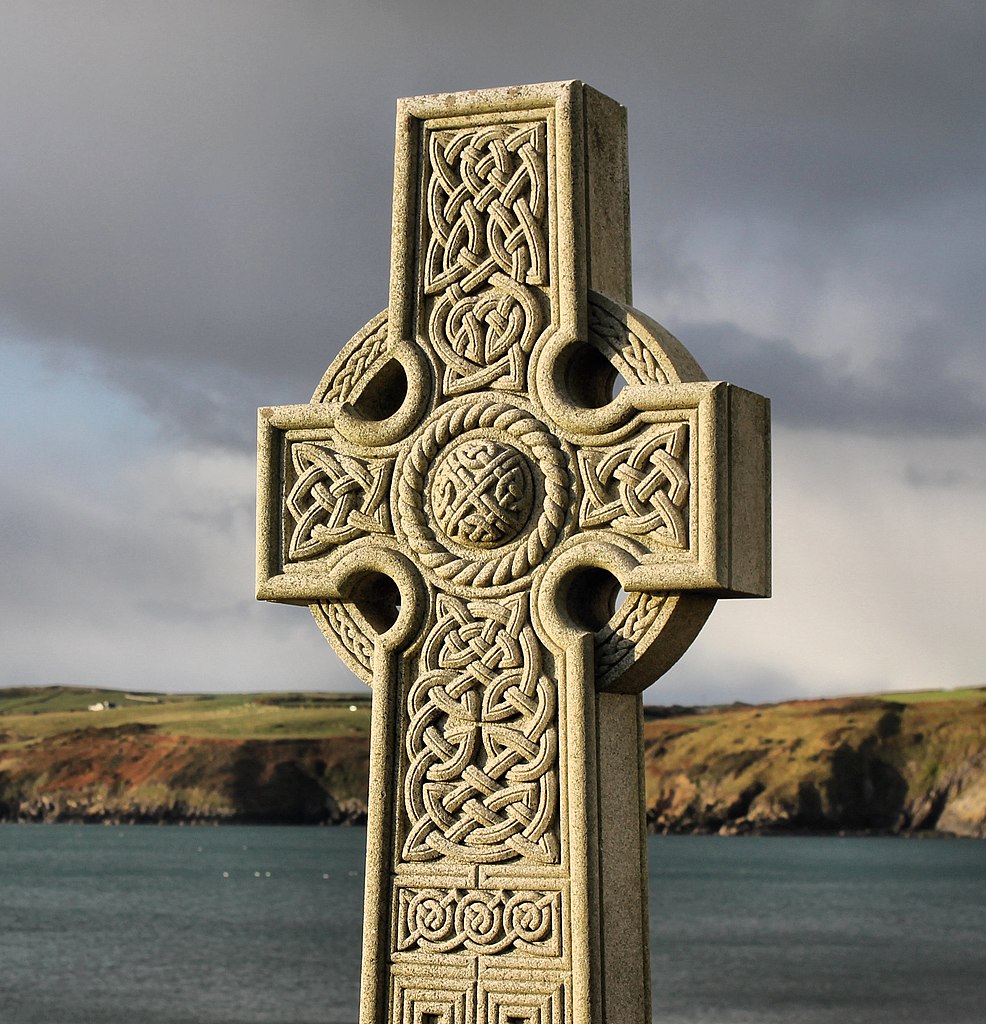
Celtic Cross at St Hywyn's Church, Aberdaron, Gwynedd, Wales (Credit: Wiki Commons)

Familiar with the Irish language and culture, he adapted Celtic Paganism into his lessons of Christianity, rather than attempting to eradicate native beliefs.

He used bonfires to celebrate Easter, since the Irish were used to honouring their gods with fire.

[lower-mid-content-banner]

The Celtic cross

Saint Patrick also superimposed a sun, a powerful native symbol, onto the Christian cross to create what is now called a Celtic cross.

Patrick’s mission in Ireland lasted approximately 30 years.

It is said that he died in 461 AD, on 17 March, now commemorated as St. Patrick’s Day.

Follow Owen on Twitter to discover more secrets of Wales…

For the price of a cup of coffee a month you can help us create an independent, not-for-profit, national news service for the people of Wales, by the people of Wales.

Get more trusted Welsh news

Choose Nation.Cymru as a preferred source in Google News to see more of our journalism.

Choose Nation.Cymru as a preferred source in Google News

3 comments

Frank

Llantwit Major, correctly known by its Welsh name as Llanilltud Fawr. There was no saint named Twit.

Reply
Y Cymro

Indeed, correct. This is another bastardisation of our place names by those with the inability to understand the historical significance let alone have the ability to pronounce not only Cymru but Britain's native language. And as with Brecon Beacons & Bannau Brycheiniog etc... want to see that name too consigned to the linguistic landfill and its original restored to his rightful place.

Reply
Y Cymro

How ironic that every year millions around the world slap on green paint, ginger wigs, and celebrate Saint Patrick's Day not knowing that Patrick (Patricus, Latin for Father) wasn't even his real name or that he wasn't even Irish, but an Old Welsh speaking native Briton whose birth name was Maegwyn (Succat). Note: Its been disputed whether it was Wales or stated by some historians , Strathclyde (Strat Clud it Ystrad Clud ) in Yr Hen Ogledd, modern day Scotland where Patrick was allegedly born & taken even though an Old Welsh speaking Welsh Kingdom. Fact: Yes, there were Romas on the boarder of what would later become Scotland with Hadrian's Wall. Ironically both sides of the divide not mentioned by historians the language spoken & heard by Romans would not have been Germanic or Gaelic but Brythonic i.e Welsh at its inception. History suppressed. Not a surprise. To be expected. Also there's no evidence that any Roman Legions were based in the Welsh Kingdom of Strat Clud. And seeing Cymru (Latinised to Cambria) is the true geographical West of Britain, had numerous Roman legions stationed, one near Banwen (Bannavem Taberniae) his reputed birthplace, and seeing Irish raiders like the Vikings later chose areas rich with pickings Strathclyde would bare scant reward but bloodshed. BOT: Maegwyn was taken by Irish raiders as a slave, came back to Cymru, received his religious education by Illtiud at Côr Tewdws and in Gaul, later returning to Christianize the Irish, they receive all the credit about Christianising Britain according to idiot board historian Dan Snow, can celebrate their adopted saint, like the Scots with Saint Andrew, every March 17th, and we with Britain's only native patron Saint David/Dewi Sant like with everything else, are denied by the Germanic English Tories and now authoritarian Labour in London. How has it come to this? We were once a feared Celtic warrior people who defeated Roman legions. So sad.

Reply

Leave a reply

Replying to Y Cymro Cancel

Indeed, correct. This is another bastardisation of our place names by those with the inability to understand the historical significance let alone have the ability to pronounce not only Cymru but Britain's native language. And as with Breco...

Comments are reviewed before they appear.