


Feature
The History of Energy part seven: Can less mean more?
Gareth Wyn Jones
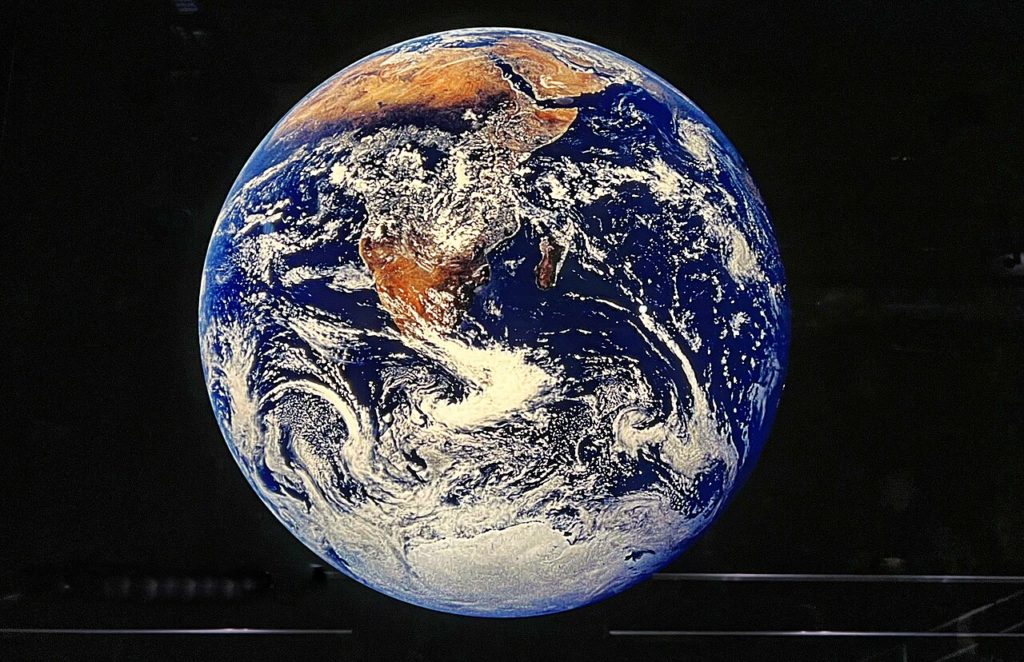
The global challenges of climate change and heating, biodiversity loss and the other aspects of environmental decay that confront humanity are unique.
Our species is now so powerful, so dominant and so resource-demanding as to be despoiling the wildlife, soils, oceans and atmosphere on a global scale. We, humans, are even commanding about 20 % of all terrestrial photosynthesis but, as much as 80%, in areas of high population density.
This is, in addition, to burning billions of tonnes of fossil fuels annually to energise our life styles. Small wonder all other wildlife is being squeezed out.
Fossil fuels
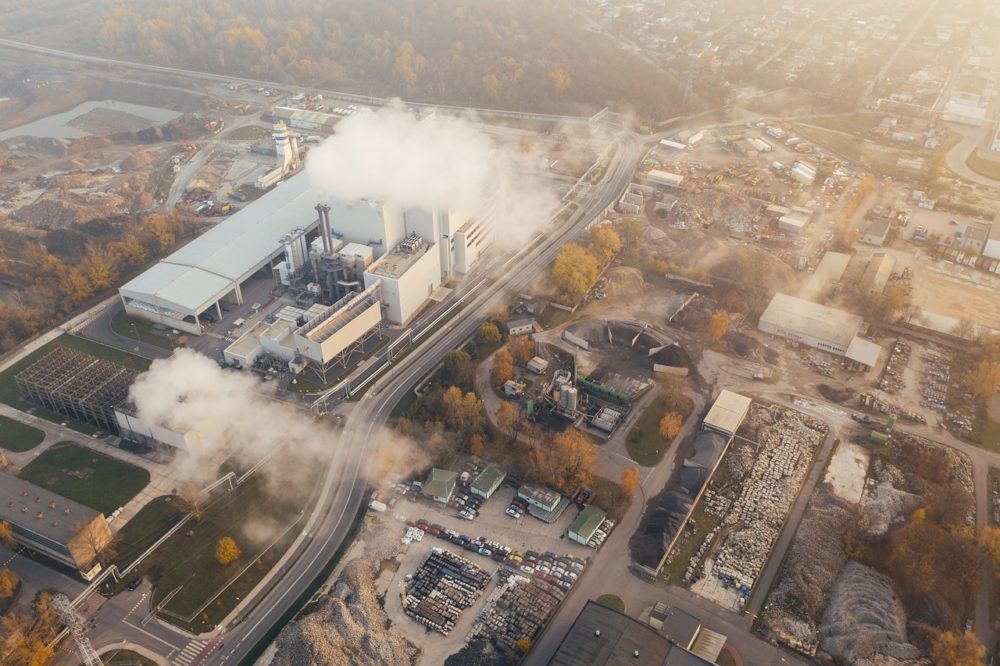
Despite the conferences, the promises and the gradual rise of renewables, some 80% of our energy, globally and locally, still comes from burning fossil fuels.
As we’ve been discussing, these emissions are endangering the very fabric that sustains us. Yet these emissions underpin the exceptional material prosperity of close on a billion people. Even so, some 650 million live on less than $2 a day.
Almost a quarter of the global population, about 23 percent, live below the poverty line, defined as $3.65 a day in the poorest countries, and almost half the world’s population, nearly 4 billion, live below the $6.85 poverty line set for the middle income countries. (To put these numbers in a Welsh/UK context, currently $12.3 per day = £10 per day = £3,650 per year).
The poorer half use much less energy and release far fewer greenhouse gases, as we discussed in the last article, and the latter mainly from their food.
Prosperity and poverty may be fellow travellers but with drastically different profiles.
Human food chain
Fortunately the rate of population growth is slowing. Nevertheless we face, by the middle of the 21st century, the daunting problem of giving hope and sustenance to some 10 billion humans without wrecking the Earth.
This in a context, let me note again, that about 30% of all GHG emissions come from the human food chain.
Methane emissions from ruminants are but one issue, although a very important one in Wales. Land loses CO2 when ploughed, so increasing arable areas will create a spike in emissions unless there is a parallel drop in animal emissions.
Also crop yields are near-linearly related to available nitrogen. Much of that comes from the energy-intensive Haber process for converting atmospheric nitrogen to ammonia. But about 1% of the nitrogen that is applied to increase yields of food crop is lost to the atmosphere as N20; a greenhouse gas x 300 as effective as CO2.
Much food is also wasted by the prosperous; while food is spoilt by the poor, largely because of inadequate storage; they have neither electricity or fridges. The post farm-gate food chain contributes about a third of the sector’s total emissions; transport, refrigeration, processing, storage, display in supermarkets and of course cooking etc. at home.
Hill farmers
As Albert Bartlett wrote, ‘Modern agriculture is the use of land to convert petroleum into food’. I can hear the cries of Welsh hill farmers in my ears but lamb is not going to provide the billions with their daily 2,500 food calories and, unfortunately, even upland grazing is far from carbon neutral.
We may enjoy our lamb but cereals are the key energy commodity as is being demonstrated yet again by Russia’s war in Ukraine.
Of course, feeding such grains and soya to animals in feed-lots to satisfy the world’s growing demand for meat, does nothing to solve our problems. Globally some 220 million hectares are devoted to wheat, 206 million to maize and 165 to paddy rice which implies that much vaunted vertical farming, that is growing crops in doors using hydroponics and artificial light, is at best a distraction [cf. Wales ~2.1 million hectares].
These numbers summarise very scary issues. we are warned that poor harvests in some cereal producer-countries may well precipitate a global food problem well before warming exceeds 1.5oC. We are riding our luck!
[mid-content-banner]
Social upheavals
Our cruel dilemma deserves emphasis. The Industrial Revolution and its attendant secondary agricultural revolutions, including the displacement of many indigenous peoples from their lands, allowed agribusiness to flourish and the human numbers to soar, albeit often in poverty and near servitude.
The consequential moral and practical responsibilities now fall on this generation.
Greenhouse gas emissions from all humanity, including from such basics as food production, must be reduced to near zero in 25 years. In doing so we must seek to avoid mass starvation and mass migration.
Failure will leave important and populous regions such as the plains of northern India from the Indus river to the Bay of Bengal as death traps. This will ensure huge social upheavals and mass migration. In all likelihood it will lead both ‘reactive’ and ‘proactive’ aggression as we’ve discussed.
The directly affected will react as their livelihoods are threatened and the authorities and external powers will proactively seek to minimise the impacts of the unrest on their status or patch.
As occurred in Syria some will see an opportunity to make serious mischief. Such strife cannot and will not be confined within neat geographical limits.
Extinctions
Life on our planet has lived through many crises; at least five major extinctions and periods of Snowball Earth and of great heat and, more recently. a sequence of Ice Ages.
Living organisms have survived, diversified and indeed flourished. The extinctions were caused by external or major geological events.
The dinosaurs were not the agents of their own demise. Given a bit of asteroidal luck. they might have reigned for a few more million years. Now we, after but a few centuries of industrialisation, are the agents of our own possible downfall, even destruction. Fortunately we also have agency; we are the only potential source of our own salvation.
Energy transition
I have been arguing that a fundamentally salient problem arises from our use of energy. To reiterate "every damn thing depends on energy transition".
Broadly, more energy allows more work and greater power leading to greater complexity and an accelerating speed of change, now reinforced by digitization and AI.
Both the current climate change crisis and the AI revolution have brought these issues into sharp focus. I argue the way forward to retain our humanity, our well-being, our "souls" to use the old religious term, and our sanity is deliberatively to seek to limit our energy use.
The onus to do so must lie primarily with those now using the most, as the energy-deprived poor deserve better and their share. Furthermore these changes must happen quickly.
Nimbies and deniers
This core conclusion chimes with the time-line in the 2022 6th IPCC Report. The rapid reducing GHG emissions to avoid a highly dangerous increase in the mean global temperature of over 2oC must take place in the next decade or two if we are to avoid dangerous tipping points.
However installing, globally, whole new energy systems powered by renewable electricity and maybe hydrogen will take time and a substantial investment not only of money but of natural resources including lithium, copper and rare earths.
Such massive change will inevitably meet with resistance as all renewable energy resources and electricity storage schemes have their downsides.
The nimbies and deniers, as well as voicing some justifiable concerns, will peddle disinformation. I would argue therefore that both the practical short-term priority to reduce greenhouse gas emissions and my broader energy-based analysis are mutually reinforcing. Cutting emissions through reduced energy use should be the overwhelming priority.
Can this be achieved? Why are we so reluctant to face reality?
Read all the previous installments of The History of Energy here.
Support our Nation today
For the price of a cup of coffee a month you can help us create an independent, not-for-profit, national news service for the people of Wales, by the people of Wales.
Get more trusted Welsh news
Choose Nation.Cymru as a preferred source in Google News to see more of our journalism.
