Feature
Study shows views of British empire shape voting behaviour – but in subtle ways
Christopher Claassen, Professor of Political Behaviour, University of Glasgow
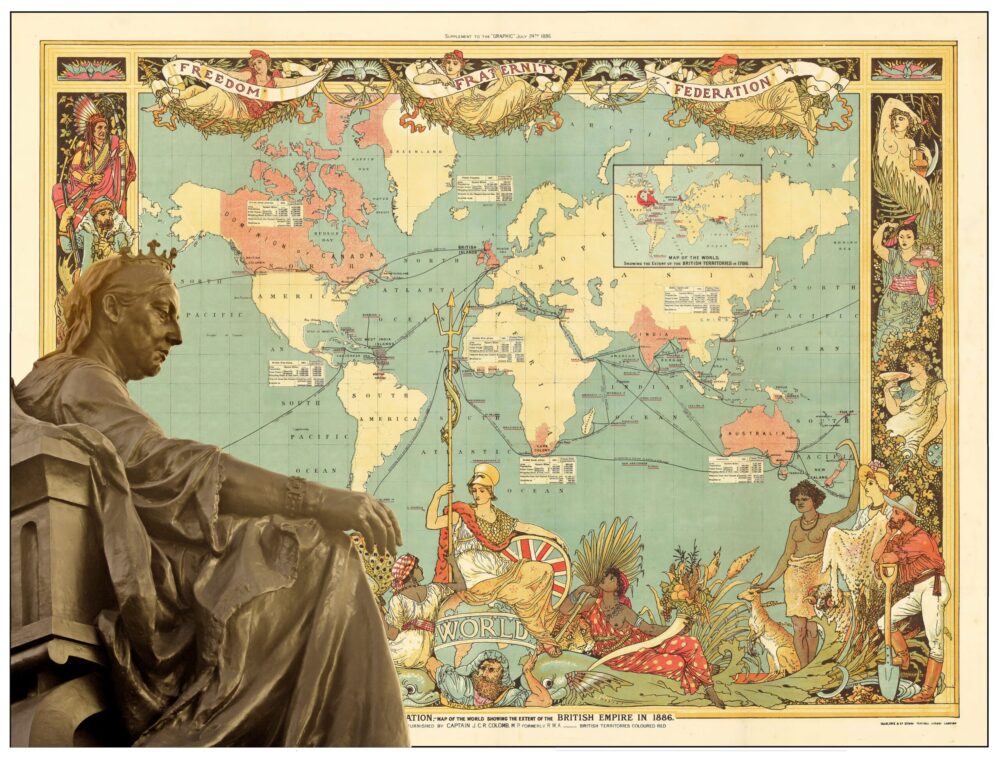
If you wander through Glasgow Green, you’ll encounter the Doulton fountain, a gaudy terracotta tribute to empire that features “native” and colonial figures in national dress holding out the produce of their lands to the imperial centre.
Like thousands of imperial monuments across Britain, the Doulton Fountain is neither widely celebrated nor widely denounced. It is part of the everyday backdrop.
That quiet coexistence says a lot about Britain’s relationship with its imperial past. Empire is everywhere – cast in stone, threaded through schoolbook stories and family lore – but rarely front-and-centre in political debate. In a new article in the British Journal of Political Science, Daniel Devine and I set out to answer two questions: what do Britons actually think about the empire, and do those views matter politically?
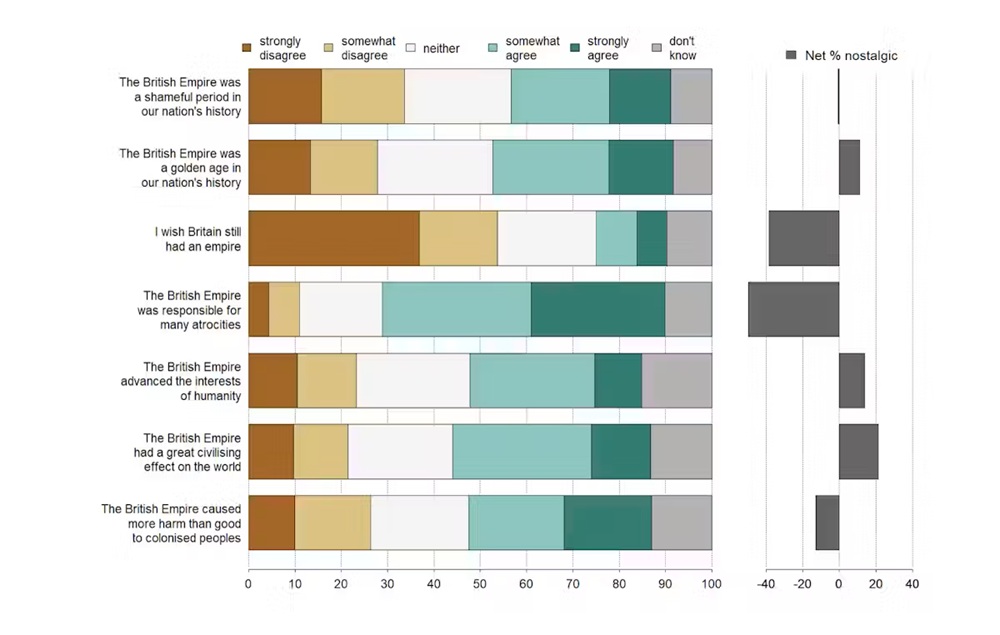
To answer these questions, we built a measure of imperial nostalgia using survey questions on attitudes to empire. We asked people how much they agreed with statements like “the British Empire had a great civilising effect” and “the British Empire was responsible for many atrocities”.
Across two polls in late 2023 and mid-2024, we found Britain both divided and unsure about its imperial past. Net support swings from −50 points when asked whether the empire was “responsible for many atrocities” (62% agree, 12% disagree) to +21 points on whether it had a “civilising effect” (44% agree, 23% disagree).
Between a quarter and 40% of respondents chose the “neither” or “don’t know” options, showing that there is substantial ambivalence in attitudes. Taken together, opinion about empire tilts slightly negative: more critical than celebratory, but far from a blanket rejection.
Demographically, imperial nostalgia rises with age and falls with education. It is higher among men and white British respondents, and notably lower in London and Scotland. In short, it behaves like a form of cultural conservatism.
However, we find that it forms its own dimension of opinion, distinct from authoritarianism and nationalism. That distinctiveness matters, because it implies politicians may be tapping something different when they invoke empire, as when Boris Johnson recited The Road to Mandalay on a visit to Myanmar.
How imperial views relate to voting
We found that imperial nostalgia connects quite significantly with partisan politics. Supporters of Labour, the Liberal Democrats and the Greens are, on average, more critical of empire. Conservative and Reform supporters are more nostalgic about it. This is perhaps predictable but the strength of the relationship between views on empire and party preference was a surprise – it was stronger than left–right economic values, for example.
The result survives more demanding tests. Imperial nostalgia remains an important positive predictor for Conservative and Reform support, and a negative predictor of Green support, when we control for respondents’ other political attitudes and identities.
The link remains when we add a separate measure of general nostalgia (“life was better 50 years ago”), demonstrating that imperial nostalgia isn’t just another name for backward-looking mood.
In fact, the two nostalgias diverge in their effects. General nostalgia negatively predicts Conservative support but positively predicts Reform support. Imperial nostalgia boosts both the Conservatives and Reform.
However, this is not to say that voters want their politicians to go on about empire. In fact, when we asked respondents to choose between hypothetical parliamentary candidates, they opted for ambivalence in their representatives.
When presented with a conservative who thought empire had a “civilising effect”, a progressive who said empire was “responsible for many atrocities” and a third candidate with mixed views incorporating both, the latter was the most popular.
While a conservative position on empire neither helps nor hurts a candidate overall, a progressive stance actually reduces support by about five percentage points. In other words, criticism is the least popular position when it comes to politicians, even though most respondents adopted such a critical view when asked about their own opinions of empire.
The picture sharpens when we examine the results separately by respondents’ ideology and party. Conservative and culturally conservative voters punish the critical “atrocities” stance strongly, while cultural liberals offer little offsetting reward for it.
Studied silence on empire
So for political parties, openly criticising empire is not a winning strategy. It yields only minimal gains on the left while antagonising and mobilising voters on the right.
That asymmetry helps explain the studied quiet we’re currently experiencing. Steering around an issue is considered the best course of action if it divides the public and risks energising opponents more than supporters.
Our study suggests that imperial nostalgia is like a submerged current in British politics. It shapes where parties can safely sail even if they rarely talk about the tide. But we think it’s possible that the current could resurface.
Imperial nostalgia correlates strongly with support beyond the main parties: positively with Reform and negatively with the Greens. With Britain’s party system in unprecedented flux, a challenger could weaponise the issue to split opponents and mobilise a base.
And since younger Britons hold more notably critical views of empire, their entry into the electorate could make debates about the past more electorally decisive and therefore worth campaigning on. Our experiment suggests a sharp backlash from conservatives will ensue, setting the stage for a fresh culture-war divide.
Even without these two factors, it remains the case that backward-looking narratives resonate more strongly in periods of perceived national decline. So if the current stagnation persists, imperial nostalgia could surface from background mood to foreground politics.
Support our Nation today
For the price of a cup of coffee a month you can help us create an independent, not-for-profit, national news service for the people of Wales, by the people of Wales.
Get more trusted Welsh news
Choose Nation.Cymru as a preferred source in Google News to see more of our journalism.
