


Feature
Rejuvenating north Wales' Railways
Professor Stuart Cole, CBE. Emeritus Professor of Transport Economics and Policy, University of South Wales
This week the transport secretary Ken Skates MS announced the North Wales Network setting out Welsh Government’s rail investment programme.
It is visionary and extensive and has been under discussion for many years but little has been created.
This I can vouch from my own experience having worked on the electrification of the North Wales Main Line (NCWML) in the 1970’s while economic adviser – transportation with Cheshire County Council.
[mid-content-banner]
North Wales rail investment
Mr Skates’ plan increases train frequency on an electrified NCWML and provides for a Holyhead – Liverpool service. This would be accompanied by additional stations and more train units.
A through service between Wrecsam, Chester and Liverpool has the opportunity of drawing the commuter market from the car by reducing interchange time at Chester.
The Chester – Liverpool section was electrified in 1993 and any through service from Wrecsam will draw on TfW’s experience with battery trains in south Wales; that is the only affordable option without considerable expensive infrastructure.
[lower-mid-content-banner]
Funding
Of the total cost (£2 bn – similar to the government estimate), half would be for the NCWML electrification and track speed increases reducing journey times by fifteen minutes.
Welsh Government have raised a similar sum (£1.9 bn) for Cardiff valleys electrification and new trains throughout Wales though without any Barnett consequential funding.
However it will address the imbalance in rail investment between north and south Wales.
Bangor – Afon-Wen railway
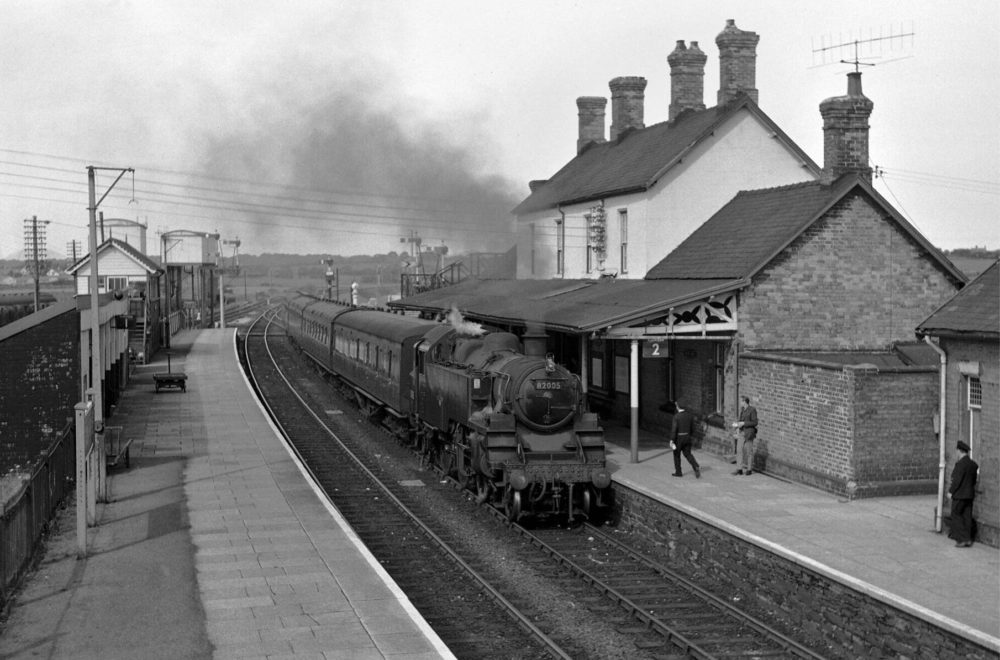
Not in Mr Skates speech, at the Wrecsam Transport Conference this week, was the line between Bangor and Afon-Wen. It partly closed on 7th December 1964 following the Reshaping of British Railways (or Beeching) report in 1963.
The Bangor – Caernarfon section remained open to passenger traffic for six more years.
The economic benefits and link to Welsh Government policy on transport modal change are clear. As has been argued for the Heart of Wales line (this column 29th December 2024) easy access to rural Wales by train or bus will draw those tourists with environmental concerns.
They will make the journey from big demand markets such as the West Midlands and north west England more attractive and ease of connections will be a key decision maker for them to holiday in north west Wales.
The infrastructure
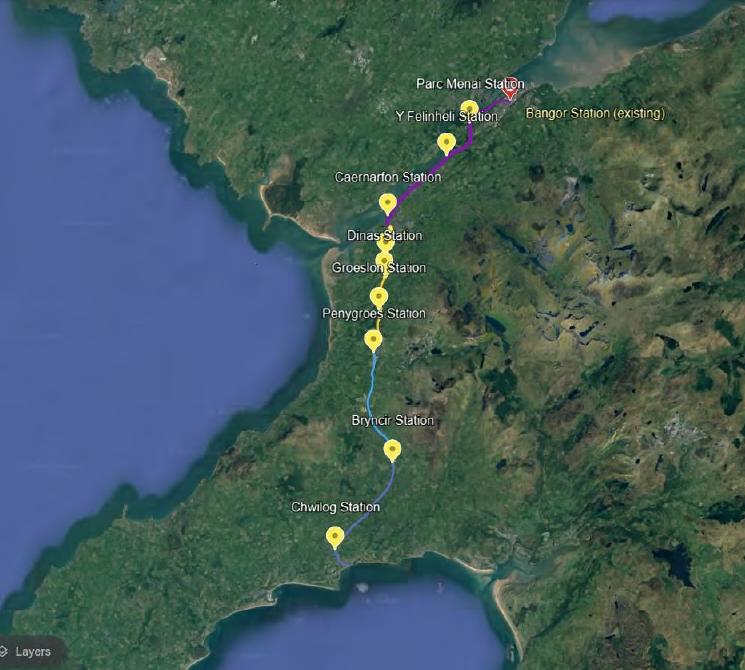
However, there is a possibility (small at present) that consideration is being given to some form of reopening of the line. The North South West Wales Feasibility Study by AtkinsRealis (a leading transport consultant) for TfW in February has examined the engineering options, physical challenges and created an indicative preferred route to reopen all the railway service between Bangor on the NCWML and Afon-Wen (43.7km) on the Cambrian Line.
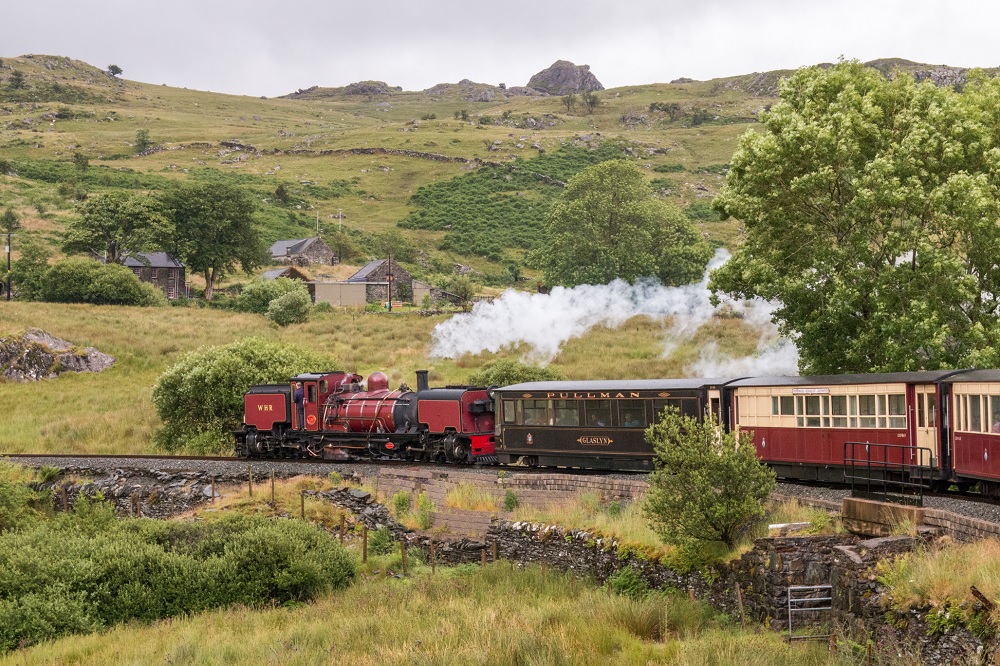
Since its closure the trackbed has been put to various uses including road schemes, a heritage railway, cycle / walking paths and business / farming uses.
Fortunately a large proportion remains in Welsh Government or local government ownership.
Investment required
The degree of financial investment and compensation varies along the route but it is, in effect, building a new railway. So costs will be high (circa £800m - £1 bn) given the terrain based on costs of other similar railways.
The return would be based on visitor movements not using cars together with relatively low local resident demand. TfW has not yet carried out costs, revenue or timetable analysis.
What TfW has done so far is to review the track route and the major engineering work needed to reinstate an alignment based on the original railway. There are many other factors (and costs) to consider such as electrification, signalling, telecommunications, drainage, active travel diversions, intersections and final decisions on rolling stock (diesel, electric or hydrogen).
Possible electric trams
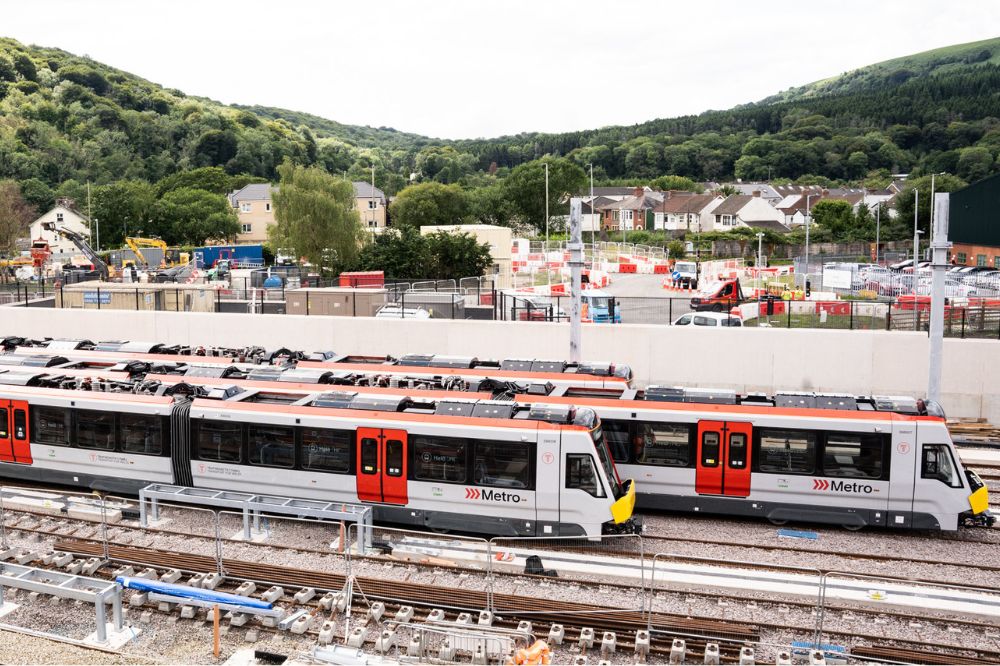
Consideration has been given to using tram-trains of the type to be introduced on Cardiff commuter services later this year. The cost of light rail infrastructure is sufficient for tram-trains and considerably cheaper than heavy rail but it does mean that freight trains would not be able to use the line. Light rail has been chosen to allow the tram-trains to operate on the public highway and minimise the impact where track land has been lost.
Assumptions have to be made in any assessment. For example:
- Standard railway gauge to allow the tram-trains to operate on Network Rail lines at Bangor and the Cambrian Coast line stations
- Rolling stock will be high floor to be compatible with main line platforms
- Trains will be able to mix with heavy rail (usual trains we travel on)
- Maximum speed will be 75 mph
The trains could be powered by overhead lines for much of the route and using battery power for the remainder. TfW will by then have experience gained on Cardiff’s valley lines
The report suggests eight new stations at Parc Menau, Y Felinheli, Caernarfon, Dinas, Groeslon, Penygroes, Bryncir and Chwilog.
The new service ought to be quicker than the 1960’s timing of 1h15m with modern trains, better acceleration and fewer stops.
Likelihood of success
It has long been the aspiration of Gwynedd County Council to reopen the Bangor – Caernarfon section and consider the possibility of the route between Caernarfon and Afon-Wem junction with the existing Cambrian Coast Line.
The WelTAG study of the north – south ‘western corridor’ does not augur well for rail reopening, recommending as it did the bus-based solution provided by TrawsCymru with direct TfW funding.
Any reopening of the route between Bangor and Afon-Wen will depend on finance and the economics of the scheme unless its strategic case can be proven. This column became unpopular in some quarters by suggesting that the Carmarthen – Aberystwyth line would take 40 years to open.
As a west Wales resident, nothing would be more satisfying than having a direct north – south line between Carmarthen and Bangor in Cymru-Wales and through the most attractive scenery in the world.
Rail investment decisions for Wales still made in London
Decisions will fall to UK Department for Transport ministers and Great British Railways considering only the Strategic Case and benefit:cost ratio of the Economic Case.
The Bangor – Afon-Wen line would only be considered if Welsh Government have responsibility for railway infrastructure (which the UK government currently refuses), adequate funding from Whitehall’s Barnett formulae and, above all, that it is considered a part of the strategic railway network for Cymru-Wales.
For Ken Skates’ vision, and any rail re-openings, a new deal is needed between the Welsh and UK governments.
The Valley Lines financial arrangement was unacceptable to Wales. It was indicative of the London government’s negative, or at best ambivalent, view of Wales' railways. Juxtaposition of events do seem to support history repeating itself.
Responsibility for rail infrastructure has to be with the Senedd. The Transport Secretary and the First Minister should be considering this funding process and Wales' position in their response to the Great British Railways proposal.
A point one would hope was made by Eluned Morgan in her discussion with Sir Keir Starmer last Friday.
Support our Nation today
For the price of a cup of coffee a month you can help us create an independent, not-for-profit, national news service for the people of Wales, by the people of Wales.
Get more trusted Welsh news
Choose Nation.Cymru as a preferred source in Google News to see more of our journalism.
