


Feature
Making Tracks: Barmouth
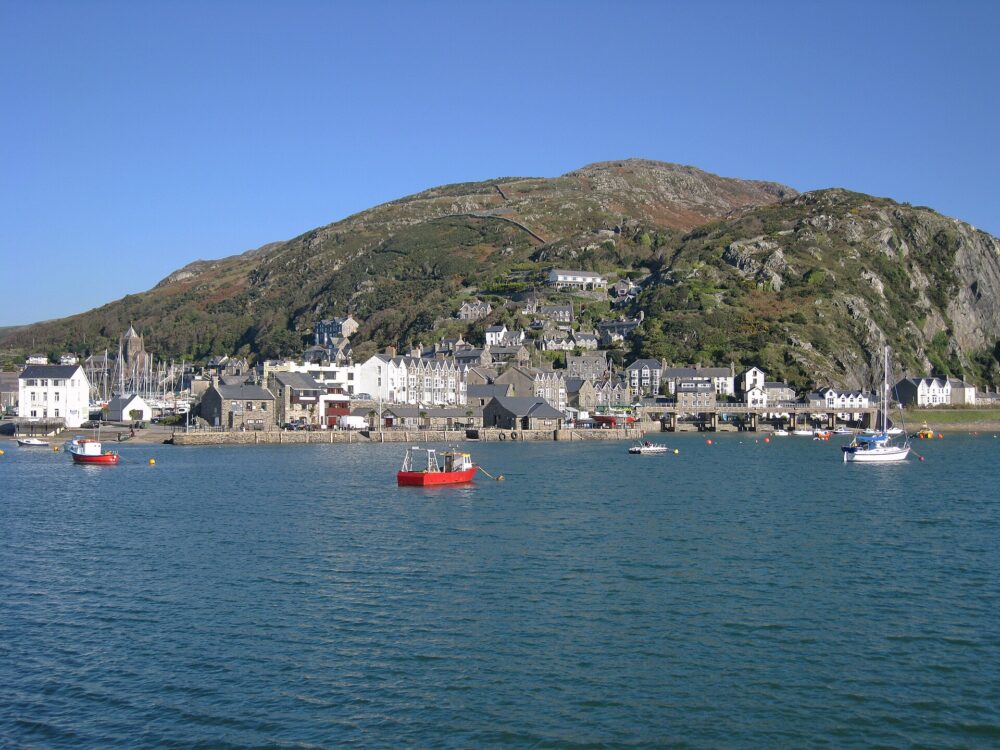
Jon Gower finds poetry in place in an arrestingly scenic seaside town.
The glories of Welsh estuaries are perhaps undersung when compared with the hymning of our hills and mountains, or indeed the praised meanderings of river valleys such as the Wye.
But the tidal interfaces of our rivers and the sea are glorious, from the picture postcard Parrog in North Pembrokeshire to the glistening sands of the Dee, from the cocklebeds of the Burry Inlet to the goose-haunts of the Dyfi estuary.
But if there is one that stands proud because of the sheer geological drama of its setting it’s surely the Mawddach, which distils its fresh waters into Barmouth Bay after passing, on one side, the western flanks of Cadair Idris and Craig y Llyn and, on the other, the mixed greens of Bryntirion and Galltyrheddwch woods foregrounding the high crags of Diffwys and Y Llethr.
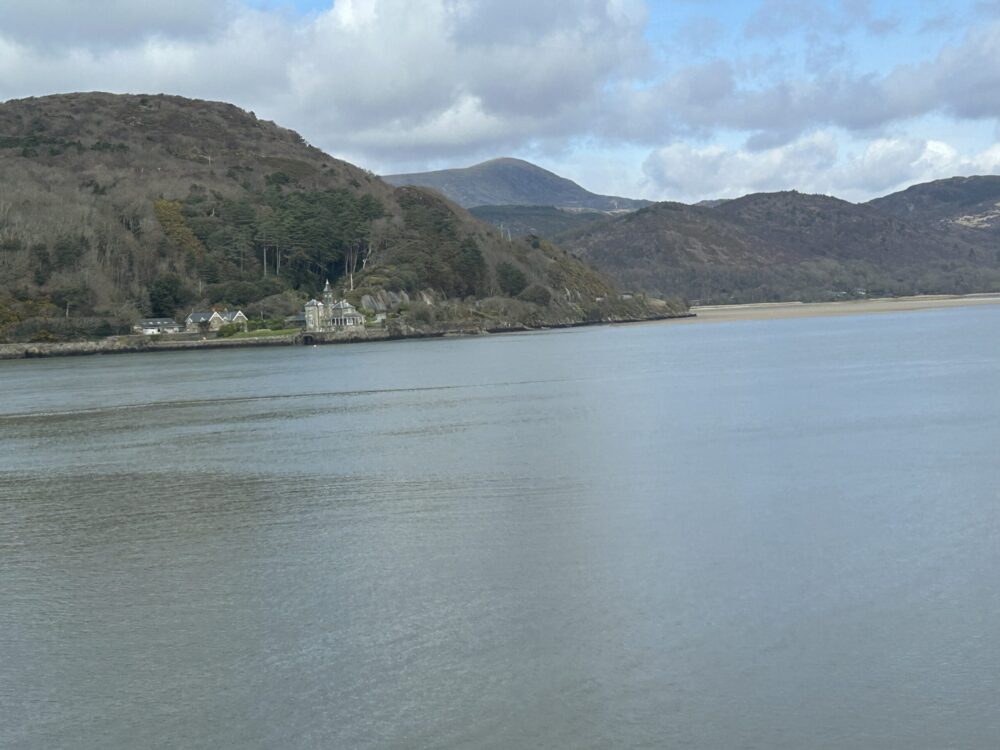
You can cross the river mouth, the maw of the Mawddach by train and, as it slows down on the approach to Barmouth – Abermaw, or, colloquially, Y Bermo – you can imagine you’re arriving as if by graceful hydrofoil, with waters lapping gently on either side of the carriage. You can also cross the bridge by foot, taking ample pauses to take it all in. The twin, rocky outcrops of Fegla Fawr and Fegla Fach. The green sweep of Penrhyn Cregyn. It’s certainly one of the most visually satisfying stretches of the Cambrian Line, which certainly isn’t short of such stretches.
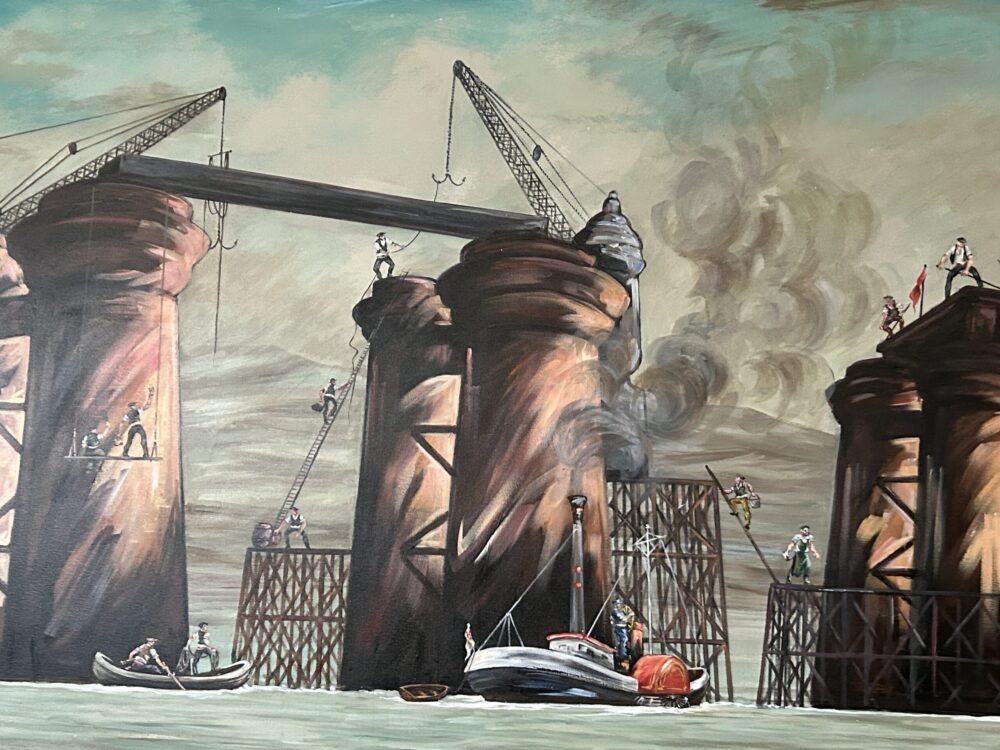
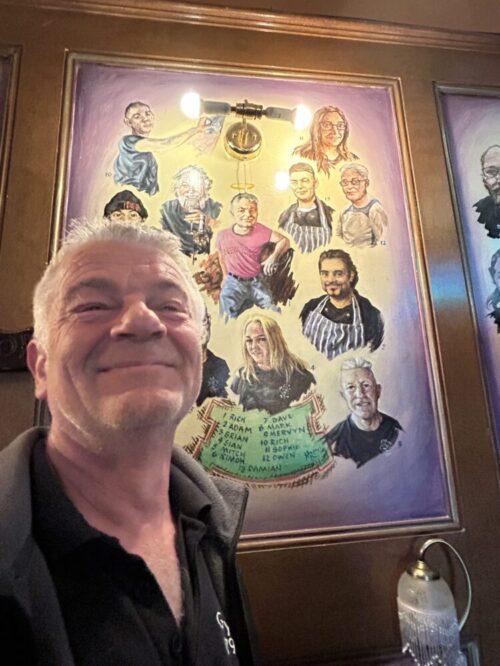
The engineering feat of building Barmouth Bridge is captured in a painting in the bottom bar of the town’s Royal Hotel, where pretty much every wall and ceiling is covered with art. It’s all the work of one local artist as hotel manager Richie Bailey explained: “One day I was up in the dining room when I saw this old gentleman with a white beard walking in. He was looking around at the pictures. I said, oh, do you like the pictures? And he said, yes, I did them.” He was duly encouraged to add many new paintings to the place.
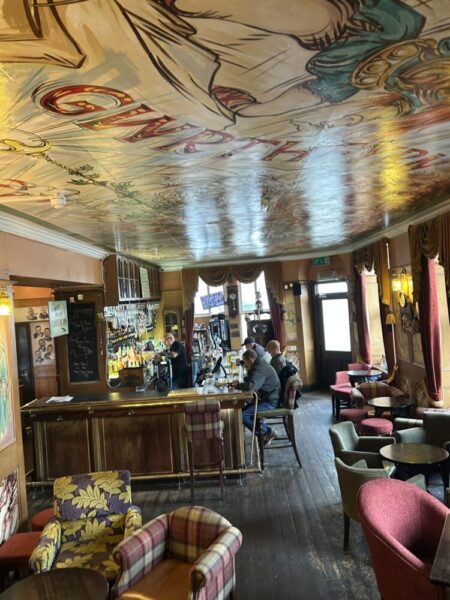
The artist in question, Mervyn Rowe, lives in Barmouth. Now in his eighties, he has worked on sets for opera and for the Royal Shakespeare Company as well as films such as John Boorman’s Excalibur as well as the hugely popular S4C series C’mon Midffîld. In the Royal Hotel Rowe’s energetically applied his talents to interpreting The Mabinogion in the restaurant area as well as portraying some of the locals on the walls, hotel manager Richie Bailey duly included.
It was the railway that first brought in the tourists. Askew Roberts’ Gossiping Guide to Wales, published in 1882, suggested the promise of a railway arriving in Barmouth so excited the townspeople that they “Rejoiced exceedingly, and so eager were they to possess such a blessing of civilization, that we verily believe, had the promoters suggested a line over the housetops, they would have hailed the scheme as feasible.”
Above the town there are places for visitors to properly appreciate the magnificence of the setting, such as the marvellously named Dinas Oleu, the Citadel of Light, being the very first land holding of the National Trust. Then there’s the aptly named Panorama Walk, reached by a snaking Victorian footpath through the Glanymawddach estate and created to add to the list of the town’s blandishments for the Victorian tourist.
The opportunity to appreciate such vistas today magnetizes people such as landscape photographer Dominic Vacher, who runs a gallery in the town. “It’s one of those places that people have gone back to again and again and again. This estuary, it's ever-changing because of the sunlight, the weather, and the tides. So you've got at least three different interactions going on, which means that it never looks the same.” Vacher’s vivid work shows the estuary in four seasons and the town in all weathers and from many angles. In one of his most serendipitous works, appropriately entitled “Panorama Drama” a powerful lightning bolt crashes to earth through pewter masses of cloud like a divinity suddenly firing up nature’s oxy-acetylene torch.
The town’s touristic motto, “For Mountain, Sand and Sea” pithily reminds us of the area’s principal natural attractions and the way in which the mountainous hinterland help shape it as much as sea. As the German writer Friedrich Althaus wrote in 1889: "Cader Idris is to Barmouth what Vesuvius is to Naples.” Then there’s the sand. On the day I visited earthmoving vehicles from Gwynedd Council were busily involved in the annual clear up of sand blown in from the beach and dunes, as the town shrugged off its winter torpor ready for the tourist season. Not that this is anything new. It used to be commonly said of Barmouth that when the wind was in certain quarters the sand “Penetrates everything you eat there, except eggs, which you must despatch quickly.”
Sand aside, the Romantic poet William Wordsworth extolled the virtues of the place after a boat trip in the area in 1824. “With a fine sea view in front, the mountains behind, the glorious estuary running eight miles inland, and Cader Idris within compass of a day’s walk, Barmouth can hold its own against any rival.”
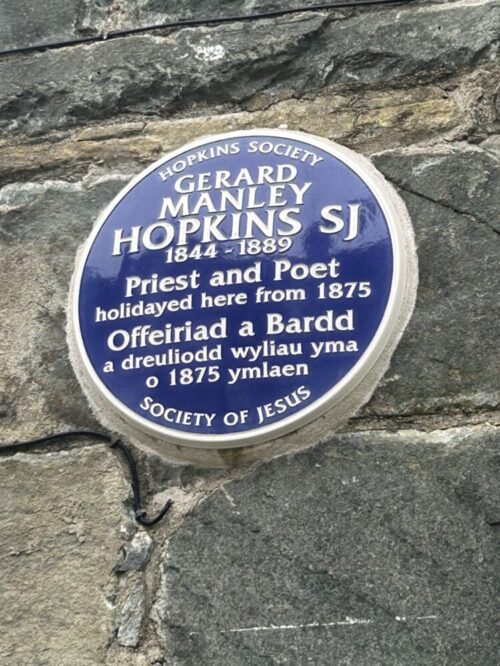
His words would have chimed with fellow poet Gerard Manley Hopkins, whose holiday stays in the town were recently commemorated in the form of a blue plaque. Hopkins, a Jesuit priest – whose work, with its “sprung rhythm” was very much influenced by the flow of the Welsh cynghanedd – praised the river-stretch between Barmouth and Penmaenpool in a poem which includes this stanza:
The Mawddach, how she trips! though throttled
If floodtide teeming thrills her full,
And mazy sands all water-wattled
Waylay her at ebb, past Penmaen Pool.
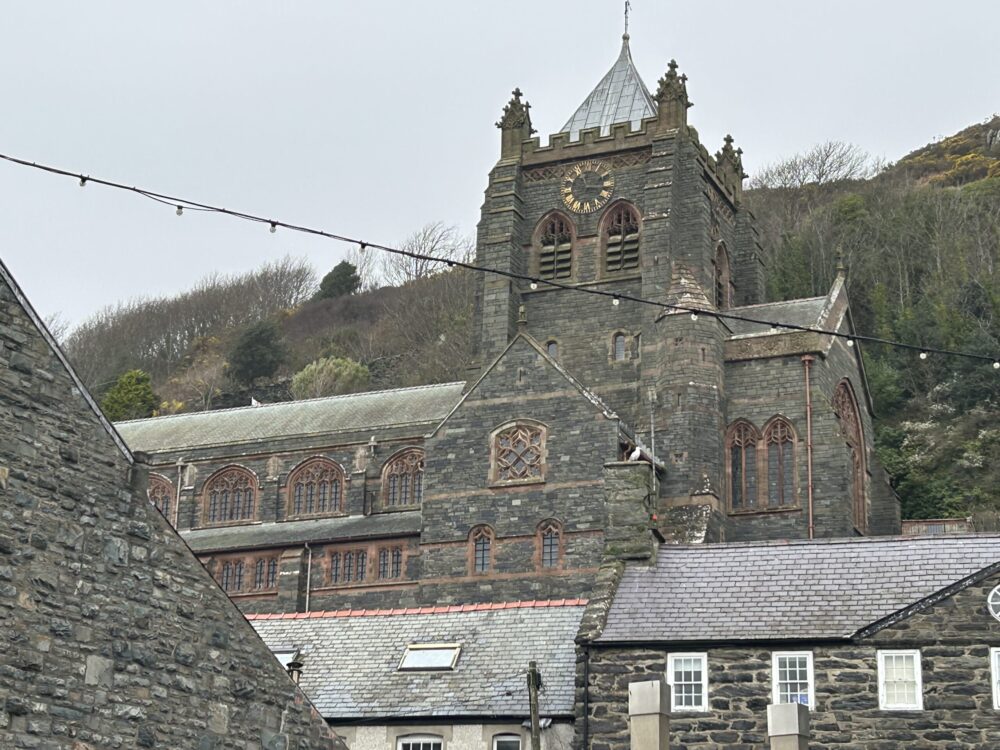
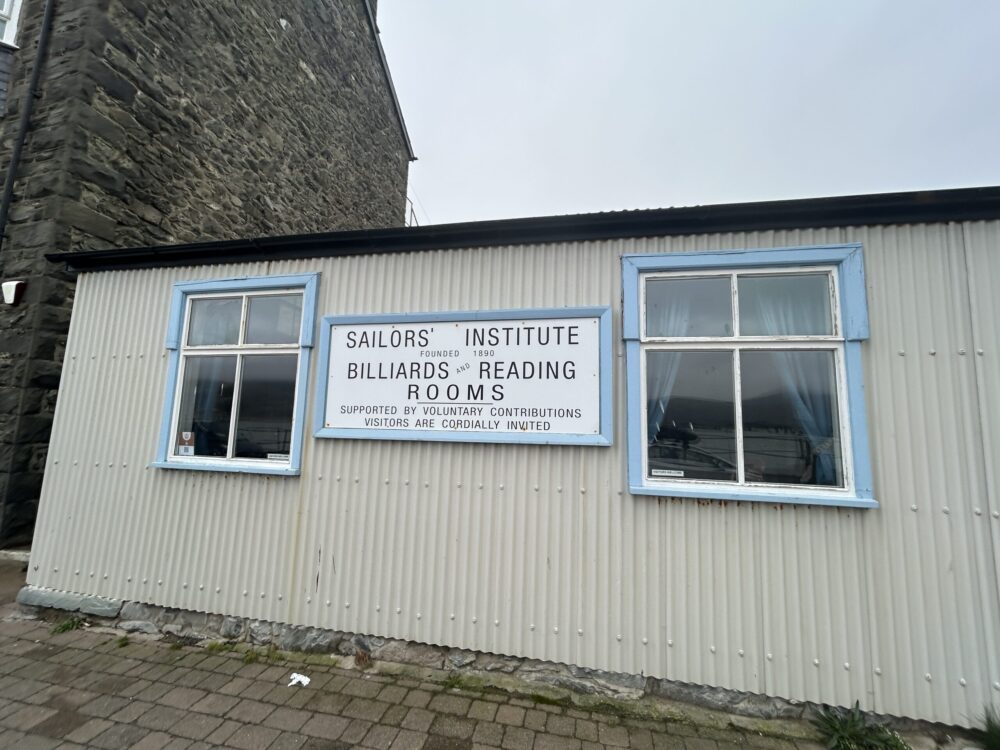
Barmouth, set at one corner of the Mawddach rivermouth, is a linear town that tightly hugs the coastal lines, a picturesque, slate-grey settlement where many of its Victorian houses are seemingly built into the hillsides, vertiginously clinging to crags like so many limpets. Notable buildings in the town include the Gothic St John’s Church, built on the scale of a small cathedral and paid for by the Lee and Perrins family. In keeping with its shipbuilding tradition and seafaring ways there is the atmospheric Sailors’ Institute, open to landlubber members of the public as well as old salts. The nearby Tŷ Crwn roundhouse, meanwhile, catered for less bookish sailors, acting as an eighteenth century lock-up for drunken ones.
David Brown, who works part-time in Barmouth Station and used to run a bed and breakfast in the town, avers: “We have the perfect combination of landscape in the perfect configuration. So, you've got a stunning estuary with mountains behind. The bridge is iconic. You've got a perfectly shaped town where the high street runs parallel to the beach. Nothing's very far away from anything. You've got a glorious, glorious stunning beach and you've got some of the best walks in Wales, so scenically it's about as perfect as it can be.”
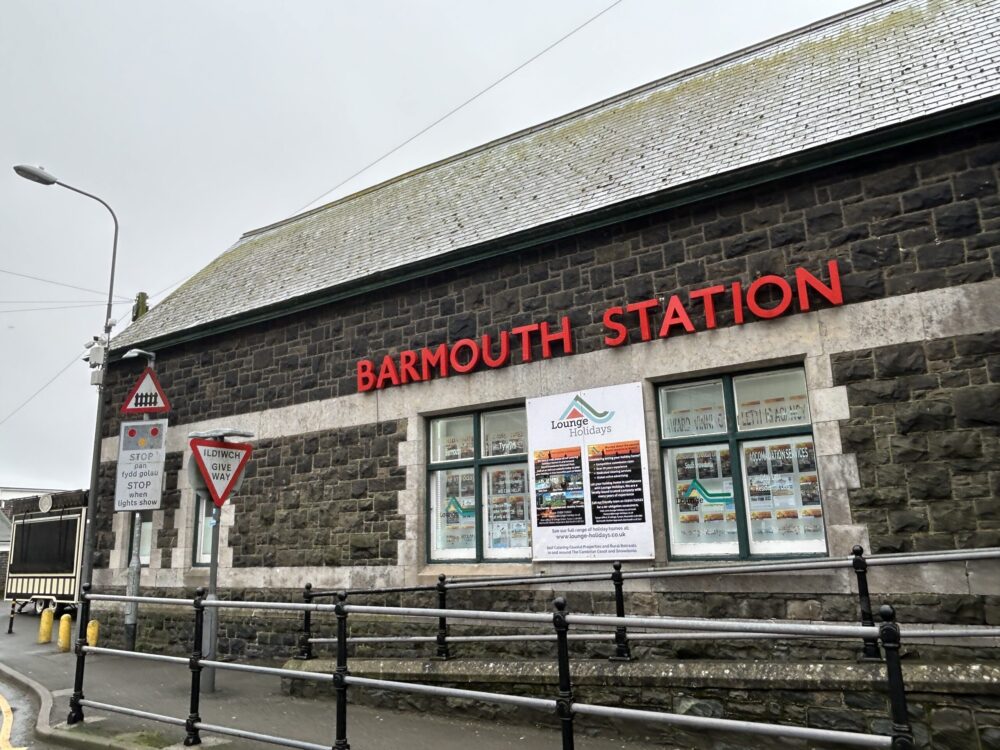
The railway has long been pivotal in the town’s economy and the town’s station is one of the busiest on the Cambrian Line. Barmouth Station is an interesting commercial model, offering a shopping outlet as well as both tourist and rail information.
Bekki Stott is the Sunset Bay Lifestyle shop manager, selling anything from season tickets and Barmouth hoodies to ceramic puffer fish: “It's the second biggest stop on the Cambrian line. Shrewsbury gets over two million passengers, which you'd expect.
"Then you have Aberystwyth, with its hospital and university and then it’s Barmouth with 238,000, only 60,000 fewer. We've had lots of good publicity recently and it's not just the about the summer holidays but also things such as where to go for a walk on a beach at Christmas or for the best date night. A fair few years ago Barmouth didn't have a good reputation, you know. It was a bit rough around the edges. That’s changed.”
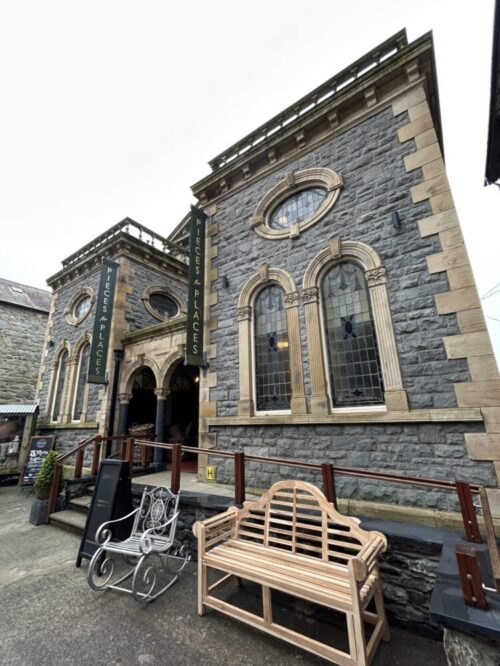
There is nowadays a well-heeled feel to the place. The High Street houses over 70 mainly independent businesses, from the high-end furniture store Pieces for Places to fudge emporia and quilting shops. And ice-cream parlours, of course.
Barmouth isn’t just about scenery but also about tight-knit community. A case in point is a former refuse tip just a crow’s hop away from the town centre. Here local builder Dominic Bailey shows me around the Wern Mynach Community Garden, a four-acre site next to Barmouth and Dyffryn United’s football ground.
Dominic explains that, before the advent of the railway, “The sea came all the way up and there was possibly a little port here, to get the boats in. The monks used to come and leave all their livestock here, which is why it's called Wern Mynach, the Monk’s Grove.
"You've also got Ynys y Brawd, the brother’s island, in the estuary and there’s a house called Hendre Mynach over there.
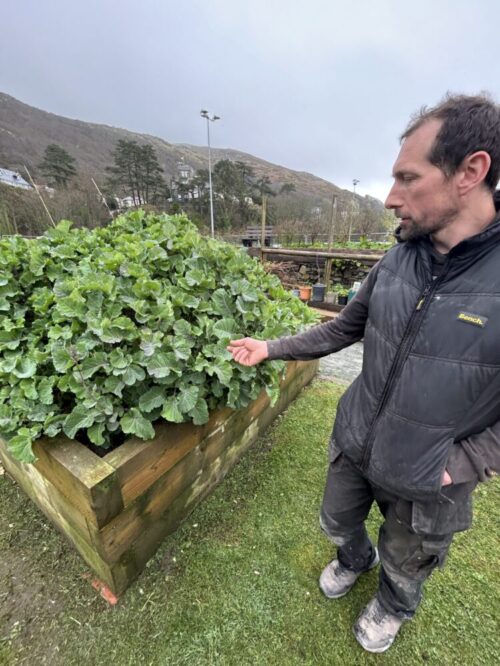
“In the 1970s the place was a refuse tip and then it became an open area. Now it’s a mixture of planted garden and wild woodland. Because it used to be a tip, that's why we have everything in raised beds – you can't really grow anything in the ground, you know?”
Dominic proudly shows me a positively jungly bed of perennial cabbage as he explains “This is now a little green space for people to just come and unwind and relax. And that was the idea of the community garden, it was to get people involved in the whole site.”
We stroll through the vegetable beds into the adjoining woodland area which is bisected by two streams, a place chirpily alive with the calls of great tits and fluting bird song. “There are little fish in here, there's brown trout. We have a lot of bluebells in bluebell season, plenty of wild garlic coming up and a little orchard over there. It is a haven for wildlife, definitely, and there’s a butterfly garden and an outdoor teaching area.”
From volunteering at Wern Mynach, Dominic has graduated to becoming a Forest School leader.
“It’s a bit like the Scouts. Some people don't learn in classrooms, they learn being outside and you can make kids learn without even knowing they're learning, you know? And it's just looking after the environment, taking ownership of your area, picking up rubbish, doing games, keeping fit outside.
"You can do so many games outside. And the beach is a great place because it's a blank canvas, the sand and things. It's about educating, looking after the area. and children being free to be outside.”
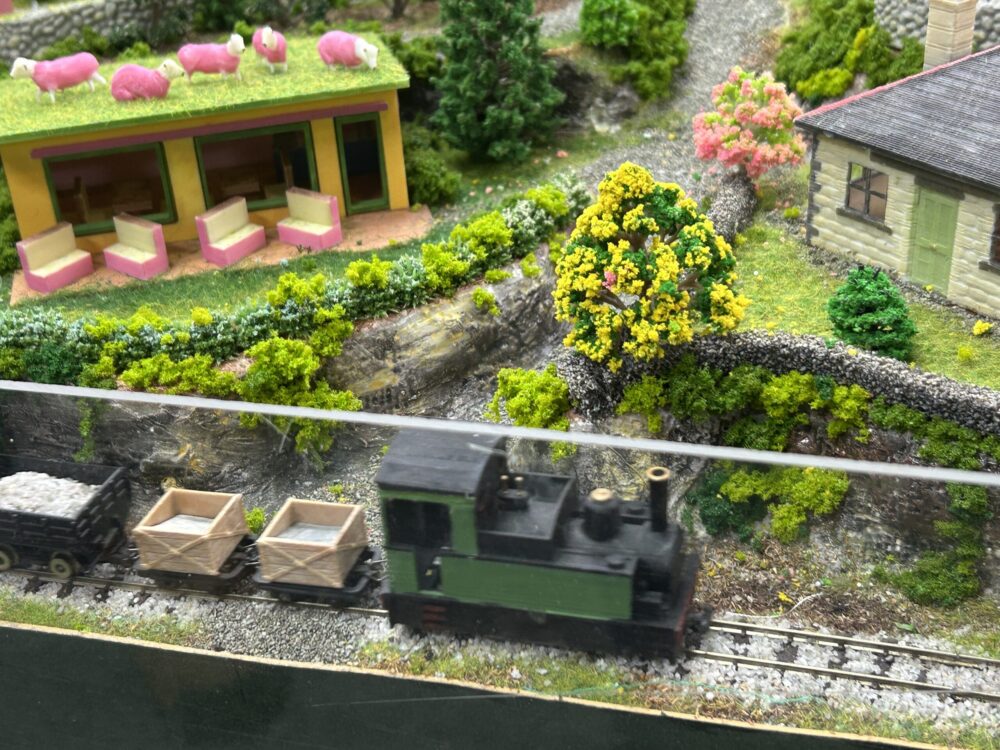
There are also indoor community provisions such as Tanio Bermo, which encourages skills in young people such as using a 3-D printer – which produced the model train that moves through a miniaturised version of Barmouth in the window.
Volunteer Heather Brown explains the ethos of the place: “Making is valuable and important. We live in a world now where we don't value creativity enough. Everything's delivered by Amazon, made of plastic, shipped over here in large containers from China and we've lost a lot of the skills and the satisfaction of making things for yourself.
"One of the things we get when people have made something for themselves is the sheer look of joy on their face when they say, I made this!”
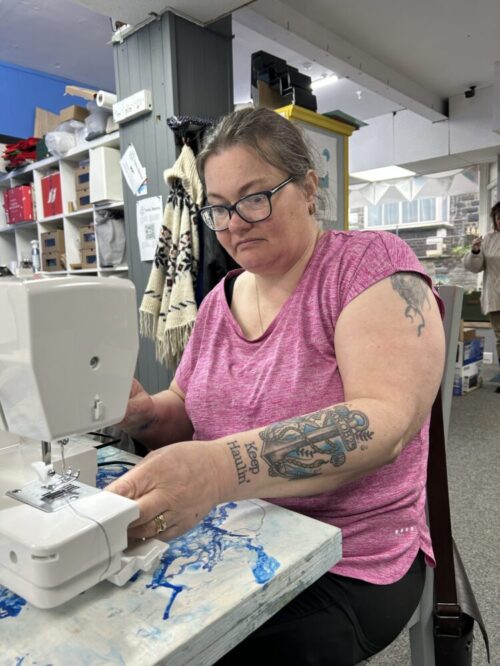
Kay Jones, working the embroidery machine has revived a skill at sewing that had long been dormant: “I did it as a child at school but hated it and had a bad lot of teachers so I didn’t use a sewing machine since. That was until I came along to a workshop and made a simple bag straight away – a simple sort of bag. I got completely hooked and now I've just can't stop.”
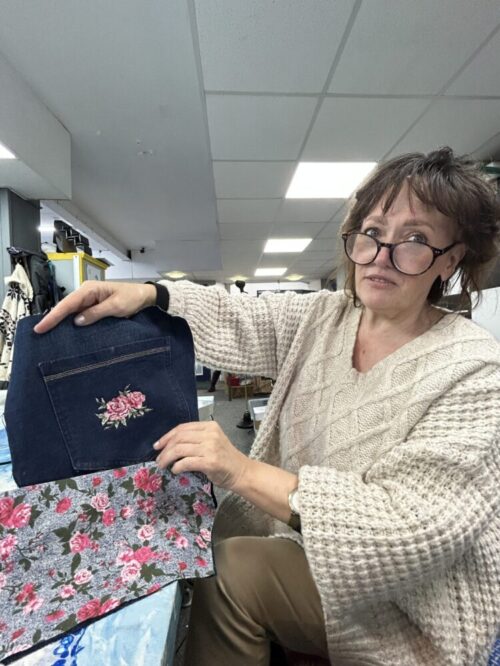
Busy as a bee at her own sewing, Tina Triggs pauses her machine to explain how she also learned as a school girl.
“I then didn't really sew much for years and years and then took it back up again about seven or eight years ago.” She now teaches people herself. “There's that pleasure that people get from making something, you get the extra pleasure from teaching people. And seeing them come back and seeing them want to learn more is just amazing.”
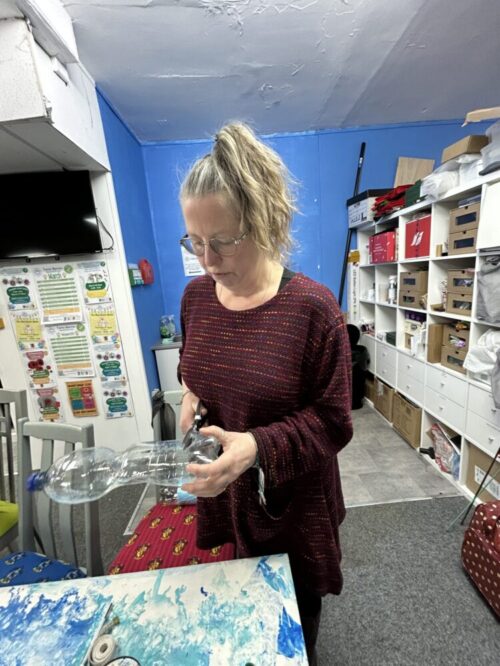
Wendy Slater-Ferguson shares the success story of their repair café which has proved to be very successful. A whiteboard enumerates some of the things they’ve fixed of late, including electrical lights and lamps, vacuum cleaners and audio equipment.
“We've repaired two step ladders,” Wendy adds, “as well as four bits of furniture, ten items of jewellery, three spectacles, some suitcases and a wheelchair.” Wendy and her co-workers also able to turn plastic bottles into poppies with her recycler’s alchemy. “Waste not want not” might be their watchwords.
At day’s end it was time to become a thoroughgoing seaside tourist. It was made easy by the choice of not one but four fish and chip shops. Then ice-cream to follow, as the lights of the town quietly strobed into the lapping waves of the harbour.
At times like this the place is a veritable idyll, the taste of vanilla and chocolate flake melding with the slightly seaweed tang of the southern Snowdonia air.

Jon Gower is Transport for Wales’ writer-in-residence. He will be travelling the breadth and length of the country over the course of a year, reporting on his travels and gathering material for The Great Book of Wales, to be published by the H’mm Foundation in late 2026.
Support our Nation today
For the price of a cup of coffee a month you can help us create an independent, not-for-profit, national news service for the people of Wales, by the people of Wales.
Get more trusted Welsh news
Choose Nation.Cymru as a preferred source in Google News to see more of our journalism.
