


Feature
Is Wales still a Christian country?
Desmond Clifford
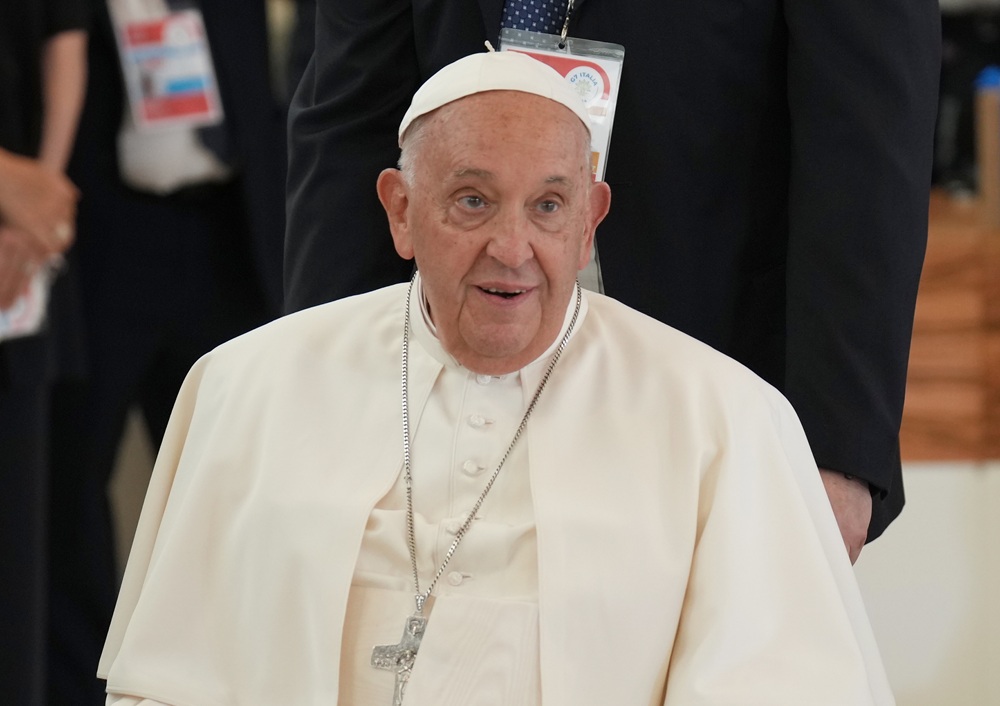
When Pope Francis died, I was surprised by my level of interest. I had an intensely Catholic early life but haven’t been much in churches for years.
So far as I could tell, Francis was a humble man whose heart was in the right place.
He mistrusted the Vatican civil service (“the Curia”), as any pope should.
He was personally tolerant and merciful and spoke up for immigrants when practically no one else would.
Apparently, he could be irascible, which only made him more human in my eyes.
The part of his mission which was to be a shepherd and lead by example, I think he did very well.
I’m less sure about the institutional side of his mission. His personal support for those marginalised by the Church – women, gays, divorcees - didn’t translate into reform.
[mid-content-banner]
Abuse
The Church in this generation is overwhelmed by the dimensions of abuse carried out by its priests and institutions. If you believe in such forces, you might think Satan had chosen to destroy the Church, not through the Armageddon foreseen by St John of Patmos in the Book of Revelation, but by infiltrating the priesthood and poisoning from within.
If an answer is available to all this, it eluded Pope Francis.
It’s not actually clear whether the Church can ever again re-assert moral authority with full conviction.
Only a generation or so ago, Catholic Europe – Ireland, Spain, Portugal, Italy – were virtually theocracies.
For wholly rational reasons, the Church was knocked from its pedestal, condemned by its stunning immorality and complacency.
The Church is slow to admit error and too proud for apology. Only in 1992 did it admit Galileo was right after all, exactly 350 years after his death.
When the Church had power, it often abused it.
Can it redeem itself? I am interested to see who they pick after Francis and how he will address the future.
[lower-mid-content-banner]
Eradicated
In Wales, the Catholic Church has always felt like a cuckoo in the nest. It was thoroughly eradicated in the Reformation.
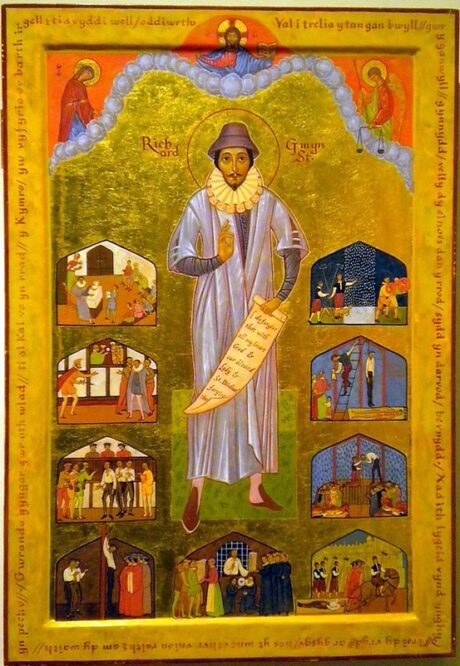
The country is carelessly indifferent of its Catholic and Anglican saints; neither Bishop Farrar nor St Richard Gwyn excite real interest. Their moral conviction and astonishing bravery should mark them out in any culture – but not here, not really.
After Catholic Emancipation in 1829, churches were erected to minister the needs of mostly Irish immigrants pouring into Wales through industrialisation.
Later immigrants replenished the congregations: Italians, Polish and most recently, Ukrainian.
For the most part, the Catholic Church remained somewhat apart from mainstream Wales and until recently, there was a distinctly anti-Catholic strain in the culture.
If that’s now gone it’s because the kind of Protestantism which sustained the prejudice has itself declined and, basically, no one cares enough anymore.
Not long ago, Wales was among the more religious parts of Britain. The angst between the Church in Wales and Nonconformists kept the pot boiling and disestablishment was a defining cause for generations.
Nonconformity
Nonconformity successfully captured the character of Wales, perhaps exacerbated by the absence of a political outlet (while Ireland, in contrast, remained militantly Catholic for the same reason). It combined individual salvation with strong collective commitments, ideas which filtered through into secular politics.
Across Wales people shook with fervour, read the Bible, sang hymns, abandoned superstition, rejected false images (art, in other words) in favour of white-washed walls; altars were torn down, priests and bishops were rejected.
I’m always struck that the Welsh version of Congregationalists is “Annibynwyr”, literally the word for “independents”.
Nonconformists formed a direct relationship with God, unmediated by priests. The minister is recruited and employed by the congregation, and directed by it, not the other way round.
Wales is attached to an illusion of the egalitarian society, and this comes largely from Nonconformism.
We can connect a century of Welsh support for Labour to this tradition. The decline of religion as a force in politics is a feature of our times.
Not long ago, most politicians had – or affected – at least a notional connection to Christianity; candidates would struggle to get through the first selection meeting without it.
Only a few years back, the BBC confected shock-horror for half a day when Nick Clegg told Radio 4 he was an atheist. Keir Starmer is an atheist and today no one bats an eyelid.
'Theocracy'
One Welsh writer (Goronwy Rees) described 1920s Aberystwyth as a “theocracy”, both in the number of chapels relative to population and their import on people’s lives (his father was a minister). I lived there half a century later, in the early 1980s, and they were still going strong. Every sect was present, often with an overfill subsidiary, and wherever there was a Welsh chapel, there was an English version round the corner.
A city of 100,000 could scarcely have merited more chapels (or pubs, for that matter, but that’s a different story). Today there are fewer of both.
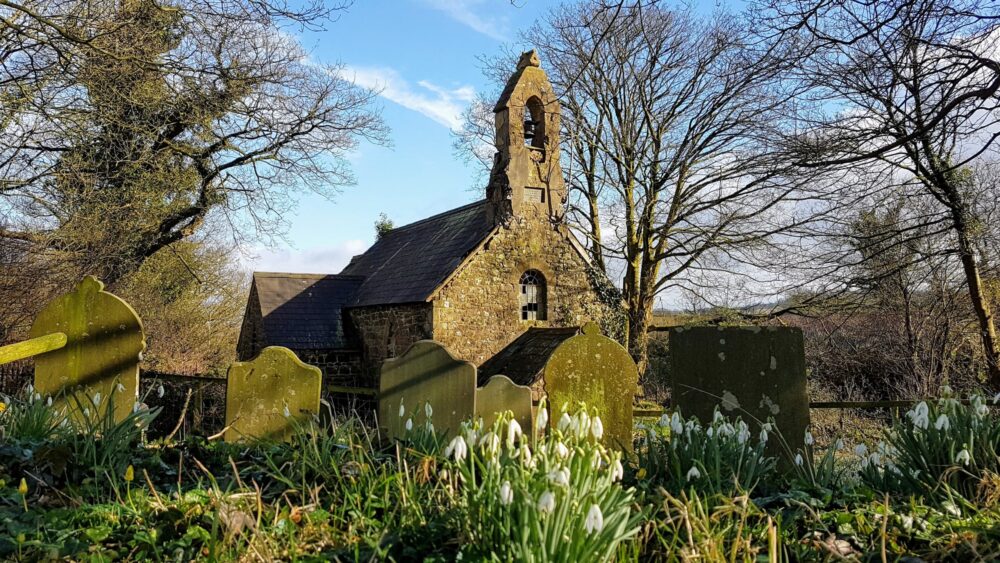
Chapels have been closing at the rate of one of week. The Church in Wales says around 10 churches a year are shut.
At the 2021 census, 44% defined themselves as Christian, down from 57% at the previous census. Less than half of Welsh people are Christian for the first time in around 1500 years, since all those tonsured Celtic saints paddled their coracles along the coast stopping to preach on hillsides.
Quite a change, but with some qualification. For years people said they were Christian because it was expected and they couldn’t be bothered, or didn’t dare, to say otherwise.
If someone today identifies as a Christian, they’ve probably thought about it and describe a choice rather than a default. Also, spirituality is now more widely defined and many look outside organised religion for nourishment and expression. And of course, other religions have grown as Wales’ population has changed.
Does Wales have a future as a Christian country?
Does it matter?
In the short term, it looks like institutional Christianity will continue to decline, at least as measured by chapels and congregations. It’s hard to see what might reverse it, although there’s a long history of revival at unpromising moments.
The Anglican Church was going nowhere when the Methodist insurgency emerged, and that very torpor was one of the reasons why Methodism took off.
Perhaps a major social shift – the AI revolution, environmental chaos? – might stir some craving in people’s souls on a large scale?
In our own age, Elim-style charismatic churches (Elim was founded by Welshman, George Jeffreys, from Maesteg) have grown as traditional chapels declined, the evangelical movement serving as a Nonconformist re-invention for the modern age.
However, my sense is, and the census seems to substantiate this, that the charismatic churches are scooping up congregants that might otherwise have gone elsewhere. They are not growing the total number of Christians in Wales.
Nonconformity, it seems, carried the seeds of destruction at its birth. When you reject, as they did, the theatre of religion, there’s precious little to fall back on when the traditional basis of faith mutates.
The Anglican and Catholic Churches re-invented themselves through liturgy, ritual and allegory, providing a spiritual and ceremonial punctuation to life.
Defenceless
Nonconformity seemed particularly defenceless when the sea of faith withdrew, marooned on the darkling plain.
The level of public dialogue about Christianity is pathetic. The media treats it as taboo, except for formulaic constructs like “Songs of Praise”, “Thought for the Day” and “Dechrau Canu, Dechrau Canmol” which are largely bland and uncritical safe spots.
Easter and Christmas are almost wholly secular now in the public realm.
Discourse on Christianity has practically disappeared and the churches, their confidence destroyed, have retreated to sanctuaries away from public gaze - essentially the opposite of what their mission to the world demands.
The New Atheism holds tremendous sway. Brilliant figures like the late Christopher Hitchens and Richard Dawkins captivate the digital airwaves and public space, and why wouldn’t they?
But who makes the Christian case? Politicians are scared to cite Christianity for fear of being labelled illiberal and have, incredibly, abandoned it to the militant right.
Tim Farron resigned the Lib Dem leadership, and the SNP rejected Kate Forbes, because of supposed clashes between Christian convictions and liberal politics.
Public dialogue
Can’t we just accept difference? Is it really evidence of pluralism to exclude from public dialogue the religion which shaped this country’s culture, politics and collective morality? How did it come to this?
The churches are sustained today by their link to the state education system. Every major town in Wales has a Catholic school and large chunks of the population live within travelling distance of an Anglican one. This is the main way churches keep going.
If faith-based schools were abolished (I’m not suggesting they should) then the churches would struggle even more.
And does it matter? That’s the hardest question of all.
Ideas once widely accepted die when they can no longer be sustained under public view (which is not the same as saying everyone must agree with them).
The divine right of kings, creationism, a flat earth, feudalism, slavery, communism: all these ideas were once mainstream but have fallen away.
Christianity’s part in our history gives it no divine right to the future.
If Christianity has a public future, it must be through relevance, good deeds and presence in people’s hearts and lives as they confront what surrounds us.
Support our Nation today
For the price of a cup of coffee a month you can help us create an independent, not-for-profit, national news service for the people of Wales, by the people of Wales.
Get more trusted Welsh news
Choose Nation.Cymru as a preferred source in Google News to see more of our journalism.
