Wednesday, 15th July 2026 Cardiff 28° · Clear sky
NationCymru A news service by the people of Wales, for the people of Wales.

Feature

Is Wales ready for the post-Labour era? What comes after 25 years of one-party rule?
By Jibreel Meddah
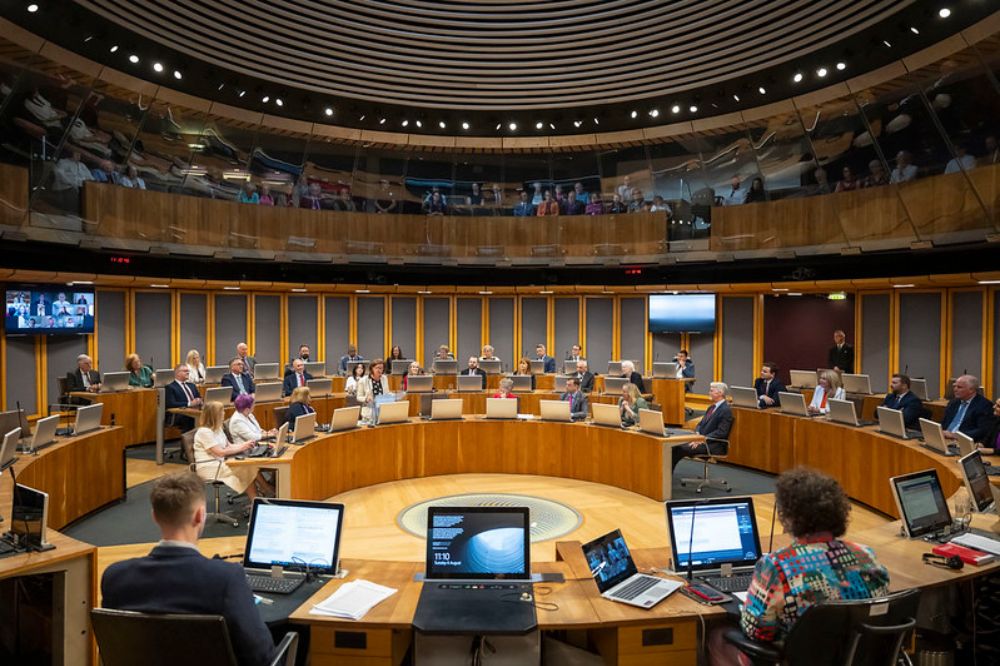
Senedd Members in the Chamber - Image: Senedd Cymru

Jibreel Meddah

For twenty-five years, Welsh democracy has been defined by a single colour. Since the then-National Assembly first opened its doors in 1999, Welsh Labour has done more than just sit in the seats of power. They have essentially owned the room.

The party has outlasted five First Ministers and a global pandemic. They have managed a total transformation of the Senedd’s powers, standing as the only real constant in the shifting tides of Cardiff Bay.

I reached out to Welsh Labour numerous times to ask how they intend to maintain this grip as the 2026 elections loom. They did not answer. No statement was issued, and my questions regarding their vision for the next quarter-century went ignored.

But as the 2026 elections loom, that old sense of certainty is starting to crack.

What used to feel like reliable stability is now being viewed through a much colder lens. The predictability that once offered comfort has lost its shine, leaving many voters to wonder if stability is just a polite word for a country that has stopped moving.

For the first time since devolution began, the big question is no longer whether Labour can be challenged. It is whether the entire system that kept one party on top for a generation is about to be torn apart from the inside.

The legacy of the quarter-century

To grasp the appetite for a post-Labour era, you first have to examine exactly what these first twenty-five years have managed to build. From the early days of 'Red Welsh Way', the strategy of distancing themselves from the London agenda, the party in Cardiff Bay made every effort to define its own identity.

Labour is the government responsible for free prescriptions, the first plastic bag tax in the UK, and the ground-breaking ‘Well-being of Future Generations Act’.

Of course, twenty-five years of the same leadership is a gift to anyone looking to pick a fight. The Welsh Conservatives have built their entire case on the idea that we’re not seeing progress, just a country being managed as it slides downhill.

Darren Millar MS is currently driving that effort, insisting that the 'broken' state of the country today is the direct result of a decades-long marriage of convenience between Labour and Plaid Cymru.

“Poor decisions made as a result of Plaid Cymru support for Welsh Government budgets have precipitated in Wales having the UK’s longest waiting lists, the highest unemployment and languishing at the bottom of the UK’s PISA rankings,” Millar says, framing the 'Red Wall' not as a shield, but as a barrier to the radical reform he believes the nation desperately needs.

Yet, despite the mounting criticism, some experts warn against writing off the Labour machine too soon.

Professor Laura McAllister, who leads political analysis at the Wales Governance Centre, suggests that any talk of a post-Labour era is still premature.

“I think it would be a mistake to talk about a post-Labour narrative at this stage,” McAllister says.

“Clearly we've seen some seismic changes, which makes this election probably the most exciting since the referendum in 1997... But whilst there's no doubt at all that this is an existential threat to Welsh Labour, I think we underestimate the durability of the party at our peril.

"It hasn't been in the impregnable position it's been in for a century, having held seats like Caerphilly since 1918, without strong cultural and social roots amongst the population of Wales.”

The end of the working majority

While political fatigue is definitely in the air, 2026 introduces a structural threat unlike anything the Welsh Government has faced before. The Senedd is currently staring down its most radical overhaul since its inception.

By jumping from 60 to 96 members, the government has essentially redrawn the map of Welsh power overnight. This shift to a proportional system effectively erases the safety net that once allowed Labour to govern alone even when the public vote was split.

This shift remains staunchly opposed by Millar and the Welsh Conservatives, who brand it a £120 million waste.

To Rhun ap Iorwerth, the leader of Plaid Cymru, the new rules are the only way to break the cycle of stagnation caused by one-party rule that has typified Wales for decades.

He argues that more members are not about more politicians, but about giving Wales the representation it needs to scrutinise decisions and make better laws.

“This new system encourages collaboration and pluralism, not the tribalism of one-party dominance,” ap Iorwerth says. He believes that moving away from the archaic first past the post system will facilitate a change in culture within Welsh democratic institutions.

However, Professor McAllister points out that this shift makes a single-party government almost impossible.

“It's safe to say it's almost impossible for a single party to get over that magic 49-seat threshold and form a government of its own,” she explains. This mathematically explainable shift means that for the first time, deals and coalitions are not just a choice, but a necessity.
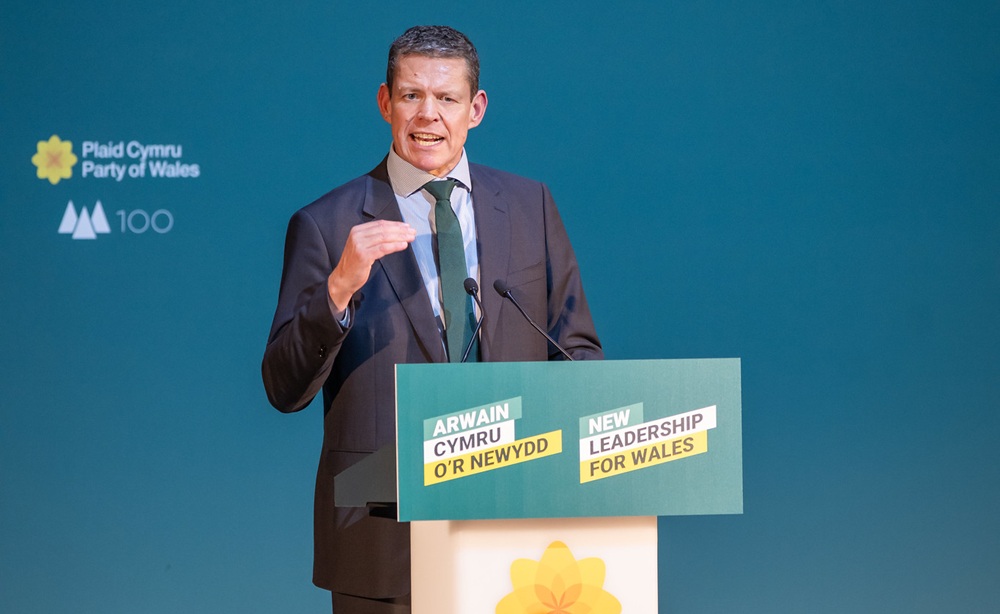
Plaid Cymru leader Rhun ap Iorwerth

The challengers: A two-front war

For Plaid Cymru, the 2026 election is being framed as a once-in-a-generation opportunity to lead a national government.

Rhun ap Iorwerth claims that Labour has grown tired and complacent after twenty-six years in power.

“They have given up on finding new, innovative ideas to support our public services or grow our economy,” he says.

Under his leadership, he promises that a Plaid Cymru government would no longer be subservient to Westminster and would be unyielding in fighting for what Wales is owed, from missing HS2 billions to power over natural resources.

The traditional Plaid-Labour duopoly is under threat from outside by the rise of Reform UK. As noted by McAllister, Reform is creating a double whammy effect for the First Minister, Eluned Morgan.

“She's been blamed for policy failures in Wales, and also a kind of deep-rooted hatred of Starmer is manifesting itself in the poll ratings as well,” McAllister observes.

While Reform UK did not respond to requests for comment regarding their specific 2026 manifesto, the party has made no secret of its plans for a major surge in Wales. High-profile figures have set their sights on winning between 20 and 40 seats in the expanded 96-member chamber, looking to exploit the new proportional system to its full extent.

Rhun ap Iorwerth acknowledges this threat but frames the election as a two-way fight between his party and the populist right. He suggests that Labour’s time has passed and the Conservatives are in disarray.

When I asked him about this choice, he was direct about the stakes: “The choice facing Wales is between two very different futures. A Plaid Cymru government focused on hope and ambition, or a Reform presence that looks only to Westminster.”

To the Plaid Cymru Leader, the middle ground has disappeared, leaving voters to decide between a positive national vision or an insurgent movement from the fringes.

The two forces in this election, the established government and the rising populist threat, are united only in their silence. Both Welsh Labour and Reform UK declined to comment for this piece.
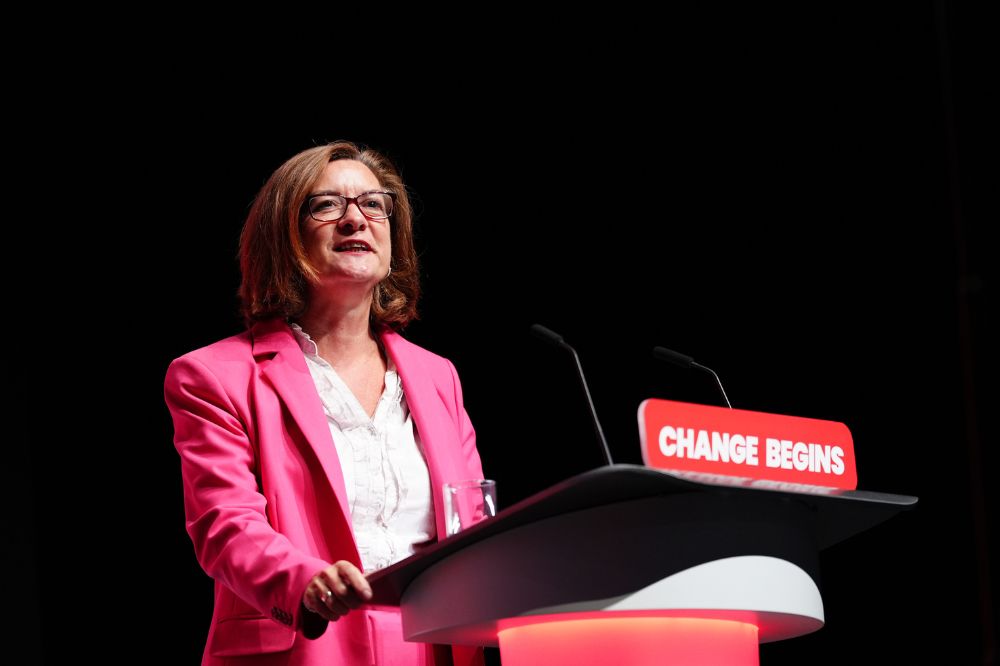
First Minister Eluned Morgan Image: Peter Byrne

A pluralistic future?

As May 2026 approaches, the real debate isn't just about which party wins the most seats. It is about whether Wales is actually ready for a different way of doing things.

Rhun ap Iorwerth has already thrown down the gauntlet with a 100-day plan, promising an immediate break from the Labour era. His pitch is urgent: slashing waiting lists and tackling child poverty to show that the "old normal" is no longer acceptable.

If his vision holds, the "post-Labour" period won't just be a change of face. It will be a negotiated government where no single party can force its manifesto through without a consensus. It marks a shift from a century of dominance to a landscape where deals are the only way forward.

For McAllister, this election is far more significant than just a standard trip to the ballot box.

“I don't think it's a referendum on the past 25 years," she says. "I think it's a moment in Welsh political history. It shows a willingness for the electorate to remove their historic ties with that party...

"It’s a moment of hope as well, in that certainly on the left, people are likely to be backing a range of parties that have constructive ideas about the future of Wales."

Whether this leads to a more dynamic, accountable democracy or a period of political gridlock remains to be seen. But after 25 years, the process of devolution is entering its most unpredictable phase.

The red wall hasn't fallen yet, but for the first time, the cracks are telling their own story.

For the price of a cup of coffee a month you can help us create an independent, not-for-profit, national news service for the people of Wales, by the people of Wales.

29 comments

Alwyn

The achilles heal in UK democracy is the now lack of discussion about policy. I started visiting this site about a year ago; when you take a step back, it's actually quite astounding that we have several articles a week on polling, what the polls mean, what future polling will look like, how have the polls changed - or articles like this which have little concrete discussion about what will change with a reform or plaid government. UK politics was designed to produce good policies - through talented debaters that could master an argument, understand a brief, run a department/policy area as well as gaining public support. Today politicians just seem appeal to voters without needing an in-depth understanding. This problem is a westminster/holyrood problem as well - I remember one senior scottish based CEO saying - 'it's just noise.' it's hard to argue.

Reply
Keith

"UK politics was designed to produce good policies" When was this exactly? Every policy from the Thatcher era turned out to be terrible. Just ask those without water in the home counties.

Reply
Alwyn

I knew there would be someone who would quip this. How would you have policy discussed otherwise - happy with voxpops and social media clips as per standard? As an example, for your chosen period - the 1988 education reform act had over 300 hours of debate on the floor, over 2000 amendments, subjects like maths and science had separate sittings. Led to all students being taught a consistent set of core subjects such as English, maths, and science- reduced regional inequality, made school standards more transparent, helped parents understand what their children were being taugh, and improved accountability for schools. OK not perfect, but today have major problems with consistency between schools, a stronger focus on exams, still covid problems, higher teacher workload / burnout, students’ mental health and ALN problems. Clelrry senedd hasn't risen to the challenge

Reply

In reply to Alwyn

Keith

There's plenty of debate and amendments happening today with the assisted dying bill although I'm not sure debate length is a good measure of policy quality when taxpayers are paying people who like to talk to do what they love. All that's actually changed is the pace and transparency of politics that makes it harder to hide bad governance. If pulling back the curtain reveals a bad system then it was always bad and you didn't realise it when it was filtered through the BBC and Daily Telegraph. Because what is and has always been a barrier to good policy in the UK is the adversarial politics created by FPTP. You wouldn't make good decisions elsewhere in life if it was a fight to the ideological death every time. Good policy only comes from collaboration and cooperation. But of course it's not fair to say that absolutely everything was terrible under Thatcher. Two of her successes, and possibly the only two, were the single market and S4C.

Reply
Jn jones

I think for this election. Unfortunately the regrettable rise of Reform seems to have reduced the role of policy debate even more than usual. To be fair it’s typical of Plaid on the day to come out with pretty hefty manifestos, albeit often placing unrealistically transformative expectations around certain proposals (recreating the Welsh development agency being one such probably sensible but not mind blowing idea). But It’s no doubt been a great gift for Plaid this time round to frame the election as some sort of simplistic ‘good v evil’ struggle to galvanise votes without having to say all that much so far about what they intend to specifically do. They have ambitions and slogans a plenty to be sure, but those aren’t the same as policy proposals. They want to slash waiting lists, great, who doesn’t? But their actual plans to do so sit very much on a spectrum of the vague to underwhelming. What do they have to say about local government, or education standards that aren’t related to the Welsh language? These are the issues at the core of the actual government of wales. Once you’re done failing to get the treasury to give you £4 billion that’s what has to be turned to.

Reply
Alwyn

Not sure I agree with this - there will be differences, but I think these won't be noticeable until after the election. some the new plaid and labour MS's have some 'unique' views on issues. And reform could be a total lottery- ranging from ex socialist worker party members to landowning tories! But the decision to expand to 96 looks quite poor, given there will be a lot of undeserving and inexperienced MSs being elected. Being able to deliver policies, you do need to understand how to implement them, what levers to pull and what you want to achieve by pulling them. I don't see that in any of the three main parties (Labour, plaid and reform)

Reply
TheWoodForTheTrees

Catastrophic socialism? Really? I would say for Reform to really make an impact in Wales, they first have to turn up. There hasn't been much evidence of that so far. They still haven't named their leader in Wales since the last one was jailed for taking bribes from the Russians. Their campaign in Caerphilly was laughable and then there's that guy Thomas who was kicked off the community council in Cwmbran for not attending enough meetings. Farage is always MIA at his seat in Clacton. It would appear the calibre of their members isn't good enough and they certainly don't like turning up for work!

Reply
Agnes Nutter

Hopefully? Full Independence.

Reply
Agnes Nutter

Deform will bring disaster

Reply
Adam

If there's any intelligence in the incoming party they'll sort the mess out that's been left, then in time, proceed with independence. Cymru can't thrive while it's being held hostage by a foreign country and being stolen from.

Reply
Tucker

Who'd have guessed that a genocide supporter like yourself would vote for reform.

Reply
Keith

You might be fed up with a leaking roof but demolishing the house to fix it (change at last!) isn't the smartest move.

Reply
Undecided

True, but if the roof leaks long enough, then eventually the fabric of the house rots. 27 years is a long leak.

Reply
Keith

That's fine if it's backed up by a structural survey and a plan to rebuild. If it's just a temper tantrum then all you have left is a pile of rubble and no shelter at all.

Reply

In reply to Keith

Undecided

The “structural survey” is self evidently a poor one - third rate individuals for the most part who have achieved little or nothing, now to be provided with remote sinecures courtesy of the ludicrous new voting system. As for the rebuild, the “house” will always be built on sand until the fundamentals of an inadequate devolution settlement are renegotiated. But that’s not happening any time soon.

Reply

In reply to Undecided

Keith

Are you referring to a survey by the same folks who told us in a 2016 that all our problems would be solved by making it almost impossible to trade with the largest single market in the world? I suggest a second opinion.

Reply

In reply to Keith

Undecided

No - Brexit was undoubtedly the biggest act of self harm in living memory; but, with respect, you are wandering away from the issue. It’s not enough to blame 27 years of failure on Brexit, Covid, the Tories and/or the weather. That’s the easy way out.

Reply

In reply to Undecided

Keith

This thread isn't about devolution. It's about those that knowingly make choices that make things worse while crying "it can't be any worse". It can always be worse and only someone born yesterday wouldn't know that.

Reply

In reply to Keith

Undecided

I think we will have to agree to differ.

Reply
Adam

The British flag represents genocide, theft, abuse, and nowadays massive stupidity. It can stay out of Wales along with the racists that support it.

Reply
Undecided

What we’ve got at all UK levels is anti-voting ie an anti Tory vote in the ‘24 general election and the near certainty of anti-Starmer (and to an extent hopefully, anti-Farage) vote in May. It reflects the unrealistic expectations of many that the state provides everything they want and their disappointment when inevitably it doesn’t.

Reply
Keith

It reflects a voting system that doesn't allow people to rank the choices in order of preference.

Reply
Alwyn

The country hasn't gotten over Brexit and covid. Two big political shocks! A large proportion of voters need to make peace with that before that moving on. Social media hasn't helped. So much to unpack!

Reply
Undecided

Brexit was the biggest anti vote of the lot. A significant number of people did the opposite of what complacent mainstream politicians wanted and voted to Leave. Not helped by the foolish interventions from Europe and Obama.

Reply
Johnny

You lot would have had Jesus deported if he set foot in the UK in this day and age.He was Brown Skinned from the Middle East.

Reply
Garycymru

Openly supporting what that disgusting flag stands for is a very brave move. It basically has the same connotations as the swastika or the isis flag and we really don't want it in Wales.

Reply
Maxwell Woodley

Labour have failed their biggest supporters, it’s Plaid Cymru’s time to make a change.

Reply
Leon

About time Wales had some change, Plaid Cymru looks like a step in the right direction for the future of the country.

Reply
Dai Ponty

No London English Based party that treats Wales like DIRT in other words and have Plaid and the Road to independence no country should control and dictate to another country ie England to Wales same as Russia Ukraine or U S A Greenland we have had centuries of it

Reply

Leave a reply

Replying to Keith Cancel

This thread isn't about devolution. It's about those that knowingly make choices that make things worse while crying "it can't be any worse". It can always be worse and only someone born yesterday wouldn't know that.

Comments are reviewed before they appear.