Feature
Can Cardiff Airport take flight?

Professor Stuart Cole, CBE. Emeritus Professor of Transport (Economics and Policy), Prifysgol de Cymru / University of South Wales
Even before the Welsh Government bought Cardiff Airport in 2013 for £52 million, the former RAF Roose airfield has attracted controversy.
Since the take over however, and amid falling passenger numbers which saw the airport attract just 859,805 passengers by 2022, making it the 20th busiest airport in the UK, it has become a hot political topic, particularly with regard to the amount of money that has been spent to keep it afloat.
[mid-content-banner]
Financial position
Up to August 2024, Welsh Government financial contributions to Cardiff Airport totalled £179.6m. This covered the purchase price (£67.9m), grants (£41.9m) and loans (£69.8m) which includes £26.2m in interest and £42.6m covering loans written off in March 2021. (Source: Senedd Research, 2024 ).
Comments on wasting government resources are misguided because Wales must have an international airport.
The Welsh Government’s international strategy for 2020 – 25 is:
- To raise Wales connectivity with the rest of the world
- To grow the economy through exports and inward investment
- Wales to be a globally responsible nation
- Cardiff Airport becoming a UK centre for low carbon aviation. sustainable adventure tourism.
[lower-mid-content-banner]
Management of Cardiff Airport
‘The government is preparing a long-term plan for the airport subject to commercial sensitivity. Consultants were providing updated estimates of the airport’s current and potential economic benefit so that ‘we have a long-term trajectory’. (Jeremy Miles, Senedd Plenary July 2024).
‘There was an objective to improve connectivity by developing routes identified in Welsh Government’s international strategy as impacting economic growth e.g. the middle east, south-east Asia and north America’ (Ken Skates, July 2024).
The Government agrees that it ‘owns the airport but says it is managed in an independent commercial manner and makes independent decisions on a wholly commercial basis and is liable for its own actions.
Welsh Government have no influence over the airport’s commercial and operating matters.
‘The airport’s trajectory for growth using the recovery package provided by the Government is intended to make Cardiff Airport become sustainable and profitable in the future so securing the long-term future of the airport as a vital piece of the national infrastructure. The Government will assess the effectiveness of its investment once Cardiff Airport has increased its passenger demand levels’. (Jonathan Moody, Head of Aviation, Ports and Logistics, Welsh Government – March 2023; email answer shown to this column).
Surely one might expect an investor or majority shareholder in any business to discuss the day-to-day activities’ achievement of financial well-being on a regular basis; not just when success has been achieved.
Juxtaposed, these statements suggest a fuzzy demarcation line in decision making between Ministers and officials alongside the airport management whilst trying to achieve both socio-political and commercial objectives. And government interference is not new in nationalised industry contexts (this column in Nation, 28 July 2024).
Recovery to pre-Covid passenger levels will not be easy. Many airports are 30% down and London City Airport worse than that. Cardiff airport’s profitability has similarly suffered.
Comparison with Bristol Airport
Bristol Airport has bucked the downward passenger trend significantly through improved AirportFlyer passenger links with eight buses hourly to/from Bristol bus and rail stations and other new services. That frequency reduces passenger anxiety and is a huge step in encouraging public transport use. At the same time it has set a NetZero decarbonisation target by 2030 for all internal transport and infrastructure operations.
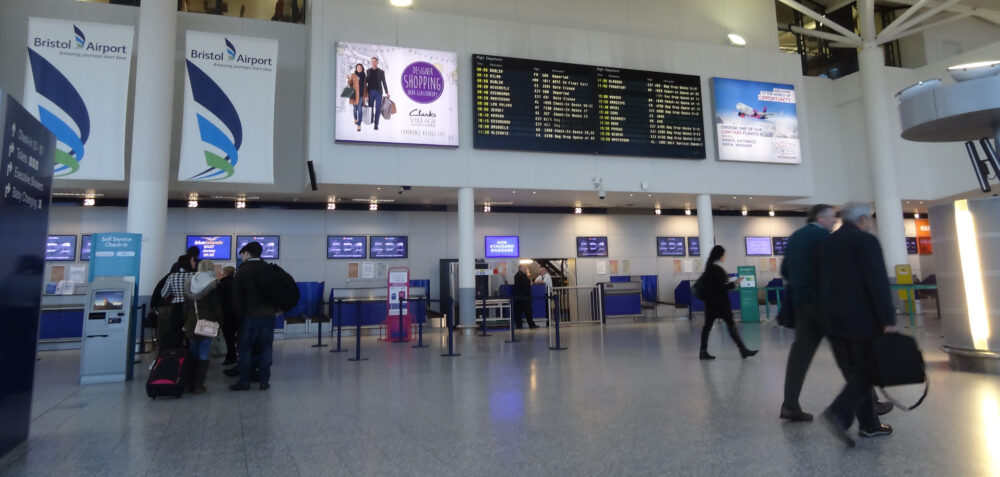
Bristol Airport, privately owned (by the Ontario Teachers’ Pension Plan) is investing £400m over five years to accommodate two million passengers of which £60m is for a new car park and Public Transport Interchange with sixteen bus / coach bays and a rebuilt internal road system.
This is not an argument for privatising Cardiff Airport. The need for an airport is reflected in Welsh Government’s strategy and without state support it would by now have closed.
Cardiff Airport’s potential
However, this has to be seen in the context of Cardiff Airport’s potential market at its present location or within a rationale for creating a mega-regional airport in place of the proposed third runway at Heathrow.
Bristol Airport is no better connected to the motorway or main line rail network than Cardiff Airport. However, opportunities have been missed to provide such facilities which encourage passengers and is a criterion for airlines in choosing an airport.
In 2008 the Welsh Government supported a new station on the Vale of Glamorgan line near Porthkerry with a dedicated bus link to the Airport or (in 2009) a railway line from it to a new, partly private sector funded, airport station (I advised on both). A new road link from the M4 running past Bonvilston and Pendoylan was also evaluated. Back in 1991, the House of Common Welsh Affairs Committee also recommended a similar investment.
A 2013 study by south Wales transport and business academics (including myself), Welsh Government and business organisations evaluated a plan for constructing Heathrow’s Terminal 6 as a regional international ‘hub’ at Cardiff with a 250-mph trains and 35-minute journey time railway link. The ‘Western Gateway’ airport estimates showed a cost of £28 bn and 14 million passengers.
If any of these had been followed up by the UK and Welsh governments Cardiff might now be the dominant airport.
Cardiff Airport has few scheduled routes unlike other small population countries with international hubs – Schiphol (Amsterdam, The Netherlands) , Dublin, and Keflavik (51 kms from Iceland’s capital Reykjavik). Building an international hub away from major financial centres is not without precedent. The new Warsaw hub (CPK) at Lotz will open in 2032, create 150,000 jobs and be the economic growth mega-project for a declined old-industry area – textiles there / coal and steel here.
Heathrow ‘extension’ in south-east Wales
Chancellor Rachel Reaves plan for a third runway and sixth terminal at Heathrow Airport makes little sense when one considers the overheated economy of south-east England, the high price of land, the over-congested roads and over pollution around Heathrow. A report from National Air Traffic Control made clear that the ‘air space over south-east England cannot support any new routes without serious implications’; that was in 2002. The position is now worse.
Developing the existing Cardiff Airport or creating a new international hub in south-east Wales may answer the need for an economic generator with an estimated 26,000 new jobs It would imply the closure of Cardiff and Bristol airports but both have extensive land banks to help finance a new south-east Wales hub. As with HM Treasury’s Heathrow scheme it would be privately funded. This vision in the context of large properly run sustainable airports are an attraction for long term investors.
Welsh Government has shown considerable vision (one might say bravery) in funding the valley lines Metro £1.1 bn electrification investment. The airport could be its next move particularly in view of the much-vaunted relationship between the Welsh and UK governments.
Cardiff Airport (international code: CWL ,which phonetically in Welsh is pronounced ‘cool’, should be living up to that.
Support our Nation today
For the price of a cup of coffee a month you can help us create an independent, not-for-profit, national news service for the people of Wales, by the people of Wales.
Get more trusted Welsh news
Choose Nation.Cymru as a preferred source in Google News to see more of our journalism.
