


Culture
Yr Hen Iaith part thirty seven: Welsh Folktales and Tudor Propaganda - Elis Gruffydd
We continue the history of Welsh literature to accompany the second series of podcasts in which Jerry Hunter guides fellow academic Richard Wyn Jones through the centuries. This is episode 37.
Jerry Hunter
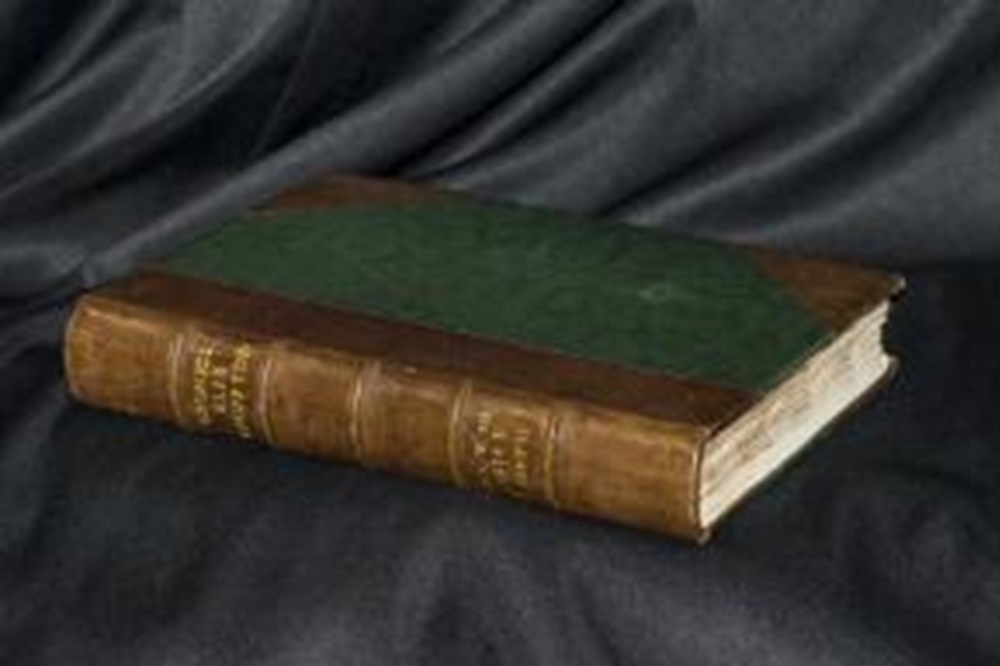
While the massive chronicle of world history composed by Elis Gruffydd between c. 1530 and 1552 is interesting for a number of reasons, many readers today will be primarily interested in the traditional Welsh narratives which it contains.
He employed a dizzying range of sources in a number of languages, including manuscripts, printed books and material which came to him orally.
And while Elis was attempting to be a good historian, comparing sources and trying to work out what the truth was, his chronicle often includes material which he himself admits is difficult to believe.
He was writing history, but he also couldn’t resist a good story and apparently enjoyed retelling a good story in his own way.
When treating Welsh history, Elis sometimes includes stories which we might categorize today as written versions of folktales and legends.
These are tales which he heard during his youth in Flintshire and/or material which he encountered in Welsh manuscripts which are now lost. In several cases, Elis Gruffydd’s chronicle is the only version we have of a particular Welsh tale.
And, in cases when other versions have been recorded, Elis’s is often the earliest.
[mid-content-banner]
Supernatural
Elis Gruffydd gives us the earliest versions of the tales of Gwion Bach and Taliesin, two connected narratives which together tell the story of that supernatural all-knowing bard.
A boy named Gwion Bach receives the magical power which the witch or sorceress Ceridwen had intended for her own son, and after a shape-shifting chase he turns himself into a grain of wheat only to be eaten by Ceridwen, who has become a hen.
She then becomes pregnant and gives birth to a new incarnation of the boy. She can’t bring herself to kill him and sets him adrift Moses-like, only to be discovered many years later by Elffin, who has gotten into trouble in the court of the sixth-century king Maelgwn Gwynedd.
It is Elffin who renames the wondrous child Taliesin, and the otherworldly youth repays his patron by extracting him from a series of predicaments.
Taliesin also defeats and humiliates Maelgwn’s court bards, showing himself to be an all-knowing poet.
While this charming tale has been retold as a children’s story more recently, it is also taken by scholars to be a Welsh manifestation of an ancient belief in the power of poetry.
Taliesin is the very incarnation of Welsh poetic power, born again in each new age and claiming to live forever.
Tudor dynasty
Given that he was a soldier in the army of Henry VIII, it is perhaps no surprise that Elis Gruffydd contains a number of legends concerning the history of the Tudor dynasty.
One takes as its starting point the disappearance of Owain Glyndŵr. Citing as his source several unnamed ‘books’ or ‘manuscripts of Wales’ (llyfrau Cymru), Elis says that they ‘show’ (dangos) that Owain Glyndŵr ‘disappeared . . . from amongst his people because of certain words which the Abbot of Glyn Egwystl said to him one morning’ (diflannodd . . . o fysg ei bobl, oherwydd sertain o eiriau a ddywod Abad Glyn Egwystl wrtho ef ar fore gwaith). The short dialogue between Owain and the Abbot is then given:
`Syr Abad, chychwi a godasoch yn rhy fore.’
`Nage,’ hebr yr Abad, ‘chychwi a gyfodes yn rhy fore o gan mlynedd.’
‘Ie,’ hebyr Owain.
“‘Sir Abbot, you have gotten up too early.’
‘No,’ said the Abbot, ‘it is you who has gotten up one hundred years too early.’
‘Yes,’ said Owain.
Owain Glyndŵr did consult traditional Welsh prophecy, and this legend tells us that he misinterpreted them.
Canys wrth ymadrodd yr abad efo a adnabu yn hysbys nad efo ydoedd yr Owain yr ydoedd ef yn amcanu i fod, yr hwn yr ydoedd y brudiau yn addo dwyn coron Loegr.
‘For by that speech of the Abbot’s, he knew clearly that he was not the Owain whom he was intending to be, the one whom the prophecies promised would take the crown of England.’
[lower-mid-content-banner]
Saviour
Henry Tudor thus displaces Owain Glyndŵr as the mab darogan or prophesied saviour of the Welsh.
Elis provides another story casting the first of the Tudor monarchs in this supernatural light, one which has the bard Rhobin Ddu prophesy his birth.
This is introduced with the phrase o gellir coelio i chwedlau gwŷr Cymru, ‘if the tales of the men of Wales can be believe’, suggesting that it was a popular story in the land of his birth.
Rhobin Ddu, having foreseen the birth of the future king, travels from his home in Gwynedd to Pembroke Castle in time to be present for the event.
Prophetic
While his mother had him baptized Henry – by the esgob or ‘bishop’, according to Elis Gruffydd – we are also told that he was given another name at his birth, Owain.
The chronicler notes that ‘the men of Wales call him Owain more often than Henry’, gwŷr Cymru a’i galwai ef Owain yn fynych no Henri, once again employing the power of the Welsh prophetic tradition in the service of the Tudor cause.
In addition to recording legends dealing with the supernatural origins of the Tudor dynasty, Elis Gruffydd provides a very different kind of story explaining its genealogical origins.
It is a well-known fact that Owain Tudur from Penmynydd in Anglesey married Catherine of Valois, Henry V’s widowed queen.
The Welsh chronicler relates how this happened, weaving a love story which is in turns both charming and comical.
Love triangle
We are presented with a kind of love triangle: the Welsh ‘squire’ (ysgwier) is serving the queen and in love ‘with one of the queen’s handmaidens’ (un o law forwynion y frenhines), but the queen sees him swimming with other men one day and is struck that ‘he surpassed his companions in fairness of flesh’ (yn rhagori ei gymdeithion o degwch cnawd).
A complicated tale ensues, with the queen dressing up as her handmaiden, Owain Tudur biting her cheek so that he can see in the light of day who had deceived him, the Welshman’s subsequent fear of punishment and then the surprise marriage.
Support our Nation today
For the price of a cup of coffee a month you can help us create an independent, not-for-profit, national news service for the people of Wales, by the people of Wales.
Get more trusted Welsh news
Choose Nation.Cymru as a preferred source in Google News to see more of our journalism.
