


Fri, 17th July Cardiff 28°
Nation.Cymru wordmark
Advertisement

Culture

Review: Whose Wales? argues that it was Labour - not Plaid Cymru - who drove Welsh devolution
By NationCymru
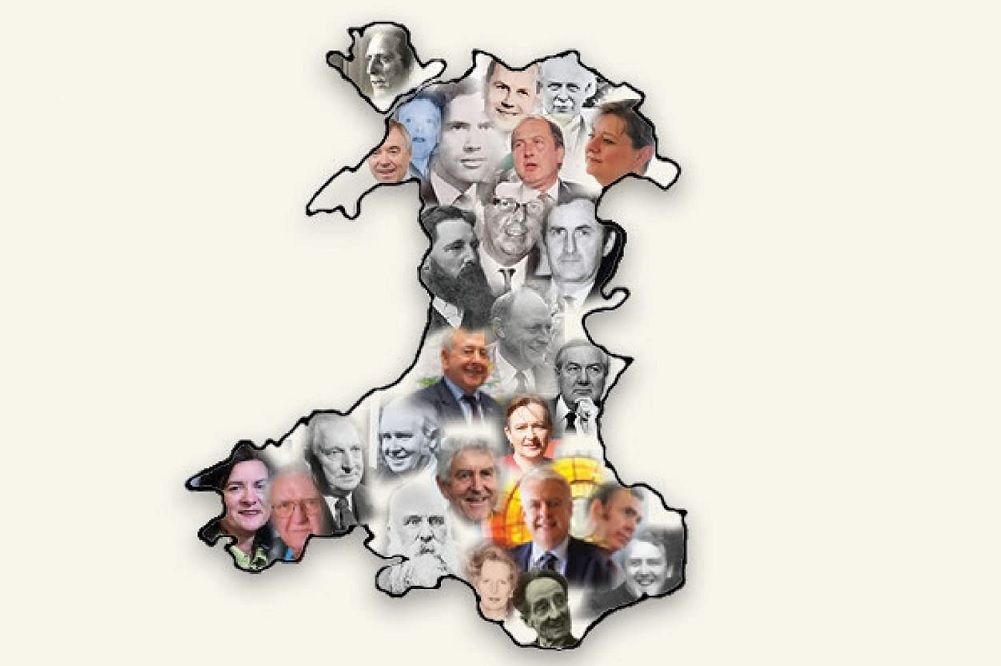
Whose Wales?: The battle for Welsh devolution and nationhood, 1880-2020, by Gwynoro Jones and Alun Gibbard

John Ball

For anyone interested in Welsh politics, or indeed even a passing interest, Whose Wales?: The battle for Welsh devolution and nationhood 1880-2020 by Gwynoro Jones and Alun Gibbard is a must read.

Devolution and the Senedd is now a part of everyday life in Wales. However, reading the first chapters readers might be surprised to learn that as democracy developed during the nineteenth and early twentieth centuries, Wales was all but ignored - with very few exceptions.

Much of the political history of Wales, especially of the twentieth century, has invariably addressed the social and political issues of industrial Wales, concentrating on the growth of socialism, trades unions and the Labour Party. However, during the late eighteenth and much of the twentieth, what is interesting is the extent to which Home Rule became and remained an issue, albeit varying in interest and support over time, but never quite going away.

The various movements and individuals involved makes for interesting reading, not least the extent to which Home Rule was – on and off – an issue for leading members of the Labour Party

For those interested in the accidents of history one section is particularly revealing. Lady Megan Lloyd George, the sitting M P for Carmarthen in 1966, was known to be seriously ill. Nevertheless, the party decided to allow her to remain the party’s candidate for the 1966 general election. Her death a little while later led to the now-famous Carmarthen by-election.

And here is another twist; the local Labour Party chose the (relatively) weak and unknown Gwilym Prys Davies as candidate instead of the popular son of Cynwyl Elfed Denzil Davies. Whilst not explicit, the narrative suggests that if the latter had been the candidate, the result would have been very different and so too perhaps the history of Wales.

One consequence of that Carmarthen result was that many members of the Labour Party who favoured some form of Home Rule were regarded with suspicion by many other Labour Party members. These tensions were to come to the fore during the 1979 referendum.

Understandably Jones (who defeated Gwynfor Evans to retake Carmarthen for Labour in 1970) spends some time describing the febrile atmosphere in Carmarthen and the bad blood of the 1970 and 1974 elections in what he calls the “Carmarthen Cauldron.”

Gwynfor Evans – in Jones’ telling - was anything but the great man and did less work than his party's propaganda suggested. There was palpable dislike, even hatred between the local parties especially after the by-election through the seventies and even into the eighties, with Plaid Cymru describing Gwynfor Evans as “the member for Wales” - which he clearly wasn’t.

[mid-content-banner]

Limited

Whether intentionally or not, the book makes a very strong case that devolution and the growth of Welsh democracy were driven not by Plaid Cymru, but by the Labour Party. A strong case is made that it was Labour that carried the flag of Home Rule long before the Carmarthen by-election and the (limited) growth of Plaid Cymru before and indeed since.

An interesting insight presented by the book is that Plaid Cymru it seems has never actually been in favour of independence; moving between accepting very limited devolved power to Home Rule and Dominion Status.

In many ways, there is a sting here. Those of us working for Plaid Cymru then and after believed that the party’s leadership really was committed to independence, but although the party produced various materials (I recall a leaflet on Dominion Status for Wales in the late 60s) the drive for independence was in practice not taken particularly seriously.

Future

Although the book makes a fascinating read as to how we got here, it also provides an interesting insight into devolution today. In discussing the 1997 referendum, Jones points out that it was the late John Smith who was the driving force behind Labour’s commitment to devolution and that Tony Blair was unenthusiastic. This commitment and subsequent acceptance of the principle of devolution was perhaps the final step on the long tradition of Labour Party support for Home Rule.

The book concludes with a look to the future – it ends with two well-argued articles, although each coming from a different direction. David Melding sees a UK federal future with significant devolution. The other by Glyndwr Cennydd Jones takes the idea even further, arguing for confederation, as close as possible but just short of independence.

Devolution and the democracy it represents is here to stay. Whether powers suggested by these two writers will come about or indeed whether this will be enough for the growing independence movement remains to be seen. But that’s another book, maybe.

For the price of a cup of coffee a month you can help us create an independent, not-for-profit, national news service for the people of Wales, by the people of Wales.

Get more trusted Welsh news

Choose Nation.Cymru as a preferred source in Google News to see more of our journalism.

Choose Nation.Cymru as a preferred source in Google News

8 comments

Dave

Lets be frank here, only Welsh Labour alone has the strength in depth to make welsh independence a possibility but just as @yescymru suggests #IndyWales needs all of us on board from all parties for it to work.

Reply
Leigh Richards

Mark Drakeford, leader of uk labour's branch office in Wales, has repeatedly attacked independence. Not a single labour MP or Senedd member or constuency labour party in Wales has declared support for Welsh independence. The fact of the matter is labour in Wales, like its sister party in svotland, remains a staunchly unionist party.

Reply
Leigh Richards

Gwynoro Jones hostility towards Gwynfor Evans is well known, and he sadly never seems to miss an opportunity to trash the later plaid leader and first plaid cymru mp. Labour adopted support for a limited degree of devolution in the 1970s in response to and in fear of the rise in support for plaid cymru in the late 60s and early 70s. John will remember how labour MPs in Wales, led by neil kinnock, were allowed to sabotage the 1979 devolution referendum. While another group of labour MPs in Wales were allowed to try and wreck the 1997 devolution campaign. Tony Blair watered down Ron Davies' proposals for devolution for Wales in the mid 90s while welsh secretary in the mid 2000's, Peter Hain, kicked the recommendations of the Richard Commission that Wales have a parliament along scottish lines into the long grass.. Hain even opposed the holding of a referendum on primary law making powers for Wales (the referendum eventually taking place following legislation passed by david cameron's tory uk govt in 2010 and was won comfortably). Perhaps book author Alun Gibbard is unaware that Wales becoming a full member of the United Nations has long been one of plaid's core aims - hard to think of a clearer committment to independence than that! A federal UK simply would not work as it would be dominated by England. Meanwhile Labour in Wales remains a staunchly unionist party and leader Mark Drakeford has repeatedly attacked welsh independence.

Reply
Richard Edwards

As per usual John Ball has produced an interesting and well written piece for accessing this joint effort by GJ and AG. Devolution has a long pedigree within Labour ranks. From Cledwyn Hughes and Goronwy Roberts, Jim Griffiths,Huw T Edwards , Tudor Watkins ,Tom Jones and of course the likes of Elystan Morgan and Lord Maelor etc - these folk pushed for years to see powers moved back towards the Welsh people. They certainly had success building on the initial foundations of the liberals with education, planning and social services. The Council for Wales and Monmouthshire under Huw T set the modern foundations of devolution and despite the opposition of Aneurin Bevan and Morgan Phillips many Labour MPs felt comfortable and it along with the WJEC gave the nation a a taste of things to come. Plaid has never been a devolution party of pass down or back powers and I doubt would claim so - rather in the spirit of Leopold Kohr, Gwynfor Evans the Davies etc - a national movement of community empowerment and growth upwards and attaining nation status and through a confederal Britannic partnership allowing Wales to take its place within international structures. Even within the Conservative Party - seen by many as the least supportive of Wales wide institutions, a closer look 👀 might reveal they have an enviable track record ( compared with Labour ? ) around Welsh Language or Bilingual issues. Wyn Roberts, Eddy Rae , Peter Thomas John Stradling Thomas plus Brandon Rhys Williams etc oversaw progressive legislation and broadcasting / bilingual signs etc Their successors from Tom Hooson, through to Glyn Davies and Guto Bebb etc have continued. Many in Yes Cymru perhaps need to be aware that the space they enthusiastically hold was created by those folk and others I mention above ,

Reply
j humphrys

Federalism just won't do it. Far better with Indy and strive for EU entry. Would massively prefer United Front For Indy, as believe would fire confidence and unity.

Reply
Cai Wogan Jones

This review does not encourage me to read this book. Sounds like a profoundly tendentious and tribal account. Reflective of much that is wrong in Welsh politics.

Reply
Jonathan Edwards

Here's what's wrong with this. "Melding sees a UK federal future with significant devolution." Yes, he studied the US Constitution in Virginia and has some idea of how this might work. "The other by Glyndwr Cennydd Jones" is not going to help. He has no plan for moving from where we are now to Indy. I have asked him. Wales has not got the people who understand how to get Indy. This is a gap which must be filled. The answers are well known - outside the UK. Clue - google "constitutional convention". BTW Elystan got it. He understood "Dominion Status" ie the Westminster way. Public education needed.

Reply
Y Cymro

What a load of political bull. Labour drove devolution, lol. So funny. I can remember 1979, when the Labour party allowed it's MPs to campaign with the Tories to scupper devolution in Wales & Scotland. thanks to the likes of traitor Neil Kinnock whose lies & scaremongering ensured Wales suffered 18yrs of Tory rule.. And 18yrs later in 1997, New Labour offered Wales a pathetic devolution settlement compared to both Scotland & NI hoping it would die a death. And It took Plaid Cymru in coalition with Labour in 2011 to force their arm by stipulating as part of their support should hold referenda on the then Assembly becoming a legislature. I can remember at the time, one Welsh Secretary Peter Hain, now Lord Hain, state that the vote shouldn't happen yet as it wouldn't be won. Yeah, right Peter. If we'd had listen to him Wales would still have a toothless Assembly forced still to use the New Labour designed LCO system in which Welsh legislation had to pass through four layers of Government to become law. The Senedd. Welsh Office. House of Commons and House of Lords . And meant it took only one layer to disagree and that legislation would be sent back to the Senedd to be changed I can recall one bill bounced back & forth taking 2yrs to become Welsh Law due to disagreement in London, and only became Welsh Law when it was deemed acceptable by our Unionist overseers in Whitehall. Oh, and before anyone says the obvious. Yes, it takes Westminster to sanction any referendum, but that's the archaic system Wales is forced to use. Democratic is isn't. We, Wales, should have that ability to call any referenda or request powers held in London be repatriate to our Senedd, not England's Parliament.

Reply

Leave a reply

Replying to Jonathan Edwards Cancel

Here's what's wrong with this. "Melding sees a UK federal future with significant devolution." Yes, he studied the US Constitution in Virginia and has some idea of how this might work. "The other by Glyndwr Cennydd Jones" is not going to he...

Comments are reviewed before they appear.