


Culture
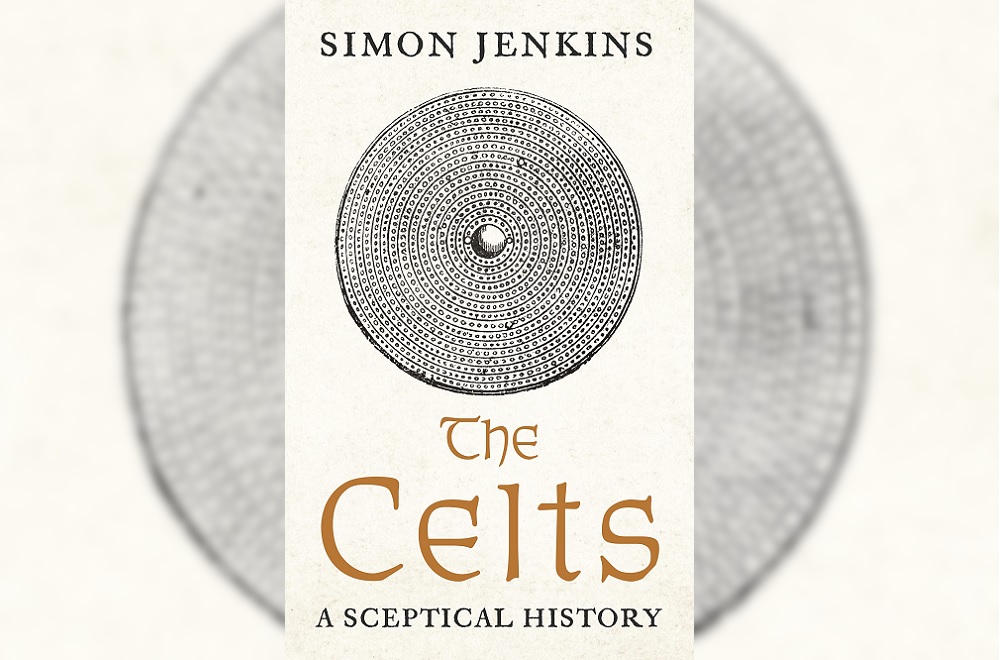
Review: The Celts - A Sceptical History, by Simon Jenkins
Simon Rodway, Lecturer in Welsh and Celtic Studies at Aberystwyth University
At the heart of this truly dreadful book is the misconception that the question of the existence or otherwise of ancient Celts in Britain and Ireland has any relevance to changes to the constitution of the United Kingdom today.
Simon Jenkins is not the first person to voice this fallacy. Simon James (or at least his publicity people) did the same thing in 1999 with the publication of his ‘Celtosceptic’ The Atlantic Celts in the year in which the first elections to the Scottish Parliament and what was then the Welsh Assembly took place.
Jenkins’s political position is quite explicit: he is in favour of further devolution, but not of the breakup of the Union. He is also in favour of the return of the UK to the European Union. This position is a perfectly valid one, but its merits need to be argued on the basis of current politics and economics.
The ancient Celts are irrelevant: modern Scottish, Irish and Welsh nationalist movements do not need them to justify their existence, and to suggest otherwise is, at best, disingenuous. Jenkins admits that no-one is proposing a ‘Celtic Union’ or the like, so why should dismantling the ‘myth’ of the ancient Celts have any political relevance?
Agenda
This being said, the prehistory and early history of Britain and Ireland are inherently interesting, and as many, if not all, available popular accounts contain out-dated ideas which current scholars would not endorse, there is a gap in the market for an accessible ‘sceptical’ account.
Scepticism is a useful tool in scholarship, but it needs to be applied even-handedly. To do that, one needs to be able to handle comfortably the relevant data, much of which in this case is very technical and comes from different disciplines that cannot be easily combined.
Jenkins makes reference to archaeology, linguistics and genetics, but is clearly out of his depth with all of them, making numerous fundamental errors in his presentation of the facts. A careful writer could set out the various arguments of scholars in a dispassionate way, which would provide a service to the interested layperson. Instead, Jenkins seizes on sceptical accounts which suit his preconceptions, but is alarmingly credulous when it suits him.
His reasoning is consistently circular. He never lifts the bonnet on any of the arguments (very likely because is unable to do so), so that the uninformed reader cannot tell why he favours one idea over another. Instead of engaging with the detail of an argument, he accuses those with whom he does not agree of having a covert political agenda (rather rich coming from him!).
Ludicrously, he claims that Edward Lhuyd chose to label the language family containing the Brittonic and Goidelic languages as ‘Celtic’ rather than ‘Gallic’ for ‘patriotic’ reasons, and this despite having just said correctly that before Lhuyd’s time ‘Celtic’ was not commonly used to refer to peoples or languages in Britain.
Surely if Lhuyd had had a patriotic motive, he would have called his language family ‘British’? He probably avoided ‘Gallic’ because it was applied to the French in his day. ‘Celtic’, not then applied to any contemporary people, must have seemed like a useful, neutral term.
Self-identification
The claim that caught the headlines, namely that the Celts never existed, is a familiar trope of popular versions of Celtoscepticism over the last few decades: it has never been espoused by Celtosceptic academics, as John Collis was at pains to point out in a recent article about the ‘Celtosceptic wars’ of the 1990s.
Jenkins adopts Malcolm Chapman’s discredited idea that the term Keltoi was a Greek one meaning ‘barbarians of the north-west’ and that it never had a precise ethnic or linguistic meaning. This does not stand, as most Classical authors did use it as an ethnic marker, differentiating Celts from other northern and western ‘barbarians’ such as Germans, Ligurians and Iberians, often on linguistic grounds.
Neither has anyone proposed a Greek etymology for the word, whereas plausible Celtic ones have been offered, making it likely that it was always a term of self-identification used by some (but not all) Celtic-speakers. This ties in with Caesar’s statement that the central Gauls called themselves Celts and Pausanias’s that the Galatians used to call themselves Celts before adopting Galatoi.
Jenkins is quite right to say, as has long been recognized, that the Classical writers don’t use the term Celt of the Britons or Irish, but the significance of this fact has probably been inflated by Celtosceptics: Caesar, Tacitus, Strabo and others compare the appearance, habits and, in Tacitus’s case, language of the Gauls and Britons and posit kinship.
The fact that most Classical authors are silent about the Irish reflects the lack of interest in the Classical world in this remote island beyond the western fringe of the Roman Empire.
[mid-content-banner]
Speculation
Jenkins has much to say on the ‘mania’ for invasion theories to explain linguistic and ethnic changes in Britain, but does not recognize, as Christopher Hawkes pointed out a long time ago, that ‘immobilism’ (the idea that no-one ever moved in prehistory) is just as much of a fallacy.
The failure here of his scepticism leads him to adopt enthusiastically the idea (not endorsed by any linguist, as far as I know) that the eastern part of Britain was home to Germanic speakers in the pre-Roman period, and that these, rather than invading Anglo-Saxons, were the linguistic ancestors of the modern English.
He later ties himself in knots trying to explain why Penda (whom he calls a ‘British’ king!) was a pagan in the seventh century while the Welsh to the west were Christians.
This whole idea is very deserving of scepticism. I could deploy Jenkins’s own technique and state that its proponents have a political motive, i.e. to portray the English as indigenous inhabitants of the island rather than alien invaders, but there is no need. No convincing ancient linguistic evidence has ever been put forward to support this, and most of its proponents have relied on ancillary evidence of doubtful relevance, e.g. modern population genetics (Stephen Oppenheimer) or modern place-names (Win Scutt).
The only attempt of which I am aware to use ancient linguistic evidence is Daphne Nash Briggs’s questionable identification of Germanic elements in the coin legends of the Iceni, and even if one accepts her analysis her conclusions are much more modest than what is proposed here, rightly in the light of undoubted etymologically Celtic names among the Iceni, the most famous of which is Boudica (Old Welsh/Cornish Budic).
In case anyone thinks that I have ulterior motives, I shall go on record as saying that it is quite possible that there were Germanic-speaking communities in parts of Britain before the Roman period bearing in mind how little we know about the linguistic landscape of Northern Europe at this period, but in the absence of evidence there is no point in speculating.
Truth
Jenkins’s ignorance of and disdain for the modern Celtic languages is depressingly predictable. He could easily have corrected minor slips in the spelling of Welsh words such as pimp for pump and Saison for Saeson. Wikipedia could have disabused this most gullible of sceptics of the notion that Galicia is ‘Celtic-speaking’.
No-one who speaks a language with as ludicrous an orthography as English should have the temerity to mock the spelling systems of other languages, but self-awareness is not Jenkins’s strong point, so he tells us that:
‘Teaching was further complicated by Irish’s impenetrable spelling, invented by academic orthographers [no it wasn’t!] but incomprehensible to non-speakers [well, duh!]. I came across one spelling of the Irish word for “bear” [he seems to think he’s talking about the animal, but I suppose by now we shouldn’t expect him to be able to use a dictionary] as beirbhiughadh and “lament” as beochaoineadh. The prime minister was pronounced “teesoc” [not by anyone who could pronounce Irish!] but spelled taoiseach.’
The truth is that Irish has a perfectly logical spelling system, the principles of which can be grasped by an attentive student in the course of an hour-long lecture. The combination gh, say, is pronounced in a couple of ways which are entirely predictable from context, unlike the same combination in English which is pronounced completely differently, and in ways which cannot be predicted, in thought, tough and aghast.
Irresponsible
The level of ignorance and prejudice about Celtic languages in the UK is high, even among English speakers who live in areas in which they are spoken. Thus a summary of their sociolinguistic situation by a disinterested outside observer would be very useful. This, however, is not what we get from Jenkins, who instead gives us an extraordinarily ill-informed manifesto for English monolingualism that belongs not in the 2020s but in the 1860s with Matthew Arnold and the Blue Books.
This will merely confirm the prejudices of the vocal opponents of spending public money on ‘useless’ languages, and rebuttals such as this one will no doubt be dismissed with a shrug of ‘well, they would say that, wouldn’t they?’
Jenkins frequently brandishes the fig-leaf of authenticity provided by his Welsh father, but his is very much an ignorant and hostile outsider’s view of Wales as much as of Ireland, Scotland etc. Again and again he presents Welsh (and other Celtic languages) as being stuffed down the throats of an unwilling public. He talks about the ‘taffia’, and poor school-children having to learn Welsh ‘whether they like it or not’ (I seem to recall being taught maths whether I liked it or not...). ‘Aberystwyth [University] even has a Welsh hall of residence’ he splutters in outrage.
A particular villain in all this is Saunders Lewis, described as a ‘Catholic convert and early fan of Hitler’ this is a low blow, even by Jenkins’s standards. It is of course right to scrutinize Saunders’s views, some of which are questionable to say the least, but to reduce this complex and sophisticated thinker to a Catholic and a Nazi (the two archetypal enemies in the mythology of the modern British state) is akin to describing Hitler as an amateur artist and vegetarian, and to do so in the context of language policy introduces an irresponsible insinuation that his linguistic ideas were somehow fascist.
Circular reasoning reaches its zenith in the declaration that Wales’s ‘finest twentieth-century poets, Dylan Thomas and R. S. Thomas, [...] both wrote in English’. The ones who wrote in Welsh are presumably not as good because Jenkins can’t understand them.
This is not just a bad book, it’s a nasty one.
Lazy
If one goes in for myth-busting, one has to be sure of one’s facts, but Jenkins really is not. In the first three chapters alone he misrepresents, sometimes seriously, the arguments of Graham Clark, Kenneth Jackson, Peter Schrijver, Patrick Sims-Williams, Edward Lhuyd, Paul-Yves Pezron and Herodotus.
As mentioned above, he makes elementary errors that could have been corrected by looking at Wikipedia, e.g. the Gododdin as a saga (attributed to Aneurin [sic]!), Dark-Age inscriptions in Brittonic in west Britain and so on.
Overall, this is like reading an essay by a clever, ambitious but lazy and contrarian undergraduate, with far too high a regard for his own cleverness.
As it shows evidence of independent reading, and a reasonable grasp of the outline of parts of the argument, I’d be prepared, despite its manifest failings, to give it a mark in the 40s. It should certainly never have been published.
Support our Nation today
For the price of a cup of coffee a month you can help us create an independent, not-for-profit, national news service for the people of Wales, by the people of Wales.
Get more trusted Welsh news
Choose Nation.Cymru as a preferred source in Google News to see more of our journalism.
