


Culture
Major south Wales excavation to take centre stage in new event
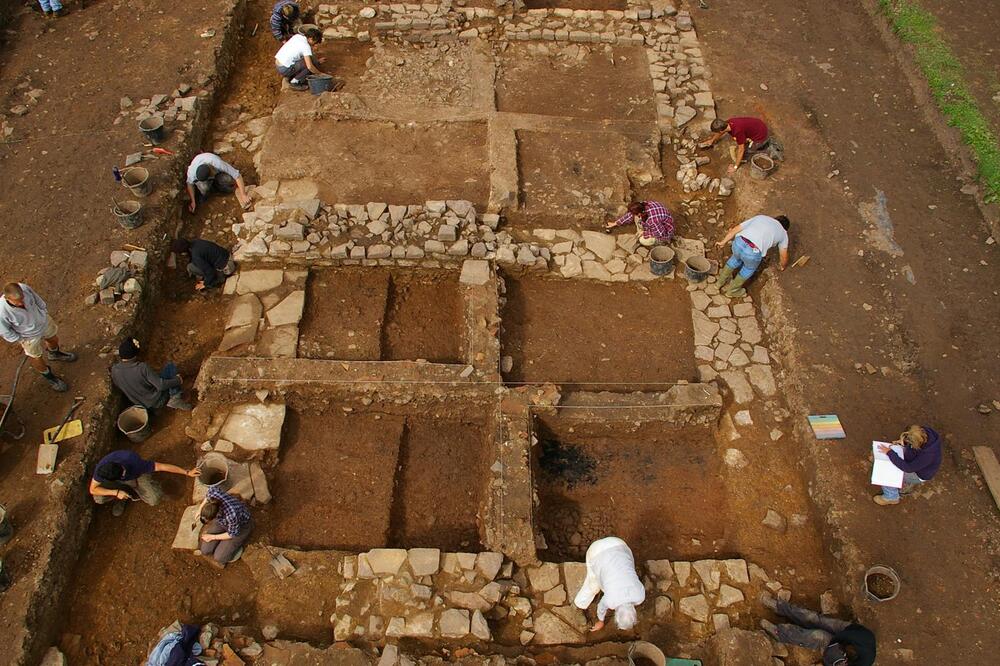
A lecture and Q&A about a south Wales excavation that unearthed groundbreaking evidence for the area's ancient history will take place this month.
Digging Roman Caerleon: The Priory Field Excavation will be held on Friday 16 January 2026 in St Cadoc’s Church, Newport.
The major three-year excavation in Priory Field, carried out between 2007 and 2010, produced significant evidence about Caerleon’s rich Roman and early post-Roman heritage.
Among the treasures found in Priory Field was the front range of a large masonry courtyard store-building, which was the first building of its kind excavated to modern standards from the Roman Empire.
Other finds recovered include a rare example of an elaborately decorated horse’s headpiece and several sets of dismantled body armour.
The night, which offers a deep-dive into the dig, will begin with an introduction by Monmouthshire Antiquarian Association President, Jeremy Knight.
This will be followed by a talk given by the excavation’s directors, Dr Peter Guest and Prof. Andrew Gardner, who will highlight some of the Priory Field project’s discoveries.
In particular, they will explore when the courtyard building was built, what was stored in it, when it ceased to be used, and what happened to it in the years after the ending of Roman Britannia at the beginning of the 5th century.
The Q&A session will be followed by a presentation about the Caerllion Rufeining – Roman Caerleon Gateway Partnership Project.
This event is jointly organised by the Monmouthshire Antiquarian Association and the Caerllion Rufeining – Roman Caerleon Partnership.
Support our Nation today
For the price of a cup of coffee a month you can help us create an independent, not-for-profit, national news service for the people of Wales, by the people of Wales.
Get more trusted Welsh news
Choose Nation.Cymru as a preferred source in Google News to see more of our journalism.
