


Culture
Lost hand a 'game changer' for our understanding of the oldest living language in Europe, experts say
Luke James
Basque was already known as the oldest living language in Europe and now the discovery of a 2,000-year-old relic has revealed it was being written thousands of years earlier than previously known.
It had been believed until now that Basque had been an oral tradition but researchers have now discovered a text which dates back to the first third of 1BC.
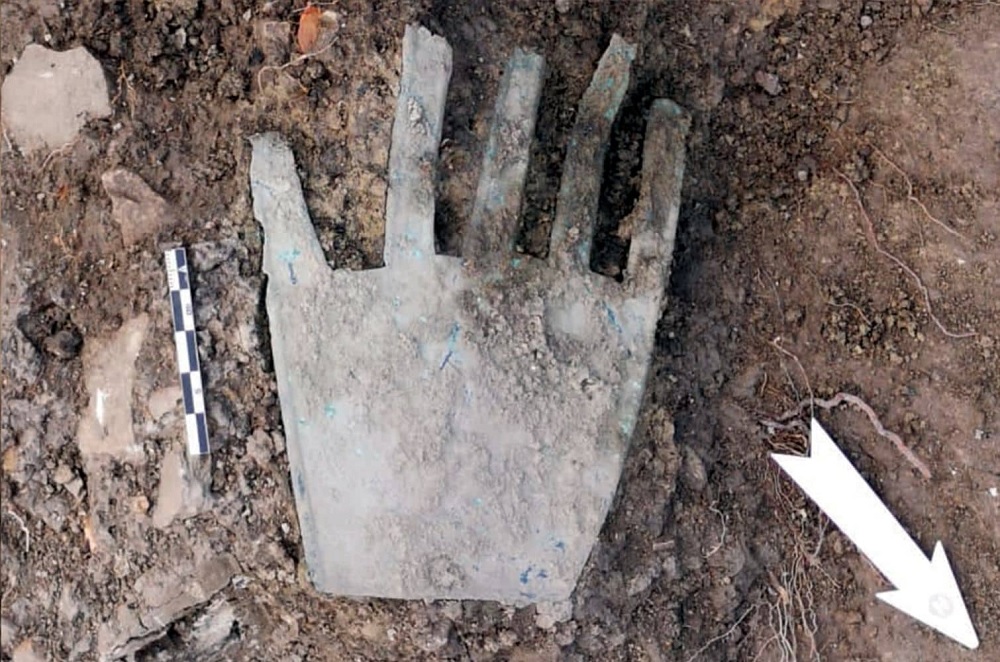
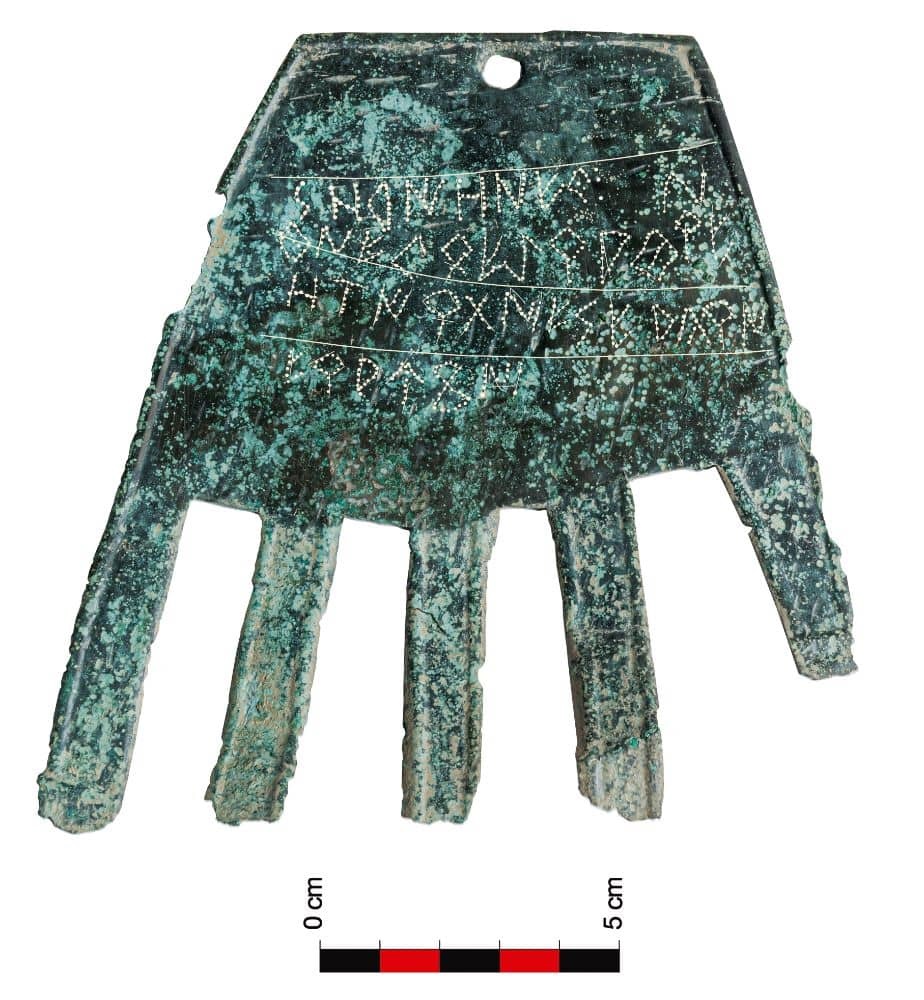
A five-word inscription found on a bronze plate known as the ‘Hand of Irulegi’, which was discovered last June and presented to the media yesterday, is now considered the oldest text written in Basque.
It includes the word “Sorioneku”, which resembles the modern Basque word “zonioneko”, meaning “good fortune.”
The other words on the hand have not yet been deciphered but linguists who have studied it say it includes characters that are specific to the Basque language.
The find proves that Basques were literate before the arrival of the Romans, experts said.
“The significance of the Hand of Irulegi can’t be understated,” Professor Elin Haf Gruffydd Jones of the University of Wales Centre for Advanced Welsh and Celtic Studies told Nation.Cymru.
“It’s a game changer - not only for experts but for all Basques. It shows that protoBasque society had a written culture and this find almost certainly dates from 1st century BC.
“Generally we have thought of Basque as being an oral tradition - the earliest book dates from 1545 - but this discovery tells a different story and opens up a new chapter.”
'Ancient times'
Archaeologists from the Aranzadi Science Society, which has previously worked to uncover mass graves dating from the Spanish civil war, found the hand as part of a 15-year dig of a settlement on top of Mount Irulegi in the Nafarroa region of the Basque County.
Its discovery at the entrance to a house led them to believe it was designed to hang from the front door as a ritual to protect the home.
Ironically the site provided such rich sources for historians because the inhabitants had to flee the village after it was attacked by Roman troops during the inter-Roman Sertorian War, leaving it “frozen in time.”
The location of the discovery near Pamplona is significant historically, and potentially, politically.
Nafarroa is part of the historic Basque Country which spans either side of the border between Spain and France but is separate from the Basque autonomous community within the state of Spain.
The region’s identity is highly contested between the mainly Basque-identifying community in the north and the Spanish-identifying community in the south, earning it the moniker of “the Basque Ulster.”
The discovery adds weight to arguments that the Basque language is native to the area, experts said.
“Small portable things like these can be found far from where they were made,” explained Professor John T Koch of the University of Wales Centre for Advanced Welsh and Celtic Studies.
But he added: “As the Hand of Irulegi was found at a site of the right period, it was probably used and deposited there in ancient times, and probably not made at a great distance.
“The idea that Palaeo-Basque was only spoken north of the Pyrenees in ancient times has been raised. This is clear evidence to the contrary."
'Love'
There have been calls for Basque to be made official across Nafarroa since the discovery was announced, the Berria newspaper reported.
The editorial of another daily paper, Naiz, said: “The Government of Navarre, for its part, should show more love, or maybe just respect, towards the language of the Basques, as well as towards its descendants.”
It was seen as significant that María Chivite, the Spanish socialist party president of Nafarroa, attended the presentation of the relic and said it represented a major advancement in “the knowledge we had of our history and culture up to now."
But Basque politicians are keen that the discovery is not used as a political football.
Ander Larunbe, of the international relations team of left-wing Basque nationalist party EH Bildu, said it should simply be considered “a really exciting thing for everyone interested in the Basque language".
“I don’t think anyone should be looking to do politics with the discovery one way or another,” he told Nation.Cymru from his hometown of Pamplona. “Our feeling is that this is something that belongs to all of us – it’s not something to bicker over.”
He added: “The fact that Basque has been used in this area doesn’t mean that it has to be used, but there shouldn’t be obstacles in the way of a vibrant community that wants to be able to use and live through the language. A language is not something that we should peer at through a glass case in a museum.”
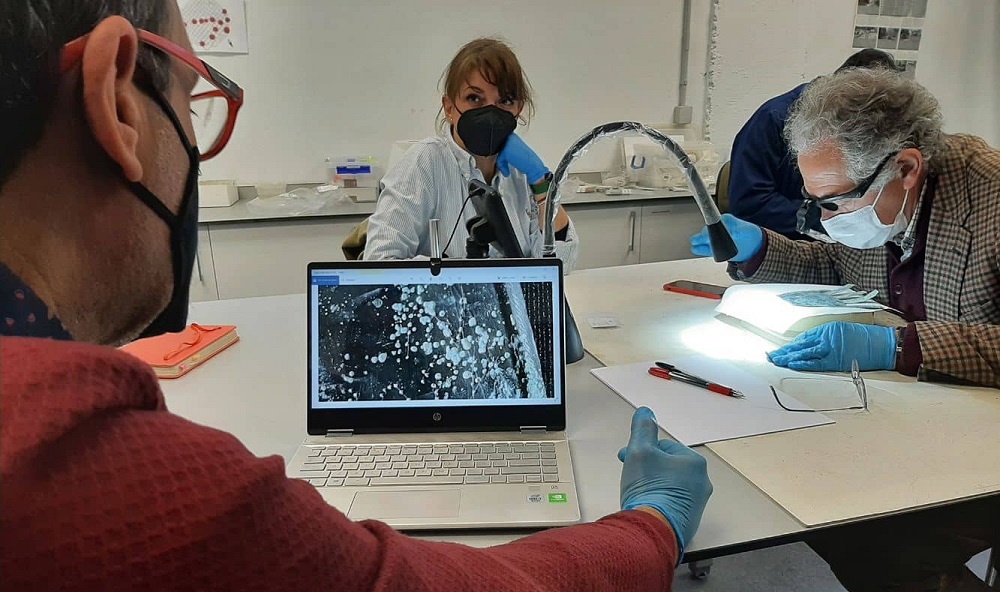
A team of archaeologists, restorers, chemists and linguists continue to investigate the items found on the site and further groundbreaking discoveries which unlock the secrets to the development of Europe’s senior language have not been ruled out.
[mid-content-banner]
Support our Nation today
For the price of a cup of coffee a month you can help us create an independent, not-for-profit, national news service for the people of Wales, by the people of Wales.
Get more trusted Welsh news
Choose Nation.Cymru as a preferred source in Google News to see more of our journalism.
