


Opinion
Why there should be a Wales-only census
Dr Huw Evans, academic lawyer, Cardiff Metropolitan University
A census is a process for gathering data about members of specific populations and their characteristics. A population is normally associated with a territory and the process is often initiated by government.
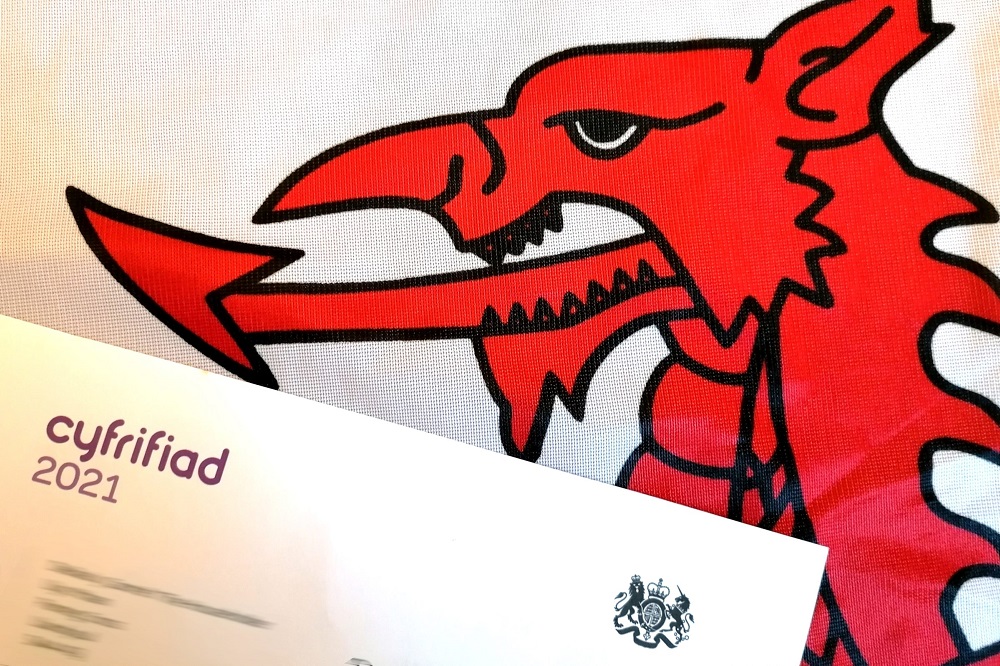
There has been a census for England and Wales (EWC) every 10 years since 1801 except for 1941 due to World War II. The most recent EWC was in 2021, and it may be the last. There are separate arrangements for censuses in Scotland and Northern Ireland.
I argue that the decision to hold a census for Wales should be made in Wales.
[mid-content-banner]
Census rationale
The EWC data provides a snapshot about the population at a fixed point, The data then informs the making and evaluation of public policy: e.g. about health, housing and education needs. This includes resource allocation because the data help set priorities.
Government at all levels (UK, devolved, and local) uses the data.
The EWC attempts to gather data from the entire population - not from a sample, as will often be the case with data from other sources. The EWC does not obtain an overall 100% response; but the response is high and data from other sources – such as public records for births, deaths and marriages, or the electoral roll - can be used to supplement EWC data.
As well as supporting the functioning of government, the census also supports social and economic research: e.g. by academia. It also has commercial and cultural significance: e.g. providing evidence for guiding commercial decisions or for assisting in family history investigation.
[taboola-banner]
The law
The governing law is the Census Act 1920 (CA). Under the CA the monarch can direct that a census must take place in, or in part of, Great Britain. As Wales is part of Great Britain, the law, therefore, already permits a direction for a Wales-only census.
The constitutional convention is that the monarch acts on advice from ministers and, it follows, any direction to hold a census is based on this advice.
A direction for an EWC is made on advice from the UK Government. The consent of the UK Parliament is also required. The Senedd must be consulted but its consent is not needed. See the Census (England and Wales) Order 2020.
The position is different for Scotland where the CA is devolved. A direction for a census there is made on advice from the Scottish Government. Additionally, the consent of the Scottish Parliament is needed. See the Census (Scotland) Order 2020.
If the Scottish position was replicated in Wales, the Welsh Government would be free to advise the monarch about a Wales-only census subject to the consent of the Senedd.
Is the CA devolved legislation?
As a result of the Wales Act 2017, the Government of Wales Act 2006, was amended so that, in broad terms, a matter is devolved unless it is reserved at a UK level.
This is commonly described as the reserved powers model. So, for example, justice and policing are reserved by the 2006 Act but health and housing are not.
The 2006 Act is silent on the census which suggests that it is devolved. But despite this apparent position the reality is different. The Census (England and Wales) Order 2020 – the order requiring the 2021 EWC – was made by the monarch on advice from the UK Government with the consent of the UK Parliament. The Senedd was only consulted.
Census and the Welsh language
Of particular significance is EWC data about Welsh speaker numbers in Wales. The data are core to the Welsh Government Welsh language strategy . The aim is to have one million Welsh speakers in Wales by 2050 - a figure to be decided by reference to EWC data, and which have been described as ‘authoritative’.
According to the 2021 EWC , Welsh language speaker numbers in Wales are 538,000 aged three or over, yet the main alternative data source, the Annual Population Survey has consistently shown that figure to be is significantly higher. For the year ending 30 June 2024, it stated that 854,400 aged three or over spoke Welsh.
Census future
The Office of National Statistics (ONS) has consulted about whether the EWC should continue. The ONS argues that a decennial census is resource intensive and other data sources could replace it; this would we both less expensive and enable more timely data gathering – i.e. not stuck to a rigid date every 10 years.
As a result of the ONS consultation 60 eminent statistics academics wrote an open letter to The Times expressing their concern about the current quality of data from EWC alternative sources.
One other issue arising from the consultation concerned how some things currently covered by the EWC are not covered by other data sources - such as unpaid home carer numbers.
Notably, there have not been parallel consultations about discontinuing the Scotland and Northern Ireland censuses.
The public good
Official statistics should serve the public good - it says so in the Statistics and Registration Service Act 2007. It also says that serving the public good includes ‘inform[ing] the public about social and economic matters’ and ‘assist[ing] in the development and evaluation of public policy.’
Accurate and comprehensive official statistics are needed regarding Welsh language numbers to serve the public good. But there will be other areas where this is needed, like for unpaid home carers.
Putting CA devolution beyond doubt
From the perspective of Wales and, specifically, Welsh speaker numbers, EWC discontinuation poses a real issue - in particular, over the quality of alternative data.
The decision about whether there will be another EWC will be made by the UK Government. A decision about a census in Wales should be made in Wales: i.e. by the Welsh Government subject to Senedd consent.
It should be put beyond doubt that the CA is devolved to Wales, as it is to Scotland. It is not clear why the decision to hold a census for Wales is made by the UK Government because the reserved powers model now applies to Wales.
Devolution of the CA cannot be regarded as controversial. Wales should have legal competence over data gathering exercises – especially having regard to the need for statistics that serve the public good. That competence would also give an opportunity to frame census questions that better meet Welsh needs.
Support our Nation today
For the price of a cup of coffee a month you can help us create an independent, not-for-profit, national news service for the people of Wales, by the people of Wales.
Get more trusted Welsh news
Choose Nation.Cymru as a preferred source in Google News to see more of our journalism.
