


Opinion
What is local? A more precise definition could heal the urban / rural Covid-19 divide
Arthur Rogers
"After 20 years people have woken up to devolution," the First Minister said yesterday.
And indeed a lot of media focus has been on the divergence between how Wales and England have tackled Covid-19.
But perhaps the more important schism that has been further exacerbated by the virus – which has shown an uncanny knack of highlighting unaddressed divisions around the world – has been the urban/rural divide.
After all, while so much media and political focus have been on those in England unable to climb Snowdon or swim off the coast of Pembrokeshire, the same rules apply to people in Wales too – most of which live in urban areas.
As suggested, the urban / rural divide is nothing new. There is a tendency for urban people to think of country dwellers as unwelcoming and fond of telling others what to do, while some residents of rural areas think those from urban areas have no understanding or respect for rural life, and, as the main centres of political gravity, make political decisions with little thought for those outside of their metropolises.
What has exacerbated this divide is that the virus, as it works its way through Wales, has hit urban areas first and hardest. Many people in rural areas are very aware that, as it has not yet arrived there, they are potentially more susceptible to infection when it lands.
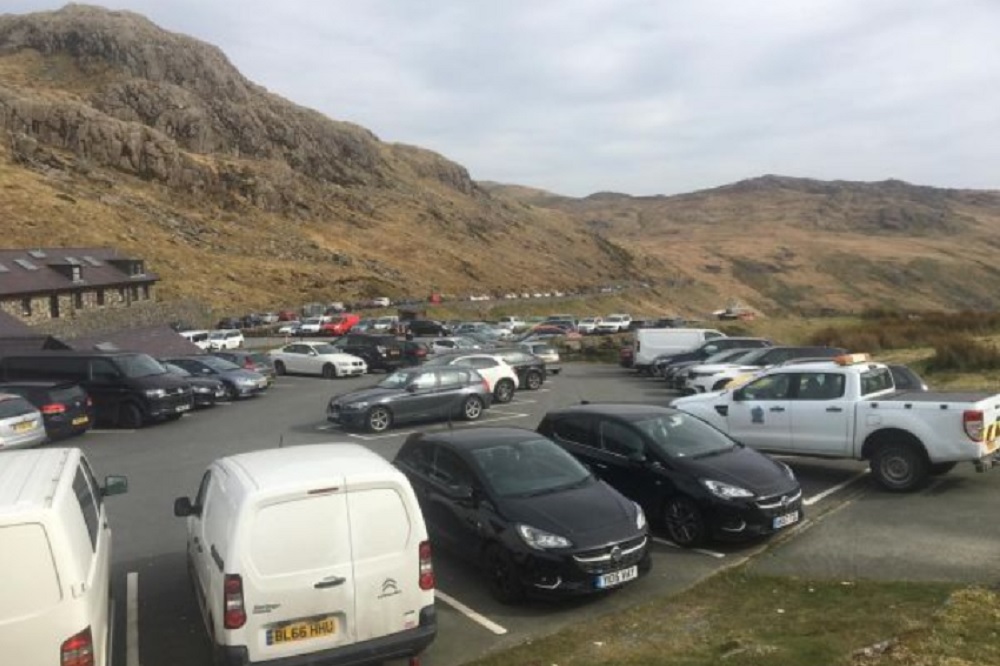
An at this time especially, when all of the major leisure venues in cities are closed, the temptation to travel to the country is stronger than the temptation to visit the city. The downside to this is that despite being very big there is a tendency for everyone that escapes to the country to congregate on a few landmarks – the peak of Snowdon, for example - which very rarely have the capacity for a lot of people whilst conducting social distancing.
So far rural Wales has been successful in emphasising the need for urban dwellers to stay away. When Pennard Community Council in Gower coordinated a joint message with local businesses and landowners reiterating Welsh Government advice to refrain from driving for leisure activities or exercise, there was a broadly positive response. The same has been true of messages from Snowdonia National Park.
But Covid-19 has still managed to exacerbate the divide between urban and rural communities. On one side, it is further convinced those in the countryside that the urbanites are inconsiderate: they will expose disproportionately elderly communities to the virus just so they can get some fresh air.
On the other side, some from urban Wales see the 'stay way' messages as rural people as being unwelcoming, hogging the countryside and trying to tell them what to do. The common vein running through these two camps, which I should stress are in the majority, is that they see the other side as selfish.
[mid-content-banner]
Precise
So what could be done to heal this divide that Covid-19 has opened up further? One thing I would suggest is to make the Welsh Government’s guidelines on what constitutes a ‘local area’ rather more clear.
Welsh Government guidelines currently state that:
“We have deliberately not defined this more precisely as it could be seen to be arbitrary and it will also depend on the circumstances – what people perceive to be “local” in Cardiff on the one hand, and in Mid Wales on the other, could be quite different.
“People are asked to exercise good judgement and common sense. If you live in Cardiff and have driven to Porthcawl to exercise on the beach, you haven’t stayed local.”
Whilst the vagueness is understandable, the guidelines themselves admit that what ‘local’ means is likely to be different in urban and rural areas. It may also mean something very different to people at either end of the same journey.
Those living in the countryside tend to think of the ‘local area’ as that surrounding their small town or village. For those living in urban areas, it can mean a much wider catchment area.
Most people travelling from Swansea to Pennard, or Bangor to Llanberis, would ordinarily consider themselves to be staying local whereas the people in Pennard or Llanberis would not see these people as locals. Neither definition is right or wrong but, when making these decisions, it is important to understand how these words will be interpreted differently.
Were there to be a more precise definition that was explained by the Welsh Government and helped people to understand why it may have to be arbitrary, it would reinforce the majority positive response to these messages.
To be clear, this would involve legal clarifications which are currently vague, rather than daily briefing explanations which have been more helpful.
This would also help to mitigate the fractiousness and misunderstandings which have understandably developed, especially at a time when so many people have so many other concerns.

Support our Nation today
For the price of a cup of coffee a month you can help us create an independent, not-for-profit, national news service for the people of Wales, by the people of Wales.
Get more trusted Welsh news
Choose Nation.Cymru as a preferred source in Google News to see more of our journalism.
