
Opinion
Welsh steelmaking secured for many decades to come
David TC Davies, Secretary of State for Wales
Port Talbot steelworks had to undergo enormous operational changes, or the entire site would have been forced to close – that was the stark reality the UK Conservative Government faced.
Tata Steel, which owns the South Wales site, warned us that they were losing more than £1 million every day – a financial shortfall that no company can possibly sustain.
And had the site been wound down, more than 10,000 jobs would have been lost, causing catastrophic consequences for Port Talbot and other towns in the vicinity.
Quite simply, the UK Government had to act quickly and decisively to save as many jobs at the site as possible and secure a future for steelmaking in South Wales.
The UK Conservative Government worked around the clock to convince Tata to stay in Wales; and late last year Kemi Badenoch and I jointly announced in Port Talbot a £500 million UK Government support package for Tata Steel – one of the biggest support packages in UK steel making history. Tata will also be putting in £700 million of their own money into the deal, securing their commitment to the Port Talbot site.
[mid-content-banner]
Modernise production
The agreement that the UK Conservative Government and Tata reached will modernise production, develop a state-of-the-art electric arc furnace and, crucially, protect thousands of skilled jobs, as well as over 10,000 in the larger supply chain.
Crucially an electric arc furnace will make us less dependent on imports because it will recycle domestic scrap steel, which Britain has millions of tonnes of, to make a new product. Currently, the UK exports most of this scrap, meaning we will become more self-sufficient in the long term.
The transition to sustainable steelmaking at Port Talbot is also expected to reduce the UK’s entire business and industry carbon emissions by seven per cent, Wales’s overall emissions by 22 per cent and the Port Talbot site’s emissions by 85 per cent.
Without this deal, we would have witnessed the death of Welsh steelmaking.
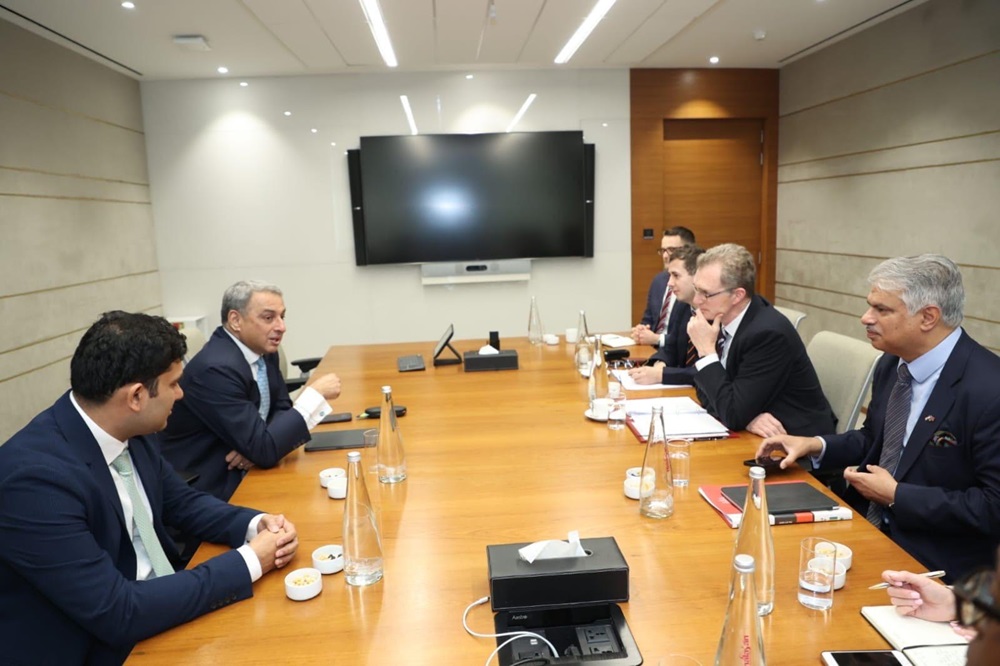
This fact was reiterated to me last week when I flew to India for meetings with both Tata Steel CEO, T.V. Narendran, and the Managing Director of parent company Tata Group, Natarajan Chandrasekaran. They both stressed that the deal has secured the long-term future of steelmaking in South Wales.
But as I’ve said before, the announcement of our support package was not a cause for celebration, as around 3,000 workers will lose their jobs.
[lower-mid-content-banner]
Job losses
Unlike traditional blast furnaces, the electric arc furnace will not require as many people to operate it, and that is why job losses are sadly inevitable.
However, the answer is not to resort to unconstructive criticism or to raise false hope with vague ideas about undeveloped technologies or even to keep the blast furnaces open for longer at huge extra expense and with the same end result.
Instead, we have plotted a credible path to a sustainable future for steelmaking at the same time as making huge investments across the economy of South Wales to ensure that there are jobs and opportunities for those affected.
Port Talbot is part of the new Celtic Freeport, backed by up to £26 million in UK Government investment and with the potential to unlock up to 16,000 new jobs over the coming years.
The Celtic Sea is also a prime location for floating offshore wind, and any future development could see thousands of skilled jobs created. Meanwhile, the Swansea Bay City Deal – which covers Port Talbot – continues to deliver significant investment across the region.
I will do everything I can as Secretary of State for Wales to help deliver this investment so we can fully unlock the huge potential of the Port Talbot area.
During my meetings with Tata in Mumbai we discussed in detail the crucial work of the transition board, which is backed by £80 million from the UK Conservative Government and £20 million from Tata Steel.
The body, which I chair, will support and re-train those who lose their jobs – and Tata Steel is firmly committed to it.
Reassurance
For all those impacted by Tata’s deal, allow me to provide you some reassurance: you will receive and will be equipped with the necessary skills to re-enter a wide array of employment.
Alongside the work of the Transition Board, I continue to speak to the steel unions, steelworkers from Port Talbot and major employers across south Wales about how this challenging process can work best for everyone involved.
Yet, despite the government’s best efforts, that has not prevented many individuals from the Labour-run Welsh Government from playing “party politics”.
While it is easy to criticise when jobs are lost and tough decisions need to be made, many will have already noted the ongoing lack of tangible action from the Labour Welsh Government.
In fact, they haven’t contributed a penny towards the £100 million transition board fund.
Welsh Labour seems to be more interested in spending over £100 million on creating more Senedd Members and £33 million on 20mph default speed limits.
And, despite talking up their £3 billion fund for green steel, Keir Starmer’s Labour Party hasn’t put their proposal to Tata and can’t say how they will find the money and what the funding will even do.
Quite simply, Labour don’t have a plan.
In contrast, the UK Government is doing all it can to make the transition to greener steelmaking take place as efficiently as possible.
Our support of Tata has secured Welsh steelmaking and I am proud to be the Welsh Secretary who is helping deliver the transition process which will result in a bright future for the industry in our country.
David TC Davies is the Member of Parliament for Monmouth and the Secretary of State for Wales
Support our Nation today
For the price of a cup of coffee a month you can help us create an independent, not-for-profit, national news service for the people of Wales, by the people of Wales.
Get more trusted Welsh news
Choose Nation.Cymru as a preferred source in Google News to see more of our journalism.