


Opinion
Welsh mutations: A rethink, and maybe even a rename, is overdue
Stephen Price
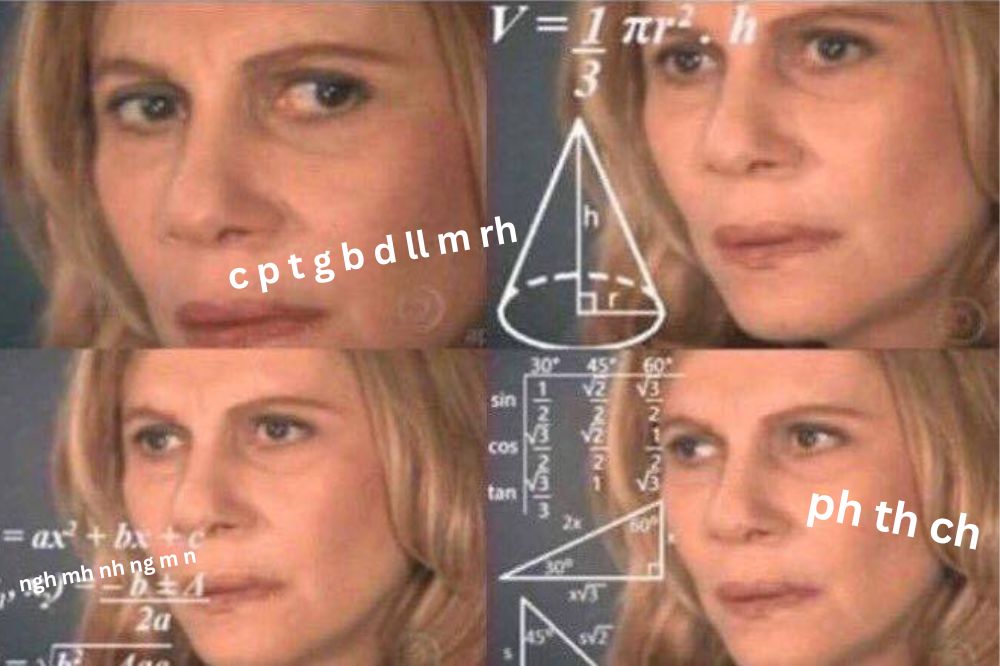
Can't put the garbage bags down call my red-horse.
No, I've not gone mad. Well, no madder than before - the above line is how my year seven class was taught to recall Welsh mutations.
11 year olds, faced with an onslaught of six or so subjects on a carousel hour after hour, then plonked in a room with the third language of the week to contend with (fourth if you include English).
For me, Welsh learning was a joy. My brain is sticky when it comes to arts, language, prose, poetry, and Welsh was a coming together of passion after passion, helped no end by a wicked teacher from another era.
For the rest of the class, however, many of the earlier lessons (especially when mutations made their presence known) were akin to staring at a periodic table. And not just any old periodic table, one that was there to add even more trip-ups to us monoglot English speaking valleys folk.
Two of us went on to take Welsh to A-level, and a handful more to GCSE, but the vast majority had no interest whatsoever.
Looking back with fresh eyes, and a better understanding of my brain which at the time had X-Men standard photographic memory, Welsh was made academic, difficult, 'other'. But my brain enjoyed the challenge, and my anxiety and shyness enjoyed the nurturing teacher.
It's that 'otherness' of Welsh that drew me in, too, that and what I always termed 'claiming back'.
[mid-content-banner]
"Stop the teaching of mutations"
Fast forward to 2025, and the Welsh learning landscape is very different. Indeed, it's global, it's democratised, and everyone has an opinion.
'Use the Welsh you've got' is the general line, and it's a good one.
It's the younger generation, often either first language or Welsh school-goers whose parents aren't, that have perhaps given me a confidence to say 'hey, I ain't so bad.. it doesn't need to be perfect...' but therein lies a little issue that has shifted into a dictation-level stance that sees learners cross a line into 'this is how you should be doing it now, folks'.
Take a recent comment on one of our articles about the Welsh Language Commissioner which said: "I believe the easiest way to make a difference would be to let the language evolve - stop the teaching of mutations. We should be making the language easier to learn."
Really?
But this isn't the first time I've heard such comments.
"It's too hard."
"But why does it do that?"
"But why do we mutate this and not that?"
I feel for adult tutors, honestly, and can only imagine I'd be throwing board rubbers left right and centre if such things still exist.
The commenter is, of course, entitled to the opinion, just as this is mine here, but to lose a fundamental, beautiful, ADVANCED, element of one of Europe's oldest languages because it's 'difficult'. Again, really?
This isn't evolution, this is debasement, and would leave Welsh much poorer for it, if it could even be called Welsh then.
[lower-mid-content-banner]
Flow
I can only give my two penneth as a 'new Welsh speaker', but Welsh without its flowing, malleable nature isn't Welsh. It's English translated into new words.
I adore mutations. I love the flow, the changes, the uniqueness of Welsh, and I love its ancient otherness.
Contrary to popular learner belief, they’re not there to trip up, to pause and clunk, but to flow, to make even more beautiful
Take one of the earliest phrases I'd learned back in year seven, in the days of 'can't put the garbage bags down call my red horse...'
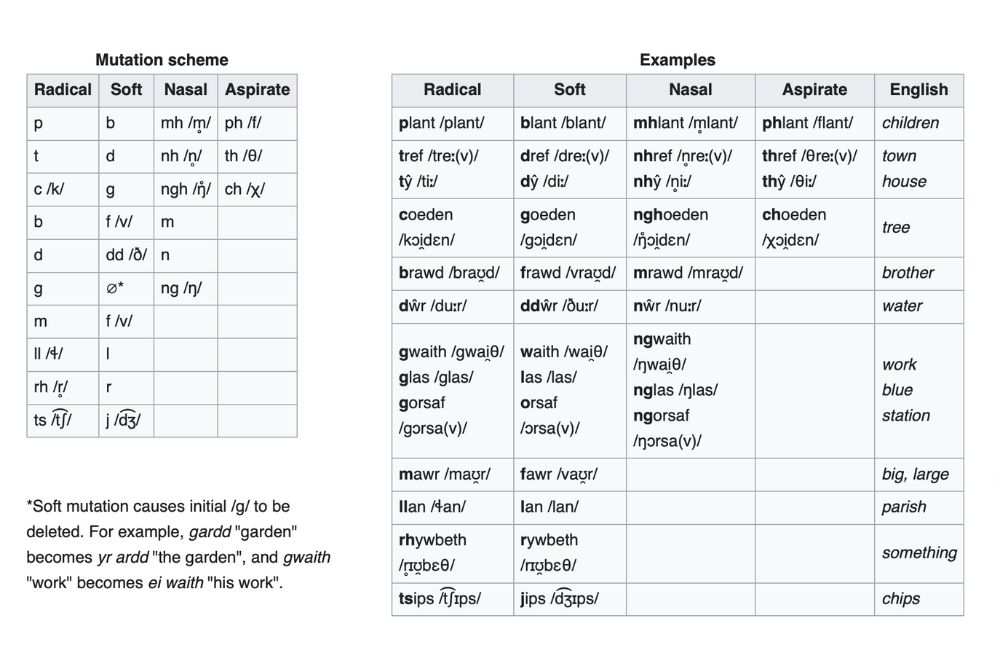
"Dw i'n byw yng Nghlydach" - I live in Clydach.
The commenter would have it read "Dw i'n byw yn Clydach"... Which perhaps, for learning stages, might actually help. But is Welsh to be made more English-speaking-learner-friendly for everyone wholesale, with native speakers (and a future country of even more native speakers)? I'd argue we'd find no native speakers who'd agree there.
Where I would like to see some change in the English speaking world of Welsh learning, maybe, is our very approach to mutations. To know that, with time, they will come.
As your fluency flows, your familiarity, your interactions with others, so too will come the flow - just as English adapts in its own ways.
Many learners, too, act as though only Welsh is hard, only Welsh has quirks.
Take the chaos of English spelling for example, when compared to the (for-the-most-part) consistency of Welsh.
A big pet peeve of mine in English speaking and writing is the incorrect use of 'And I' and 'And me' (it's more simple than most think). In English, we have similar variations on affirmative answers … I have, I do, I can, and so forth (it’s not just Welsh with more than one way of saying ‘yes’). We also do things like adapting the sound of vowels when they touch each other in a sentence, "In the house" vs "In the air"... In our Welsh accents, we add melody, all avoidances of clunks, all in search of flow.
Welsh isn’t some ‘mutant’ bogeyman of a language - learning any takes effort, and the billions of people who have learned English despite its hurdles (and accents!) to a proficient level are proof that it can be done.
So, naturally, if the above hasn't been too long-winded, I'm quite clearly a fan of the mutation. But one change I would call for, not that I have the authority to even do so, of course, is a change of mind-set towards them, and with it perhaps even a change of name.

Mutation? Mutant? It's all, yet again, so academic, if not even a little ugly a term.
Yes, the letters mutate, they change, but outside of the academic/textbook world, an approach where we see 'adapt/adaptations' or even 'flow' becoming how we see mutations might help learners 'get' the game..
Far from the pause/think/clunk new speakers might have, they're ultimately there for the words to flow ... to sing ... to fall from the tongue and lips with, conversely, greater ease.
Their existence makes Welsh even more of a wonder, and points at an advancement, a cleverness, a brilliance, a poetry even, that is simply awe-inspiring.
We have something so very special here in Wales - a living, breathing Celtic language that has survived against all the odds - and it needs protecting, and using, and embracing in all its beautiful otherness - it's what makes us who we are after all.
Support our Nation today
For the price of a cup of coffee a month you can help us create an independent, not-for-profit, national news service for the people of Wales, by the people of Wales.
Get more trusted Welsh news
Choose Nation.Cymru as a preferred source in Google News to see more of our journalism.
