


Sun, 19th July Cardiff 23°
Nation.Cymru wordmark
Advertisement

Opinion

Wales understands why our government is acting differently to Westminster, and supports it
By NationCymru
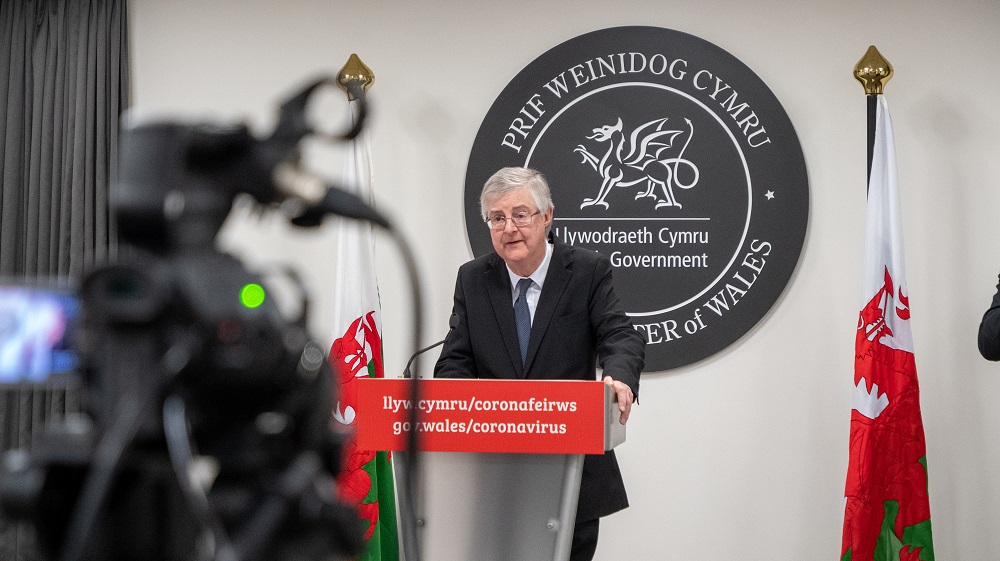
Mark Drakeford the First Minister of Wales. Picture by the Welsh Government

*English follows below*

Aled Gwyn Williams

Mae’r dyddiau diwethaf wedi bod yn rhai tyngedfennol o ran ymdeimlad ac ymwybyddiaeth o genedligrwydd Cymru, yn wlad ddatganoledig ac o ran ein siwrnai tuag at annibyniaeth.

Bu amseru ailenwi Cynulliad Cenedlaethol Cymru yn Senedd Cymru, ac yn bwysicach fyth o ran ymwybyddiaeth, The Welsh Parliament, bron yn rhagluniaethol o edrych yn ôl.

Mae’r rhan fwyaf o bobl Cymru yn derbyn eu newyddion gan ffynhonellau Prydeinig, sydd yn llawer mwy cyfarwydd â phwer a statws seneddau’r Alban a Gogledd Iwerddon. Caiff yr un urddas ac arwyddocâd eu rhoi i’n Senedd ni wrth glywed ei henw newydd. Dydy’r statws hwnnw ddim yn ddatblygiad newydd mewn gwirionedd; yr ymwybyddiaeth ohono sydd yn newydd.

Mae ymdeimlad bellach fod y perthynas rhwng gwledydd y DG, rhwng y seneddau a llywodraethau datganoledig â San Steffan, ac rhwng pobl Cymru â’n seneddau a llywodraethau ein hun, wedi newid am byth.

Ychydig ddyddiau yn ôl, â’r gwledydd Celtaidd oll yn gytûn y byddem yn parhau â’r clofa, bu disgwyl ymysg rhai i lywodraeth San Steffan ddilyn trywydd tebyg ar ran Lloegr, yn enwedig gan iddynt bwysleisio pwysigrwydd “ymdriniaeth y bedair wlad” wrth ddelio â Covid-19.

Nid felly y bu.

Rhagwelid hyn gan eraill, a chafwyd rhybyddion lawer o flaen llaw na fyddai diweddariadau Prif Weinidog y DG yn berthnasol i Gymru. Yn rhyfeddol, ac efallai oherwydd arwyddocâd ddwys y sefyllfa bresennol, a’r ffaith ein bod ni i gyd, wrth reswm, yn talu sylw i’r newyddion ar hyn o bryd, ymddengys bod y neges – a hynny bod Cymru yn wlad ddatganoledig ar wahân, yn dwyn ffrwth fel na wnaethai erioed o’r blaen.

Mae cyfarfodydd yn amlwg wedi’u gohirio ar yn o bryd, a sgyrsiau yn y cnawd wedi’u cyfyngu, ond mae postiadau cyfryngau cymdeithasol cyfrifon annibyniaeth ar hyn o bryd yn cyrraedd llawer mwy o bobl na’r arfer, ac nid yn unig ar Twitter, lle rydym ni’n tueddu pregethu at bobl sydd yn cytuno â ni’n barod, ond ar Facebook hefyd, gyda chymeradwyath Cymry cyffredin sydd ddim o reidrwydd yn genedlaetholwyr.

[mid-content-banner]


Eithriad

Yn dilyn y datblygiadau hyn, death araith Boris Johnson, wedi’i fframio fel neges i’r DG gyfan. Mewn gwirionedd wrth gwrs neges a oedd yn berthnasol i Loegr yn unig ydoedd, gan taw mandad Llywodraeth Cymru yw iechyd a’r clofa. Ac am y tro cyntaf, ar raddfa mor fawr efallai, ymddengys bod Cymru yn gyffredinol yn deall hynny.

Teg fyddai dweud mai trychineb oedd araith Johnson. Heblaw am berygl y neges a’r llacio ar y mesurau sydd wedi bod yn ein cadw ni’n ddiogel dros yr wythnosau diwethaf, roedd y Prif Weinidog yn gwrth-ddweud ei hun yn gyson, a’i gyngor yn gwbl ddryslyd i’w gwrandawyr.

Mae ymdeimlad cyffredinol o ryddhad ymysg y Cymry nad ydyw mesurau newydd Johnson yn berthnasol i’n gwlad ni, yn enwedig o’u cymharu ag araith Mark Drakeford, Prif Weinidog Cymru, a gyflwynodd neges dwys, gyfrifol a synhwyrol, gan gyfeirio at y gwyddoniaeth y tu ôl i bob penderfyniad.

Ynghŷd â hynny, dengys y polau fod pobl Prydain ar y cyfan yn cytuno ag angenrheidrwydd y clofa. Os ydyw llywodraethau Mark Drakeford, Nicola Sturgeon ac Arlene Foster yn cytuno ar fesur penodol ar draws fwlch gwleidyddol enfawr, gellir cymryd ei fod yn werth ei wneud. Llywodraeth Johnson yw’r eithriad yn hyn o beth.

Yn fwy nag erioed o’r blaen, mae’n amlwg bod Cymru a Lloegr yn dilyn trwydd gwahanol i’w gilydd, ac mai trywydd Cymru, yn unol â’r Glwedydd Celtaidd eraill, yw’r un synhwyrol a'r un y mae'r cyhoedd yn cytuno âg ef.

Dros y dyddiau nesaf, gall hyn barhau i rymyso nid yn unig ymwybyddiaeth o arwahanrwydd gwleidyddol Cymru, ond ffydd yn Senedd a Llywodraeth Cymru, ynghŷd â diffyg hyder y Llywodraeth byrbwyll Prydain.

Mae Cymru wedi cyrraedd trobwynt o ran ein hyder yn ein gwlad ein hun. Pan fydd y pandemig ar ben gallwn obeithio fod dyddiau gwell i ddod, ac y byddwn yn edrych yn ôl ar y dyddiau hyn fel cam enfawr tuag at annibyniaeth.
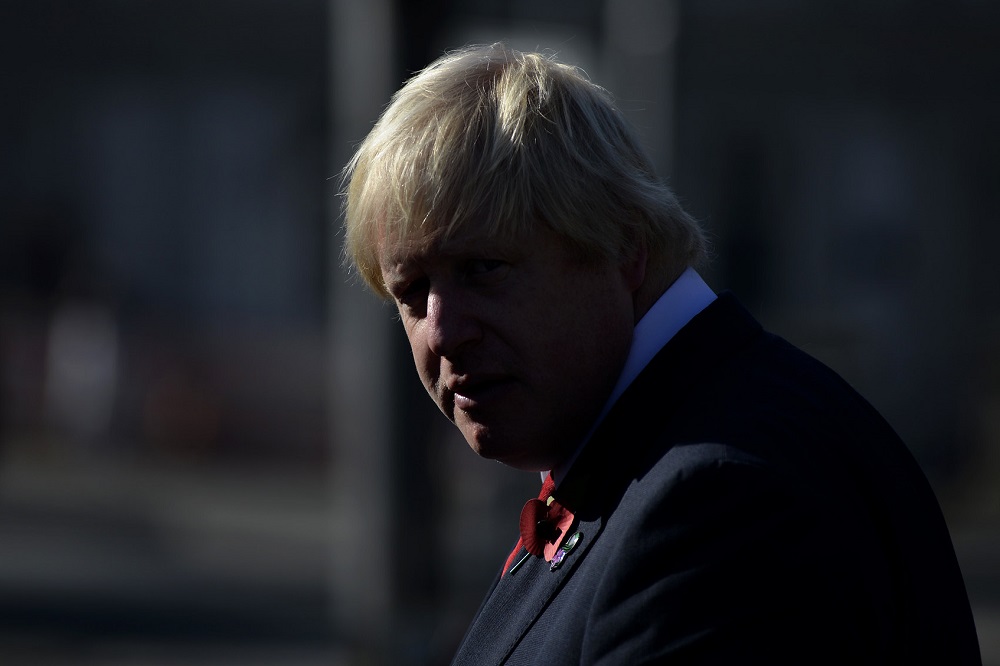

Boris Johnson. Picture by British Embassy Belgrade (CC BY 2.0).

Aled Gwyn Williams

The past few days have been fateful in regard to the awareness and recognition of Wales’ nationhood, the necessity of devolution, and our future independence.

The renaming of the Welsh Assembly as Senedd Cymru, and more importantly regarding awareness, The Welsh Parliament, was almost providential in hindsight, as this has been the week when our devolved institutions have in the minds of many come into their own.

Most people in Wales get their news from British, often anglo-centric sources which tend to be much more familiar with the powers and status of the parliaments of Scotland and Northern Ireland than Wales. Reports referencing our newly named parliament are giving it the same reverence and dignity afforded to the other devolved nations of the UK. The status isn’t new, but the awareness of it certainly is.

Since then, it could be argued that the relationships between the countries that make up the UK, between the devolved administrations and Westminster, and between the people of Wales and our parliaments and governments, have changed forever.

A few days ago, with the Celtic nations in agreement that lockdown was the way forward, there was an expectation that the UK Government would follow similar if not identical lines, especially given its emphasis on a “four nation approach” in dealing with Covid-19. That’s not how it turned out.

Others foresaw this and warned beforehand that the announcements of the UK Prime Minister would hold no relevance to Wales. Remarkably, and perhaps because of the weight of the situation and the fact that we are all currently paying more attention to the news and to current affairs, it seemed that this message – that Wales is a distinct, devolved nation - was cutting through among the general public in a way it never had done so before.

It goes without saying that events are postponed for now, and even face to face meetings are limited, but social media posts by pro-independence accounts are getting far more traction than usual, not only on Twitter, where we often preach to the choir, but on Facebook too, with the apparent approval of Welsh people of no nationalist persuasion.

[mid-content-banner]


Outlier

Then came Boris Johnson’s speech, presented as though it was for the whole UK even though in reality, it was relevant only to England, as health and the lockdown are within the mandate of the Welsh Government. Perhaps for the first time, it seemed that in general, the people of Wales in were finally aware of this.

It would be fair to describe Boris Johnson’s speech as a disaster. Apart from the obvious danger of the message and the loosening of the measures that have been keeping us all safe for weeks, the Prime Minister consistently contradicted himself and offered confusing advice.

There is a general feeling of relief in Wales that Johnson’s amendments and measures don’t apply in our country, especially when they’re compared with the address given by Wales’ First Minister Mark Drakeford, who presented a serious and sensible message, referencing the science behind every decision.

The polls show support across the UK for the necessity of lockdown. If the governments of Mark Drakeford, Nicola Sturgeon and Arlene Foster are in agreement on a specific measure across their vast political divides, it’s fair to assume it’s worth it. In this, Johnson’s Government is the outlier.

It’s more obvious than ever before that Wales and England are following different paths, and that it’s the path of the Welsh Government, along with the other Celtic Nations, that’s the most sensible and has the most public support.

Over the coming days, this could continue to reinforce awareness of, and faith in the Welsh Parliament and Government, as well as exacerbating the lack of confidence in the recklessness of Johnson’s Government in Westminster.

Wales has reached a turning point regarding our confidence in our own country. When this pandemic is over we can hope for better days to come, and consider this another important step toward independence.

For the price of a cup of coffee a month you can help us create an independent, not-for-profit, national news service for the people of Wales, by the people of Wales.

Get more trusted Welsh news

Choose Nation.Cymru as a preferred source in Google News to see more of our journalism.

Choose Nation.Cymru as a preferred source in Google News

10 comments

Tudor Rees

Ar un adeg roeddwn yn ffafrio sustem ffederal i Gymru, yr Alban a Lloegr, ond mae digwyddiadau dros y 4 blynedd diwethaf wedi dangos mor ddwfn yw'r ysfa i ormesu o fewn y Sefydliad Lloegr, mai Annibyniaeth yw'r unig ateb realistig.

Reply
Ellie

I have never understood why people in Wales listen to english politics and think it applies to them . Same as the news!

Reply
j humphrys

Me too. Get as much from Wales as I can, then DW tv and France 24 for Europe/world in general.

Reply
John Ellis

Very considerably it's a media thing: the 'Western Mail' may style itself 'Papur Genedlaethol Cymru'; but in fact few people north of the Severn read it, preferring the 'North Wales Daily Post', a journal with its roots in Liverpool. And the vast majority who still take a daily paper buy one of the London journals. And back in the days before S4C, when BBC Wales and HTV Wales schedules were interspersed with programmes in Welsh, non-Welsh speakers routinely tuned their TVs, when the topography allowed it, to channels serving adjacent bits of England, which naturally offer news relevant to their region. I recall when I lived in Swansea in the '70s having a new TV aerial and needing to check with the TV engineer that he wasn't aligning the aerial to pick up west of England channels. He said he was about to do exactly that! None of that's necessary now, of course, but old habits once established die hard.

Reply
max wallis

I would love to have been able to agree that Drakeford referenced the science and proposed a "sensible" policy. But I can't. Drakeford avoided the difficult balance of how and when to open primary schools, by accepting Kirsty Williams dictat - we are not going to open any - despite schools already being open for kids of key-workers, with teaching only voluntary by concientious teachers. Drakeford failed to confront Vaughan Gething's insistence the R-value has to be lower, by telling him the R-value in the community is quite low (0.5) which is the right indicator for relaxing the 'lockdown'. He didn't say that the R-value should exclude the care-home sector, which has suffered from Gething's neglect. To give the excuse that R is a bit higher in Wales than England is stupid when Wales cannot produce separate statistics for the care-home sector. The lack of Welsh data means Drakeford had no answer to Boris Johnson's going big on "R". We now hear the excuse from Gething that he does use Welsh specialists, not just the failure of a CMO, Frank Atherton. If we had a Welsh version of SAGE as he suggests, who are the members and where are the Minutes. Truth is, Wales has no Covid science, just Atherton who runs off to the 4-CMOs' weekly meeting to coordinate public messaging.

Reply
Sibrydionmawr

It's very encouraging that our Senedd is at last being truly valued by a majority in Wales. I was a little pleasantly gobsmacked to see that anyone expressing negative opinions about the Senedd was subject to a large number of down votes, something of a strange phenomena when usually those kinds of comments are usually accorded some support. As others have opined, it's Wales' lack of a fully functioning media that is at the core of reason why people don't understand the Senedd's function or what its responsibilities are. In many ways it's a Welsh government own goal, and one shared with the wider Senedd as well, as very few members have strongly advocated or campaigned for a more effective media. Surely now is the time to consider doing what Norway does and offer financial support to ensure that there is a free and independent media in place to hold government to account and contribute to a functioning democracy.

Reply
Rhosddu

The lack of a Welsh media is, as you say, Sibrydion, the reason for the lack of public awareness and public debate in our country. But I have a suspicion that the inhabitants of the Bubble prefer it that way, and this, I think, goes some way to explaining their inertia over demanding a national media. They don't want the scrutiny. Covid-19 has, however, not only forced the Senedd out into the open but has also persuaded the Welsh people of the need to sit up and take notice (for the first time, in the case of some of our citizens) of the decisions made in Cardiff Bay. This might, just might, set a precedent of public awareness that MS's will have to respond to. Fortunately for Mark Drakeford he has acquitted himself well recently in terms of acting in Cymru's interests (notwithstanding the failure regarding care-home infections). Hopefully will see that it is now in the interests of both himself and the public that Wales at last has a Welsh-run, Wales-focused media and a grown-up alternative to Radio Wales. National media apart, the Stockholme Syndrome prevalent in Cymru, and which the likes of Boris Johnson both expect and rely on, has taken a kick in the nuts since the First Minister's television address on the 9th. A feeling of protectiveness towards their country has been engendered almost overnight among many here who had until then suffered from the Syndrome in an acute form. This is a very significant development, and one which some in England, forced now to liken themselves to illegal immigrants instead of entitled colonists as a result of the ban on holidaying in 'Playground Wales', have reacted badly to; the Honourable Member for Shrewsbury is simply giving voice, through his own tactless stupidity, to the unspoken thoughts of such people. It is vital that Drakeford holds the line, and that, once the virus is only a seasonal visitor rather than a pandemic, he does not return to his comfort zone of the status-quo ante. There are two new kids on the political block who will be ready and willing to run Wales in his stead if he chooses the comfort zone.

Reply
Sibrydionmawr

I agree with you, I'm sure that the media vaccum that existed in Wales was at least partially an attempt to avoid scrutiny, but this was always going to backfire at some point, Covid 19 being just such a circumstance where there was a need to dissipate vital information fast. Where there was a UK-wide response the existing networks sufficed, but in this era of Devolution where there is an increasing variance in legislation between Wales and England the media vaccum that initially served the sitting administration well is something that is no longer tenable, and this is something that is now obvious to everyone in Wales. Covid 19 has created a momentum, it's now up to all of us, of whatever party affiliation to clearly demand change and ensure that we take control of broadcasting in Wales, and also develop a sound policy towards the rest of the media, perhaps through the enactment of laws against monopolising print media and adopting the idea of state funding for independent print media. Perhaps Wales could investigate how the Dutch media operates, where I believe it is largely independent and not at all monopolised in the way that so much of the UK media is. The ball is out there, so I hope more than just you and me are making note of these things, and maybe this is something that YesCymru could put its considerable weight behind. I think the time is right, as the Welsh public is particularly receptive at the moment, and will remain so for a period after the crisis subsides. People are waking up, and I don't know if this is in any way a new thing, but is it the case that it's only recently that Drakeford has been specifically referring to Welsh Law? That in itself is something significant - oh, and yes, as well as broadcasting, Wales must take control of it's justice system and policing.

Reply
John Ellis

One intriguing development over the last three days or so is that while Westminster government ministers continue to bang on blithely as if their jurisdiction was absolute in all things across every part of the UK, the UK-wide media have started routinely employing the rider 'in England'/'in the case of England'/'applying to England' in their references to the easing of lockdown first heralded by Bunter on Sunday evening. I noticed it in various TV news bulletins in the last couple of days, and on UK news websites such as 'The Independent'. If the distinction wasn't much made before, it is being made now.

Reply
Lloyd Orange

Yes I noticed this too, a welcome change to the dreaded 'England and Wales' category.

Reply

Leave a comment

Comments are reviewed before they appear.