


Opinion
Wales, UK, Europe, the World
Desmond Clifford
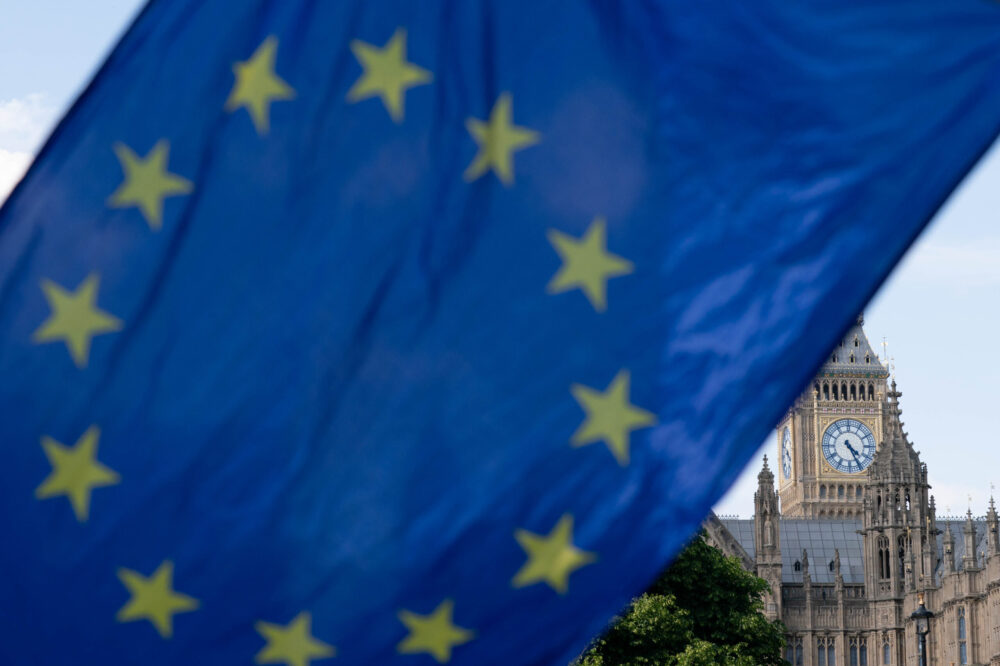
Keir Starmer announced his European Union deal with a boast that Britain is back on the global stage. It feels a little early for trumpets.
The UK’s international standing is surely higher than it was 12 months ago, but still well lower than a decade or two back.
Starmer turns out to be pretty good at diplomacy. His lack of flash is a positive advantage. He listens to people, shows respect and demonstrates decent judgement.
Most Prime Ministers end up preferring foreign affairs to domestic. Abroad, they’re treated with respect and deference often denied at home.
Thatcher and Blair demonstrably enjoyed abroad more than home the longer they were in office. Ukraine energised Johnson like nothing else.
Starmer is doing well abroad but needs to pay attention to domestic too.
[mid-content-banner]
Pragmatic
The reset agreement with the EU is pragmatic and modest. We saw some anachronistic politics as oppositions, in both the Senedd and Westminster, tried to revive Brexit passions.
It sounded hollow; that volcano is now largely empty.
If we can sell stuff more easily into Europe, tap into EU defence contracts, if passport queues are shorter, if young people get the chance to work abroad – most people will take this in their stride whatever their feelings about Brexit.
So far as fisheries are concerned, the real damage was done 50 years ago.
Fishing is a small industry in Wales – but should be taken seriously – and the new agreement largely rolls over the status quo for a further 12-year period. Hardly cause for drama.
In the Senedd Eluned Morgan got it in the neck from both Plaid Cymru and the Conservatives, about her perceived lack of influence with the UK Government on the details as they affect Wales.
If the Senedd Conservatives are going to dish this out, it’s only fair to ask what positive influence they brought to bear in Wales’ favour during 14 years of UK Tory government, including the replacement for EU funding which was supposed to come here but never arrived?
Plaid doesn’t want Wales to be part of the UK and so has other questions to deal with.
[lower-mid-content-banner]
Over-egged
The First Minister is in the firing line partly because she over-egged the putative partnership with the UK Government after she, and they, came to office. She was also unwisely and hastily dismissive of constitutional issues when setting out her priorities.
The Welsh Government was poorly prepared, strategically, for the incoming UK Government.
Welsh Labour’s pre-occupation with its own leadership issues was a dismal distraction when they should have been applying themselves to the dramatic change in UK political context.
They relied on a casual but mistaken assumption that because they belong to the same party, everything would be hunky. After 25 years of devolution, you would expect a stronger appreciation of the reality of politics; governments have interests, not friends.
Here are some hard truths.
The relationship between the UK Government and the Welsh Government is not equal. The UK Government is constitutionally superior.
The Senedd is “devolved” from Westminster; this means that sovereignty for Wales resides in Westminster, not Cardiff.
The UK Government is free to make decisions in Wales at will, with or without the support of the Welsh Government. The UK Government could choose to abolish the Senedd and, so long as it can secure a majority in Westminster, could do so any time.
Constitutional matters
These are the grim truths and the reason why I groan when politicians say constitutional matters are irrelevant. If you want the Welsh Government to sit in a genuine partnership as equals with the UK Government, then we need to legislate for that to happen.
If we want to abolish the Barnett Formula and replace it with a fair funding model, we need constitutional reform.
If we want to protect Wales from arbitrary UK Government decision-making, likewise.
Sovereignty for Wales should be held by Senedd Cymru in the name of the Welsh people – again, reform needed.
The Welsh Government made no demands whatsoever of the incoming UK Government.
There was no shopping list. Even the devolution of policing and justice, established Welsh Government and Welsh Labour policy, was dropped when blocked, apparently, by an unsupportive Secretary of State for Wales.
The fact that the First Minister is also leader of Welsh Labour, and the senior figure, seems to cut no ice.
The Independent Commission on the Constitutional Future of Wales, established by the Welsh Government, reported in 2023 - and then sank like stone.
Among other things, it recommended devolution of policing and justice, securing “parity of esteem” between governments, and the removal of “constraints on Welsh Government budget management”.
None of these modest proposals are earth-shattering but even these are not being pursued by the Welsh Government, so far as I can see.
Expectations
Does the Welsh Government really have no expectations or requirements of the UK Government? If it does, has it set these out somewhere?
The Welsh and UK Governments have mandates and interests, and these should form the basis of their policy engagement.
The relationship should be supported by robust and effective machinery of government arrangements.
Change should be negotiated, agreed and transparently acted on.
Policy cannot be determined by texts, private phone calls, side-chats, nods and winks; and ministers were wrong if that’s the impression they allowed to gather.
The UK Government has responsibility for maintaining a dynamic dialogue with the Welsh Government and how best to take forward the preferences expressed through Senedd Welsh democracy. I reckon that’s what Labour Senedd supporters would want from a Labour UK Government.
So far as I can see, the UK Government has no such agenda – but why would it if there’s no pressure from Cardiff?
Nick Thomas-Symonds
There’s a UK Government agenda for Europe, it seems, but nothing meaningful for Wales. Nick Thomas-Symonds, MP for Torfaen and the Minister who handled the EU negotiations, did well with Brussels. He seems unusually modest for a politician and, personally, I respond well to that. His slightly ponderous style masks high intelligence.
There’s an argument to say that, with his massive majority, Starmer might have set his sights higher on an EU deal. Perhaps, but keep in mind the referendum result; there is political sense in not moving too far or too fast ahead of voters.
No one should under-estimate just how damaged the UK reputation in Europe has been these last years as a result of Brexit and the UK political nervous breakdown it induced.
For the Starmer administration, it was by no means a matter of simply turning up and picking items off a shelf. The EU has a tight sense of its interests and demands of its own in return for any concessions offered to the UK.
Both sides used the word “reset” and the high-level meeting held this week will be an annual affair. That allows for development of a mutual agenda and potential alignment of interests where politics allows. Although Starmer has made some headway, the EU will take a long-term view and likely retain some caution.
Peverse
In a way, the timing of the UK’s exit from the EU was perverse. The bigger picture of intelligent Brexit was based on a changing global order: aging and sclerotic Europe in decline, economic power and markets shifting east, the American pivot to Asia, the UK detaching from a limp EU and buccaneering globally. The argument had flaws but made a certain amount of sense too. In any case, it worked.
By 2025 the ground has shifted. People under-estimated the extent of Russia’s aggression and warning signs were ignored in Georgia, Crimea and elsewhere.
America is no longer the rock-solid reliable ally of previous times. An axiom of British foreign policy, solid for generations, that the UK should always stand alongside America – two Gulf Wars and 20 years in Afghanistan – has proven shallow.
Europe is tooling up, because it must, and the UK is clearly an important player. During all the years of the UK’s EU membership, defence was a second order issue and NATO was the relevant body; the EU struggled for credible defence identity.
That needs to change, quickly, and the strategic opportunity is for the UK to place itself near the centre of Europe’s affairs once again.
Support our Nation today
For the price of a cup of coffee a month you can help us create an independent, not-for-profit, national news service for the people of Wales, by the people of Wales.
Get more trusted Welsh news
Choose Nation.Cymru as a preferred source in Google News to see more of our journalism.
