


Sun, 19th July Cardiff 23°
Nation.Cymru wordmark
Advertisement

Opinion

Wales must step up to the challenge of active travel
By Emily Price
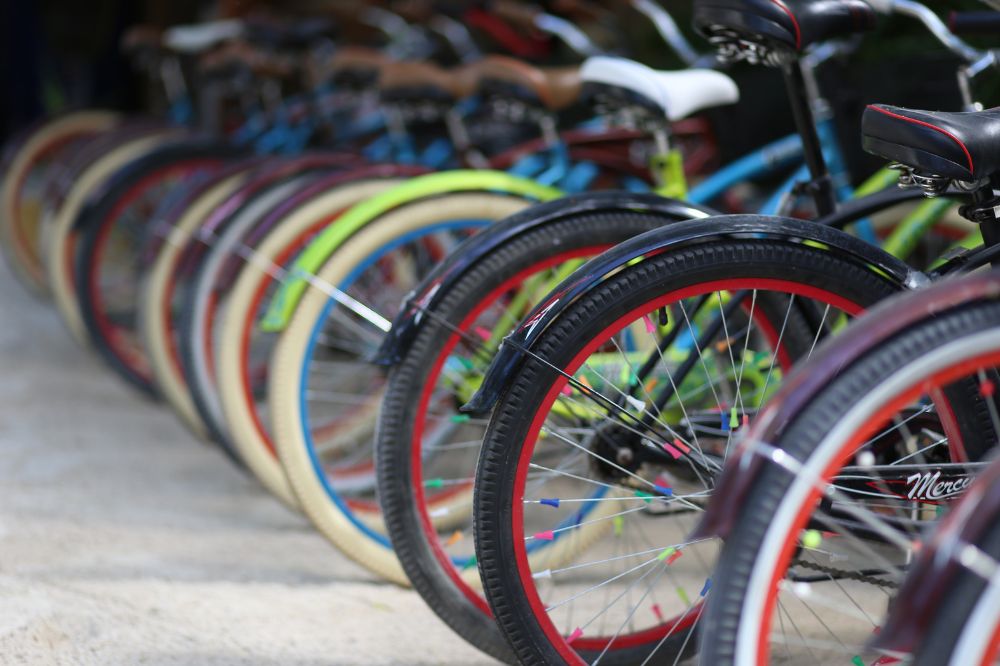
Bikes for active travel.

John Griffiths - MS for Newport East

We’ve recently seen a number of reports criticising the Welsh Government’s record in getting more people to walk and cycle.

Reports such as the one produced by the Wales Audit Office are vital to the effective scrutiny of how the government is working. They help to ensure we
get value for money and the right outcomes. It’s important we learn from them.

But it’s also important that we remember why the government has been so keen on increasing healthier, greener travel. The reason is simple: active travel offers huge benefits to Wales.

In 2013, I was the Minister who took the world leading Active Travel Act through the Assembly and onto the statute books. The law passed unanimously, because every political party in Wales supported its aim of enabling more people to swap shorter car journeys for walking and cycling. The reasons that applied then still apply today, but they are now even more urgent.

The greatest challenge facing all of us is climate change. It threatens the future of our planet. I am proud that the Senedd was the first national parliament to declare a climate emergency.

We have made some progress in cutting our carbon emissions but emissions from our transport sector remain stubbornly high, with fully 62% of Welsh transport
emissions coming from private car use.

Given that many of those car journeys are only two or three miles, there is great potential to significantly cut our emissions if we enable more people to walk and cycle. And this means providing safe and effective active travel
infrastructure.

Health is also a huge challenge in Wales. We are regularly reminded of the problems facing our NHS and of the need to reduce the burden on it by adopting healthier lifestyles.

Travelling more actively is an extremely effective way of improving people’s health. Wales has the lowest physical activity levels in Britain, contributing to obesity and a wide range of illnesses that are estimated to cost the Welsh NHS £35 million each year to treat.

We are also seeing a growing problem with mental health, another issue that increasing physical activity can help tackle. Having a healthier lifestyle will also help our economy: statistics show that regular cyclists take less time off work due to illness.

Poor air quality is another serious threat to our health. Public Health Wales say that each year around 1,600 avoidable deaths in Wales are due to particulate matter, and 1,100 due to nitrogen dioxide (NO2) exposure.

The primary source of both NO2 and particulate matter pollutants is vehicle emissions, primarily from exhaust gases but also from particles shed by tyres and brakes.

Wales has some of the worst air quality in the UK. Every time somebody walks or cycles instead of driving, we breathe a little easier.

[mid-content-banner]

Cheaper

For many people, driving isn’t an option. 19% of households in Wales do not have access to a car, many of them because they cannot afford it.  Walking and cycling are the cheapest ways to get about.

We have a duty to ensure that this cheaper alternative is made safe and
convenient in the same way we have made the motor car safe and convenient: by providing the infrastructure people need.

Similarly, for our young people not yet old enough to drive; active travel offers them an important opportunity to develop their independence if they can
do so safely.

Wales needs to reverse the decline in the numbers of our children walking or cycling to school. Far too many of our children are not getting the 60 minutes of exercise each day needed to keep them healthy. Children who travel actively tend to be more attentive in classes and achieve better results. Reducing the number of cars used on the school run would significantly reduce rush hour congestion on our roads and cut down on the all too frequent parking disputes outside school gates.

Of course, not everybody can travel more actively, but there are enough of us who can for us to be able to make a significant dent in harmful emissions.  And it doesn’t need to be every journey to make a difference. We all complain about the weather, but Welsh weather is not very different to the weather in Holland, where 49% of children cycle to school. Welsh hills are also becoming less challenging with e-bikes offering assistance with pedalling whilst still providing low carbon healthy exercise.

Ambition

There are good news stories showing that we can get active travel right.  Newport Council’s Momentwm programme is an ambitious attempt to demonstrate the benefits of active travel to people across the city; Pedal Power is a leading charity providing specialised cycles and training for disabled people; many schools in Wales are working hard to change the way their pupils travel, with Howardian Primary in Cardiff now seeing 90% of children walking or cycling to school.

We are on a long-term journey. It is only in the last few years that we have been investing at a level that matches our active travel ambitions. Even now, the sums involved are dwarfed by the amount spent on other transport modes.

For all these reasons, the Welsh Government must redouble its efforts to increase active travel. It must maintain its level of investment and continue to develop the mechanisms to target this funding so that it has the greatest impact.

The Welsh Government has recently put in place an active travel delivery plan that, in partnership with local authorities and Transport for Wales, has the capacity to transform the delivery of walking and cycling infrastructure.

It must also do much more to promote active travel. Ten years ago, when we passed the Active Travel Act, Wales put itself at the head of the myriad nations that had realised the advantages of active travel and wanted their citizens to benefit from it. We can and must regain that leading place.

For the price of a cup of coffee a month you can help us create an independent, not-for-profit, national news service for the people of Wales, by the people of Wales.

Get more trusted Welsh news

Choose Nation.Cymru as a preferred source in Google News to see more of our journalism.

Choose Nation.Cymru as a preferred source in Google News

23 comments

Jack

'The greatest challenge facing all of us is climate change' That's not true for most of us when the day to day existence problems are far more important. So, be less of a politicain and be more aware of normal people's problems.

Reply
Padi Phillips

It's not a case of either or, both can be achieved. The problems of climate change and pollution are everyday existential problems, equally important if not as immediately urgent to the problems of the daily grind. On a poisoned planet with no food you won't have an existence to worry about.

Reply
Jeff

There are many things that are queuing up at the moment to crash into reality. Everything from migration to food shortages. You might not have everyday problems on the same level as other peoples but they are coming. The latest bizarre thing I read was a firm wants to ship the Greenland water run off around the world to make money. Really got to take a step back when headlines like that appear.

Reply
Mawkernewek

Not as silly as it sounds, because before electric refrigeration was available, cooling was supplied by shipping blocks of ice around.

Reply

In reply to Mawkernewek

Jeff

The point is they want to ship the run off caused by global warming. The loss on the glaciers is accelerating fast. To catch what they need they want to dam it (sounds half baked to me).

Reply
Nubs

"For many people, driving isn’t an option" Conversely, for many of us who are disabled, DRIVING IS THE ONLY OPTION. Yet Y Senydd seems to be hell bent on destroying ALL private vehicle travel.

Reply
Padi Phillips

Evidence?

Reply
RJ700

which part the destroing of private travel? that was in the manifesto of labour to push the modal shift and other documents stating they wanted to make it uncomfortable for motorists. the only option part? We don't all live in metropolitan environments and public transport especially in the north is seriously lacking or in the case of trains are too expensive to consider.

Reply
OLl

Is that not part of his argument? Make it no longer a case that driving is the only option by making active travel more accessible for larger numbers of people.

Reply
Brian Coman

But the Senedd Ministers are content to be chauffeur driven around in £40,000 Volvos.You cannot make people use bikes. You cannot make people walk. The Active Travel plan is 10 years old, apparently cost £13 million over that time, all to no avail.Most of us don't want it and want to be left alone.

Reply
Jeff

Better facilities for cyclists including secure storage and force the supermarkets to lose a few parking spaces for secure storage as well.

Reply
Linda Jones

This article reads like a fairytale, out of touch with reality. It ignores the fact that Cardiff has become a free for all for cyclists. Many are doing 40/50 miles an hour down pavements and in parks with those on zooped up electric bikes able to do up to 70 miles an hour with impunity and while using their mobile phones. The highway code doesn't apply to them, no insurance, nothing. if they damage you or your car they are unidentifiable and able to move on with no redress. Surely the best way to reduce the number of cars on the road is to have an efficient, reliable and frequent public transport system, mainly buses. Cardiff doesn't have a decent bus service. Its unreliable, infrequent and expensive. We pay £160 a month for one adult and two children to travel on Cardiff bus, most of the time they are infrequent, unreliable and expensive. Ridiculous for a so called 'capital' city.

Reply
blcollier

I’m sorry, but… what? For the record, any electric bicycle that: does not have pedals, is not capped at 15.6mph, or has a twist throttle, is an illegal motorcycle. Let’s not beat around the bush here: they’re not “electrically assisted bicycles”, they are illegal and unlicensed motorcycles. So, right off the bat, anyone using one is committing an offence, and the police are clamping down on them in Cardiff. But the pearl-clutching in this post is absolutely ridiculous. > Many are doing 40/50 miles an hour down pavements and in parks I can guarantee you: no one on an electric bicycle or unlicensed electric motorcycle is doing 40-50mph. They’re cycling where they shouldn’t be and they’re going at speeds that are completely unsafe, but they’re not doing 40-50mph. > with those on zooped up electric bikes able to do up to 70 miles an hour I can again guarantee you that no one has an electric bicycle or unlicensed electric motorcycle that can travel at 70mph. 125cc motorcycles are far more powerful than electric bicycles - yes, even the illegal ones - and most 125cc bikes can’t do 70mph. Have you ever travelled at 70mph on two wheels? Or even 40mph, for that matter? I do quite regularly, it’s a *hell* of a lot faster than you think it is. One false move at 70mph and they won’t need a body bag: they’ll be scraping up the smeared remains with a shovel after the rider’s body turned into a meat crayon. That’s the kind of kinetic energy involved in travelling at 70mph. No one, absolutely no one, is riding an electric bicycle - legal or otherwise - that is capable of 70mph. There are legal electric motorcycles that can easily do those speeds, and far more, but those are licensed and sold as motorcycles. > The highway code doesn’t apply to them Yes it does, it applies to everyone who uses the public highways. Fun fact, that also includes pedestrians. The Highway Code is… well… just that, it’s a code. It’s not “The Highway Law”. Many of its rules are backed with laws, but the Highway Code itself is not a legal document. > no insurance, nothing. if they damage you or your car they are unidentifiable and able to move on with no redress. Actually many cyclists *are* insured. Their home insurance provides liability insurance which would absolutely provide redress if they were responsible for a road traffic collision. Admittedly that’s not always as clear cut when it comes to delivery riders, but that’s an industry that is ripe for tighter legal and standards. But the reality is that *all* road users can be absolutely muppets, including pedestrians. And it is also the reality that those on two wheels are infinitely more vulnerable and infinitely more likely to be killed or seriously injured in a collision, no matter who was responsible.

Reply
Linda Jones

I believe your reflecting how things should be not how things are. Most pedestrians in Cardiff are sick to the teeth of cyclists. I for one have been overtaken by electric bikes while driving around 30/35 mph as they weave in and out of lanes and by non electric bikes when doing 20mph. On many occasions I have narrowly escaped being run down by cyclists on pavements and in pedestrian areas. So too my toddler grandson and so too many other people. It's illegal, by the way, to cycle on Queen St but it's not enforced, neither are many of the other problems caused by cyclists. It is one headbanging moment to put pedestrians and cyclists in the same category for the use of pavements, parks and pedestrian areas. In addition my car was expensively damaged by a cyclist trying to squeeze past a traffic queue and off they rode into the sunset. No numberplate so untraceable. It cost me more than £500 to repair. In my opinion cyclists have become a bigger danger to pedestrians than cars and they are bad enough

Reply

In reply to Linda Jones

Sean Thompson

There's no doubt that some cyclists can be annoying and potentially dangerous in pedestrian areas. It is also daft for the council to label some (not all) pavements as shared use between people walking and those on bikes - and I speak as both a pedestrian and a cyclist - but the sensible alternative is to create more properly designed segregated cycle lanes like the handful the council has actually built (or at least started) in the city. And let's be clear 1) electrically assisted cycles (not the illegal hacked or DIY conversions ridden by so many food delivery riders) can't be ridden faster than 15.5 mph. 2) Very, very few cyclists other than a tiny handful of professionals are physically capable of riding at 30/35 mph on an bike - and not even they could cycle at that speed through urban traffic. 3) In the UK over the past decade, just over 2 pedestrians a year have been killed in collisions with cyclists, but hundreds every year have been killed by cars. In fact cars kill several dozen pedestrians who are ON THE PAVEMENT every year. So instead of wild generalisations and exaggerations about people riding bicycles, let's get the council to keep our pavements in decent condition and building many more proper segregated cycle lanes across the city, and get the police to crack down on the young men riding illegal electric mopeds and on all illegal behaviour on the roads, whether by motorists or cyclists

Reply
Nigel

No,I’m a cyclist, it’s primarily a leisure activity. Expecting thousands to cycle commute in wet, hilly wales, carrying what they need to work, arriving dirty & sweaty just shows how out of touch politicians are. How many of the Senydd do this? None.

Reply
Matt

The main issue is that we've half heartedly put some cycle lanes in near city centres which then end and feed cyclists straight back into traffic because it was phase 1 and further phases are years away. Then we wonder why inexperienced cyclists don't see that as appealing. And that's when we get it right, and the active travel way isn't a secluded ex-railway line which isn't a fun place for anyone to be after dark. If we want it work we have to double down and do it quickly and properly. It works in the Netherlands so we should just copy what they've done.

Reply
Toby Morgan

The Netherlands are mainly a flat area, and a small country, do you really want to cycle to work in the wind and driving rain that make visibility poor, my main concern is that the senedd have no idea what they are doing, they have proved this time and time again, starting with the useless 20 mile per hour, wich causes more pollution, you can breath in my small town centre, as cars busses and lorries are idling around, they are more interested in thair fat wallets than actually helping wales, closing big attraction in wales so they can expand the senedd is ridiculous, we don't need more useless policies telling us how to live when they are driving around in chauffeur driven posh gas gusling cars, and flying around the world to watch sporting events at our expense, thus policy is as useless as lockdown was, and just another scam to get people ready for 15 minute cities and cashless societie, have a look at India how bad that is, Plus all the wars Britain is funding is causing more problems than people driving to work

Reply
Sean Thompson

Most journeys taken by people in Wales, including most car journeys, are less than 5km in length - easily done by most people on a bike. For example, very many more kids would like to cycle to school if there was a safe route. Obviously many parts of Wales are much hillier than the Netherlands, but most of our country is no more difficult for cycling than many other parts of Europe where a great many more people cycle regularly (but not necessarily all the time of course) - and where the weather is no better or even worse than a Welsh winter. More, better and safer routes for people on bikes in our towns and cities would benefit pedestrians, cyclists and motorists too.

Reply
RJ700

200m+ wasted on active travel and usage has gone down post covid. There is no want for it outside of a small percentage of militant push bikers and ecomentalists. It wont work for Wales because we built everything on the side of hills and it the weather is rough as toast more often than not.

Reply
Joel

200million over a decade. That's about £6.60 per person per year. Doesn't seem like much for government spending to me...

Reply
Joel

I believe covid related spending stands at about £16,000 per person (for whole UK population, not just Wales) to put some perspective to that number...

Reply
Oll

It would be great if Wales sought a leading role in active travel. I cycle to and from work every day of the year, in Bangor, a hilly city. My children both walk to school, and my wife cycles or walks to her studies. It would be great to feel supported in living a lifestyle that is independent of owning a car. While there are so many benefits in terms of health, lower costs and environmental benefits of active travel, it can feel like you are the unseen presence on the roads (despite the high viz!). I have to escort my child across the pelican crossing as so many drivers shoot the red lights, cycle lanes disappear and reappear, making them unfit for less experienced riders, and pavements are narrow and suffer from cars parked on them, which impacts anyone walking to work. The 20mph limit has been a major improvement, one new shared use cycle and walking lane has been created, and hopefully there will be further developments to make active travel more attractive to a greater number of people.

Reply

Leave a comment

Comments are reviewed before they appear.