


Opinion
Wales finally draws a line in the sand with England – and just in time
Theo Davies-Lewis
Credit where credit is due.
While the Office of the First Minister of Wales has never faced a challenge as great as coronavirus, it seems as if Mark Drakeford’s government is starting to gather momentum in its response to the crisis.
Drakeford knows that for him, like many other leaders across the world, his response to the pandemic will define his legacy. So far, the signs are not as positive as he may have hoped: only last week a YouGov poll showed that the Welsh public had more confidence in Boris Johnson in his response to the deadly pandemic.
But as the saying goes, a week is a long time in politics. In a global health emergency, of course, 24 hours seems to feel like an eternity.
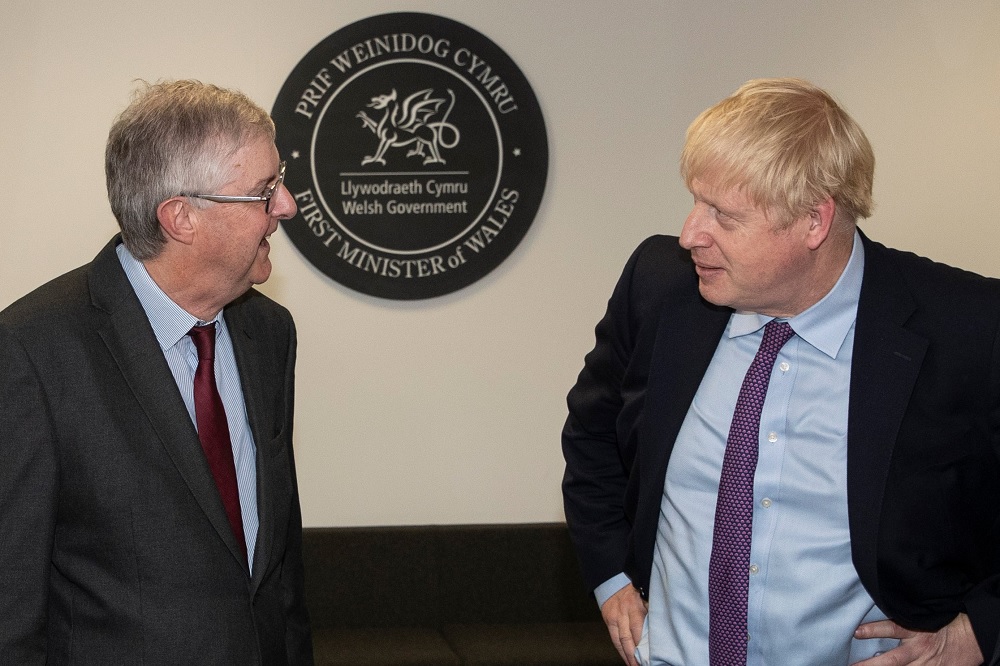
Over the last few days, in response to a media landscape that has increasingly focused on the impact coronavirus on London and England, it has been evident that the Welsh government and Mark Drakeford have realised the necessity to alter their communications strategy.
It started with a curiously targeted flurry of responses from the government’s Twitter profile to international media at the start of the month. The Welsh government responded to reports that British schools were set to return by stating that Kirsty Williams was responsible for announcing when schools would open in Wales – rather than the UK government.
On a special VE Day bank holiday the stakes were raised; Drakeford not only came out with an announcement that extended Wales’ lockdown for a further three weeks before other nations of the UK, but his senior press officer also wrote to the UK’s press lobby to remind them what Boris Johnson announced is only applicable to England and not Wales.
To make matters as clear as possible, in the letter Drakeford’s aide reportedly attached a document explaining the legal and constitutional position in Wales.
While it is remarkable – and totally unprecedented – that such a letter should be sent to the UK media to remind them that Wales exists as a separate political entity to Westminster, it is evident that this Welsh government has now realised the status quo is not possible.
[mid-content-banner]
Disinformation
For too long, Wales has been categorised as a part of England in terms of the political issues it faces. Scotland, by contrast, has enjoyed the luxury of being recognised as a nation that responds to its own matters, while the politics of Northern Ireland means it has for decades been assessed on an individual basis.
So, remarkably, it has taken a global crisis for the Welsh government to reaffirm their mandated authority over decision-making in our nation.
Despite any criticism levelled at this administration, Drakeford’s new approach to coronavirus has certainly come just in time – for both him and the Welsh public.
After all, the First Minister, as YouGov’s research suggested, was starting to become an afterthought for most of the country. Its poll found that 40% of Welsh voters said that they didn’t know enough about him to express an opinion on his response to the pandemic.
Additionally, the First Minister has also outlined this weekend that there is a very fine margin of error between a few hundred deaths and thousands of lives lost across Wales. Therefore, continued disinformation surrounding the rules for the Welsh compared to those in England – a common theme throughout the crisis – would have certainly cost lives.
Of course, in an ideal world, one would have assumed twenty years of devolution may have reaffirmed Wales’ political position within the UK.
But it’s only in recent weeks that we’ve seen how to finally draw a line in the sand with England. Thankfully, it’s come just in the nick of time.

Support our Nation today
For the price of a cup of coffee a month you can help us create an independent, not-for-profit, national news service for the people of Wales, by the people of Wales.
Get more trusted Welsh news
Choose Nation.Cymru as a preferred source in Google News to see more of our journalism.
